Managing Mixed Delivery Fleets Across Australian Operations
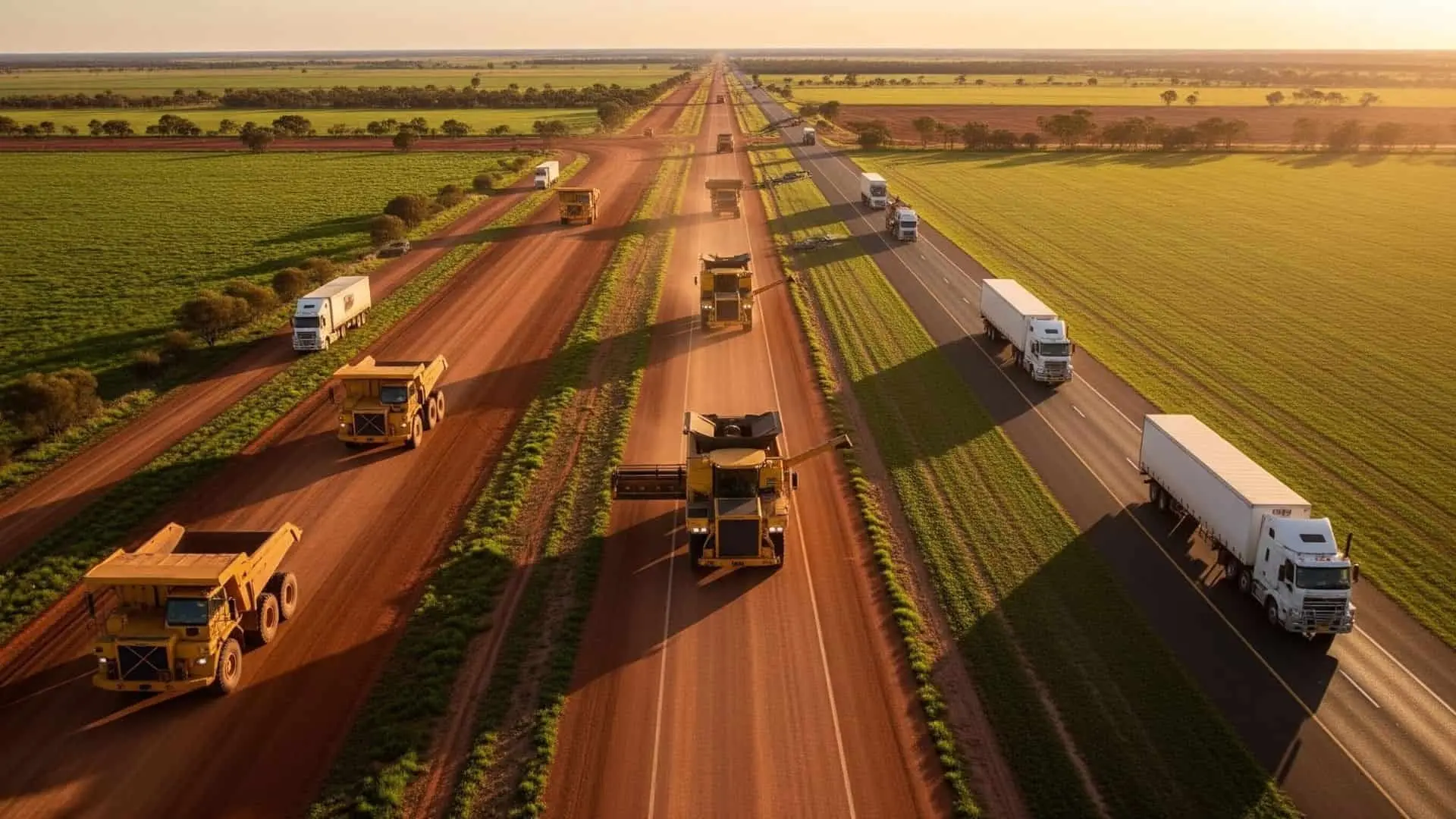
Running a diverse fleet as a fleet manager across Australian operations is not a simple matter.
Whether you're coordinating tractors and harvesters on a farm, managing utes and transport trucks for construction, or overseeing specialised equipment across multiple sites, the complexity can quickly become overwhelming.
Add in Australia's unique geographic challenges of long-distance freight routes, metropolitan congestion in Sydney and Melbourne, and remote off-road operations, and you've got a recipe for operational headaches.
But with the proper strategies and technology, managing a mixed fleet doesn't have to be a constant battle.
Let's consider the key challenges as well as the feasible solutions that can help you streamline your mixed fleet operations.
Why Is Mixed Fleet Management So Complex?
Running a mixed fleet is a different beast compared to a uniform one. You aren't just managing vehicles; you're juggling levels of complexity that don't regularly align.
When your gear is scattered across several job sites, depots, or paddocks, keeping track of varying service schedules and maintenance intervals becomes a logistical headache that's ripe for human error.
The Exact Demands of a Diverse Fleet
The real challenge is that every asset on your books plays according to its own set of rules.
Your tractors and harvesters don't care about standard intervals as they need seasonal maintenance timed perfectly with planting and harvest cycles.
Meanwhile, your transport trucks are bound by strict compliance checks and roadworthy inspections that can't be skipped.
Then you have the utes and light vehicles, which have their own fuel needs and service triggers, often different from the heavy-duty stuff.
Why Complexity Causes Friction
When you throw specialised equipment into the mix, you also have the increased pressure of sourcing specific technical expertise that isn't always available on short notice.
If you're trying to manage all these disparate moving parts without a unified system, you're essentially playing a game of "whack-a-mole."
Eventually, a service window is going to get missed, a compliance check will lapse, and an expensive piece of machinery will end up sidelined right when you need it most.
Challenges Facing Australian Fleet Operators
Fleet management doesn't have one challenge alone that managers must face.
But I'd argue that there are two big challenges often cited as the reason behind using fleet management software for better operational proficiency.
Skilled Labour Shortages Are Biting Hard
The agricultural and transport sectors across Australia are feeling the pinch of persistent labour shortages.
Fewer skilled workers are available to operate and maintain specialised machinery, and the problem isn't going away anytime soon.
Many farms and businesses rely on seasonal workers who may lack expertise with advanced equipment.
This creates gaps in maintenance capability and operational knowledge that can cause costly mistakes, equipment damage, or safety incidents.
Diverse Maintenance Requirements Create Scheduling Nightmares
Each vehicle type demands customised maintenance schedules, specific parts inventory, and technical expertise.
Coordinating these varied needs across multiple locations while continuing service quality is operationally demanding and demanding in terms of resources.
Without centralised visibility, you're left juggling spreadsheets, relying on memory, or discovering maintenance needs only after a breakdown has already disrupted your operations.
Solutions for Mixed Fleet Delivery Success
Implement Centralised Fleet Management Software
The real value is in the visibility. You get real-time tracking across the entire fleet, so you know exactly where your assets are and how they're being used.
Fuel management tools help you spot the petrol guzzlers and the idling habits that are quietly bleeding your budget, while compliance tracking takes the guesswork out of inspections.
You aren't manually checking dates anymore; the system just pings you when a certification is due.
Leverage AI-Powered Platforms for Smarter Decisions
The real strength of modern systems rest in predictive analytics.
By crunching live sensor data, these platforms can flag a failing alternator or a spike in engine temperature well before a driver is left stranded on a regional highway.
Companies like Fulton Hogan are already leaning into this, using integrated systems to close the gap between their heavy construction gear and their light vehicle fleets.
It stops the guesswork and makes sure that every asset—no matter its function—is utilised to its full potential without the risk of surprise downtime.
Adopt Real-Time Monitoring and Telematics
On the road, GPS and analytics do the heavy lifting for your dispatchers.
Whether you're negotiating the gridlock of a Sydney morning or supervising a multi-state long-haul run, live data allows you to pivot around congestion and weather in real-time.
It also gives you a factual window into driver behaviour.
Monitoring habits like harsh braking and excessive idling doesn't just improve safety; it directly alters your fuel economy and reduces the wear and tear that prematurely ages your fleet.
Invest in Training and Automation
Given the skilled labour shortages affecting the industry, automated fleet management systems lessen dependency on manual control.
By simplifying maintenance tracking and reducing administrative burden, you free up your team to focus on higher-value work.
Comprehensive staff training ensures team members are proficient with new systems and understand the processes that drive operational improvements.
The goal isn't to replace your people but should be to give them better tools so they can do more with less stress.
Industry-Specific Considerations for Australian Operations
Smaller fleet management providers are finally wising up to the fact that a one-size-fits-all approach doesn't work for industries like agriculture and construction.
They're moving away from generic tracking and building tools that actually survive the reality of the paddock or the job site.
For anyone running long-haul or remote shifts, fatigue tracking is a non-negotiable for keeping drivers safe and staying on the right side of the law.
You also need maintenance schedules that respect the climate; gear working in the dust and heat of the outback needs a different service rhythm than a van in the city.
The installed base of fleet management systems in Australia and New Zealand is expanding rapidly, expected to reach 2.6 million units by 2029.
This growth indicates that more businesses are recognising the value of these technologies—and those who adopt early gain a competitive advantage.
Moving Forward With Your Mixed Fleet
Managing a diverse fleet isn't a "set and forget" job; it requires a strategy that actually leans into the tech we have available.
By ditching the spreadsheets and moving toward flexible, scalable software that uses AI and IoT, you're not just digitising your mess—you're actually fixing the underlying friction.
The Real-World Wins of Smarter Management
When you get the right systems talking to each other, the benefits hit your bottom line almost immediately.
Better maintenance planning means you aren't just reacting to breakdowns; you're preventing them, which slashes your operational costs.
You also get to trim the fat on fuel waste through smarter routing, which is a massive win for both your sustainability targets and your fuel bill.
Cutting the Red Tape
The biggest silent killer in fleet management is the administrative mountain. Automating your tracking and alerts means your team isn't wasting hours chasing down odometer readings or checking compliance dates.
It clears the decks so you can focus on staying competitive in a market that doesn't slow down.
The headaches of a mixed fleet aren't going to vanish, but with the right tech in your corner, they become a manageable part of the day-to-day rather than a constant crisis.
Ready to Optimise Your Fleet Operations?
Discover where your logistics operations stand today.
Or, if you'd prefer personalised guidance, book a free operations review with our logistics experts.
We'll help you uncover quick wins for your fleet and identify the technology solutions that make sense for your specific situation.
Related Articles

What is Ai Logistics Agents
Ai Logistics Agents has become a critical consideration for logistics and supply chain management professionals in 2026. As businesses face mounting...

Warehouse Management
In the fast-moving world of logistics and supply chain management, warehouse management has emerged as a defining factor for operational success....

How to Stop your Logistics Operation From Bleeding Time
For logistics managers grappling with rising logistics costs, finding a practical, proven approach is essential. The landscape of logistics and supply...