How Delivery Data Is Altering Supply Chain Decision-Making
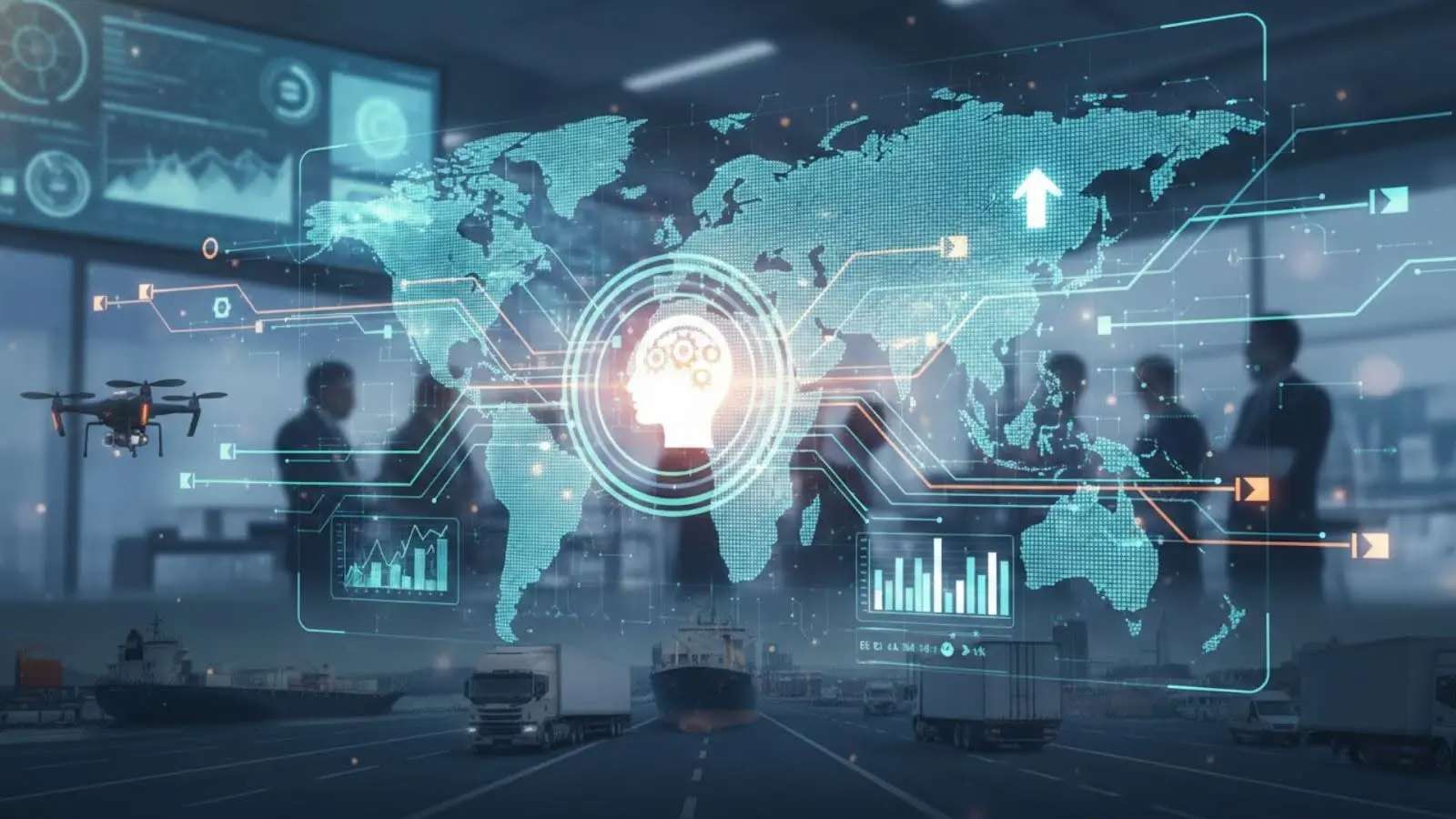
You've got the data. It's sitting in your route logs, your driver app check-ins, your proof of delivery timestamps, and your customer feedback scores.
But is it actually determining how you make decisions, or is it just... there?
In 2026, the supply chains pulling ahead aren't the ones with the biggest fleets or the deepest pockets. They're the ones turning delivery data into a decision-making engine.
Real-time information such as route density, transit times, on-time delivery rates, and last-mile visibility are shifting supply chain management from reactive firefighting to predictive, strategic planning.
Why Delivery Data Has Become a Strategic Priority
Supply chains in 2026 are operating in a landscape formed by tariff shifts, geopolitical uncertainty, and economic turbulence.
Planning cycles that once relied on quarterly reviews and static spreadsheets simply can't keep up.
The businesses that are weathering disruption well have one thing in common: they're leaning on up-to-the-minute data from every stage of the delivery process.
Traditional supply chain metrics like cost per unit and inventory turnover of course still matter like they used to. But they're being joined, and in some cases overtaken, by visibility and immediate data from networked sensors, ERP systems and logistics partners which are just more capable of living in the 2020s.
Think disruption detection times, driver response metrics, and delivery window accuracy.
What makes delivery data particularly powerful is that it connects the gap between forecasting and execution. Sales projections tell you what customers might order. Delivery data tells you what's actually happening on the ground: pickup frequency, order timing patterns, and volume trends down to the suburb level.
How Does This Look in Practice?
Imagine a retail business running an average flash promotion for their brand new line of products.
Sales forecasts might predict a general uplift, but delivery data collected from previous campaigns reveals which ZIP codes spike and where couriers tend to bottleneck.
Or take a healthcare logistics provider managing specimen pickups across dozens of clinics. By analysing historical delivery patterns by clinic and hour, they can predict volume surges before they happen and staff accordingly. No further scrambling when Monday morning hits.
This kind of intelligence directly counters common supply chain pain points: siloed systems, demand volatility, limited last-mile visibility, and the operational risks that come with them, like understaffed routes or late deliveries that undermine buyer confidence.
Four Ways Delivery Data Drives Smarter Decisions
Delivery data doesn't just add context to existing processes. Here are the four common areas where the impact is most significant.
Enhanced Projection Accuracy
Integrating delivery data with AI forecasting isn't just a minor tech improvement; it's a fundamental change in how you protect your margins.
When you feed real-world shipping signals into a forecasting model, the accuracy of your short-term predictions typically jumps by 10% to 20%.
In practical terms, that means you aren't just guessing what you need; you're carrying 5% less "just in case" inventory while seeing a 15% spike in overall process efficiency.
Machine learning models thrive on the historical data that human analysts usually find overwhelming.
Real-Time Visibility and Disruption Response
The move toward real-time visibility has shifted from a convenience to a baseline operational requirement.
Today, the continuous stream of location and status data generated by GPS, connected sensors, and connected driver apps allows for a much more forward-thinking approach to fleet management.
By processing this information, you can identify port congestion or weather delays and implement alternate routing before a disruption becomes a crisis.
To manage this effectively, you must centre on metrics like incident severity scoring to gauge downstream impact and recovery time tracking to measure how quickly operations return to baseline.
In multimodal environments, monitoring transfer rates is also essential for pinpointing friction where cargo moves between different modes of transport.
Ultimately, this data infrastructure does more than just satisfy customer demands for transparency; it provides the internal intelligence needed for better decision-making.
Inventory and Procurement Optimisation
Delivery data is changing how firms approach sourcing and inventory positioning. When you can see exactly how suppliers perform on speed and reliability (not just price), procurement decisions get sharper.
This is especially relevant in a climate of tariff volatility.
Most businesses are using delivery data to inform dynamic sourcing strategies, evaluate supplier performance in real time and position inventory closer to high-demand zones throughout both Australia and the world.
By centralising data streams from vendors, warehouses, and logistics providers, companies create virtual models that support agile, evidence-based decisions rather than gut-feel purchasing.
Cost and Reliability Rebalancing
For years, the logistics conversation was dominated by speed. Get it there faster. But the data is telling a different story in 2026.
Shippers are increasingly using delivery analytics for scenario planning that prioritises reliability and flexibility alongside speed.
Landed-cost modelling, for example, becomes far more accurate when you factor in actual delivery performance data rather than theoretical transit times.
The result is more realistic cost projections and better trade-off decisions when conditions shift.
AI and Technology as Catalysts
Delivery data on its own is raw material which doesn't help the average driver or logistics manager.
It is AI and the right technology stack that turn it into implementable intelligence.
In 2026, the conversation around AI in logistics has matured past the hype cycle. Businesses aren't chasing flashy pilots anymore. They're focused on measurable results built on solid data foundations and proper governance.
That means clean data pipelines, consistent formats across systems, and interdepartmental coordination between operations, IT, and leadership.
What Does Effective Technology Adoption Look Like?
Platforms that combine route optimisation, immediate tracking, and delivery analytics are providing the kind of trade intelligence that used to require entire analyst teams.
They can analyse supplier performance patterns, flag fluctuations in delivery costs, and even recommend greater sustainable logistics options based on actual data.
But technology only delivers value when the data feeding it is trustworthy. That demands integrity among every stream, from warehouse management systems to driver app inputs to customer delivery confirmations.
It also requires people across the business to agree on what data matters and how it should be used.
The Bigger Picture: Delivery Data as a Strategic Benefit
The supply chains that thrive in 2026's uncertain environment aren't just efficient. They're adaptive.
They treat delivery data not as an operational byproduct but as a key resource that informs everything from procurement to customer experience.
Companies that adopt this mindset gain resilience versus disruption, efficiency gains that compound over time, and a true advantageous position in a fragmented global environment.
The shift from reactive to predictive isn't theoretical. It's happening now, driven by the delivery data that's already flowing through your operations.
The question isn't whether this data matters. It's whether you're set up to use it.
Ready to turn your delivery data into a strategic advantage? Request access to see how Locate2u can help.
Related Articles
Closing the Gap Between Warehouse Operations and Last-Mile Delivery
If you've ever watched a perfectly packed order sit on a loading dock while a delivery van pulls away half-empty, you already know the problem. Warehouses and last-mile delivery teams regularly operate in entirely different worlds...
What Happens to a Delivery Operation When Order Volumes Double Overnight?
One day, everything is running smoothly. Orders are flowing in at a predictable rate, your drivers are covering their routes without drama. Then, seemingly out of nowhere, your order volume doubles...

Why Driver Routing Decisions Still Matter in Automated Fleets
You've invested in route planning software. Your dispatch is automated. The fleet dashboard shows real-time GPS data and perfectly calculated ETAs for every driver, every stop, every address on the list. So why does your most experienced driver keep departing from the suggested route?...