The Operational Trade-Offs Behind Same-Day Delivery
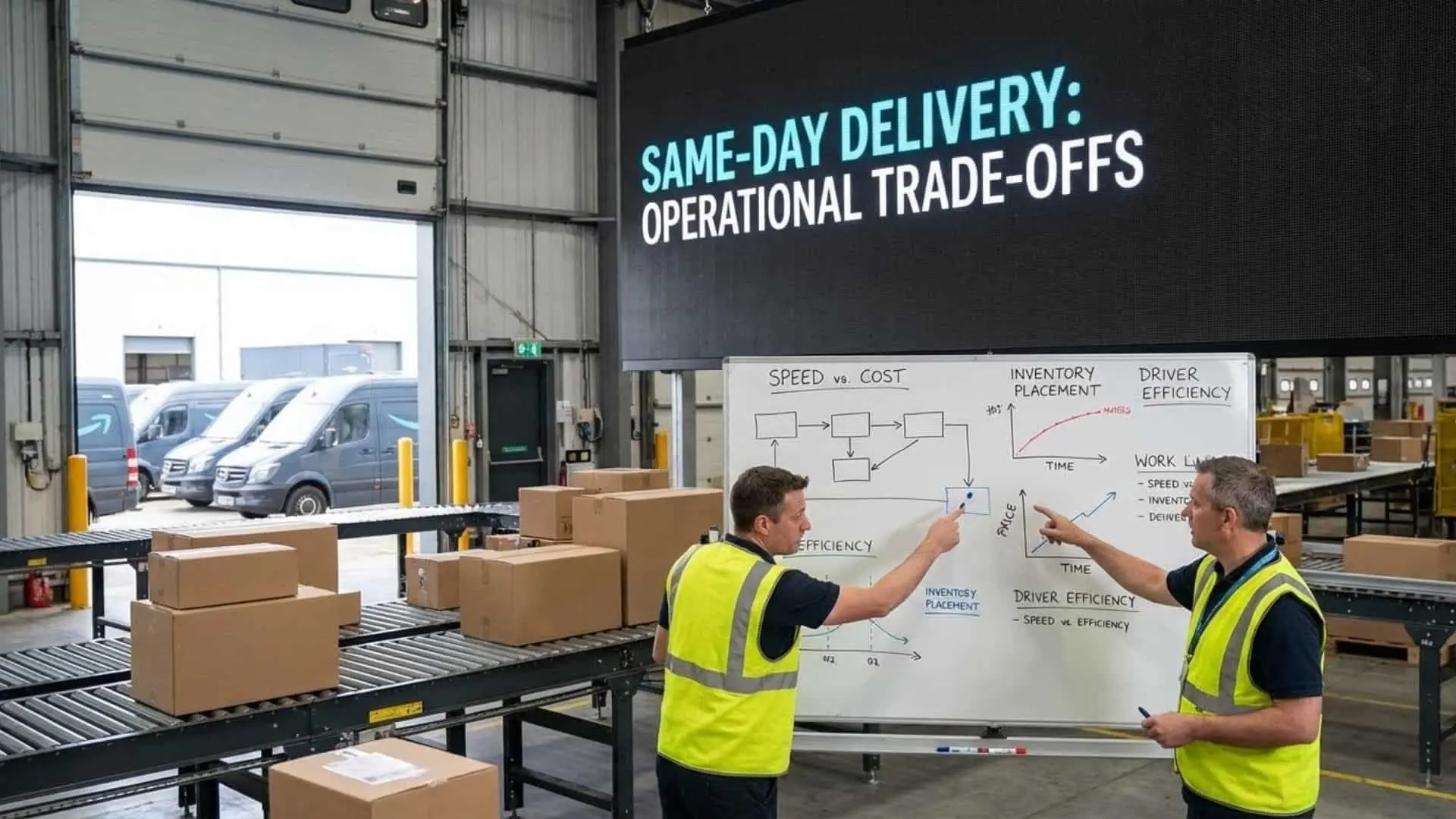
Same-day delivery is an absolute essential for most companies.
But here's what rarely makes it into the marketing copy: delivering on that promise involves a web of operational trade-offs that can make or break your margins, your fleet, and your customer relationships.
Same-day delivery is totally achievable. Plenty of businesses are doing it well.
But it entails a clear-eyed look at the tensions between speed and cost, logistical correctness and forecasting uncertainty, and the very real limits of your capacity.
Speed vs. Cost: Walking the Financial Tightrope
There's no way around it. Same-day delivery is expensive to run.
You need more vehicles on the road, more drivers on shift, technology for live tracking and dynamic routing, and potentially additional warehouse or distribution centre space closer to your customers.
Every one of those line items pushes your operational expenses higher.
The businesses that make it work financially tend to count on a combination of strategies rather than absorbing the cost outright:
- Tiered pricing models that charge a premium for same-day while keeping standard delivery affordable.
- Loyalty and membership programs that bundle fast delivery into a recurring revenue stream, quite effective in high-volume retailers.
- Cross-docking from local distribution centres to shorten the last mile and reduce per-delivery costs.
Companies that have implemented same-day services consistently show higher revenues, but the initial outlay remains an important barrier, especially for smaller operations that lack local fulfilment infrastructure.
If you don't have a warehouse within striking distance of your customers, the maths gets difficult quickly.
The Environmental Cost You Can't Ignore
The financial strain isn't the only pressure point.
Rapid last-mile logistics can increase greenhouse gas emissions by 32% and urban traffic congestion by 21%, according to World Economic Forum analysis.
Note that these aren't just abstract sustainability concerns. They actually translate into real costs like higher fuel bills, likely regulatory fines, and mounting consumer scrutiny around environmental duty.
For fleet operators, this means same-day delivery planning needs to account for emissions efficiency alongside speed. Route optimisation isn't simply getting there faster; it's about getting there smarter.
Logistical Precision vs. Order Timing and Forecasting
One detail catches many businesses off guard: most orders simply do not qualify for same-day delivery.
Typical cutoff times in 2026 fall between 1 PM and 2 PM, while order peaks hit around 10 AM and continue to flow steadily throughout the day. Yet fewer than half of daily orders land within that rigid window, leaving substantial volume in the standard queue.
You can extend these cutoffs to capture more volume, but doing so requires ramping up capacity late in the shift and accepting much tighter dispatch timelines.
It is a direct trade-off between operational simplicity and the infrastructure spend required to keep the warehouse running at high velocity until sunset.
The Forecasting Challenge
Demand forecasting errors sit at the very heart of same-day delivery pain.
Get the math wrong in one direction and you are paying for overcapacity, with idle drivers and half-empty vans draining your margins.
Get it wrong the other way and you are failing customers with missed windows and the reputational damage of delayed orders.
Inventory positioning matters just as much as the fleet itself. For same-day to work, your stock needs to be pre-positioned and organised for rapid pick-pack-dispatch cycles that leave zero room for searching through aisles.
Poor inventory management does not just cause delays; it triggers the errors and returns that ultimately lead to a flood of negative reviews.
Why Route Optimisation Is Non-Negotiable
Dynamic route optimisation appears as one of the most effective tools for managing these pressures.
Software that factors in real-time traffic, delivery windows, stop sequencing, and eleventh-hour changes like cancellations or additions can dramatically cut delays and improve drop density.
Manual route planning, on the other hand, simply can't keep up. When a customer cancels at 2:30 PM and a new priority order drops in at 2:35 PM, a human planner is already behind. Algorithms handle that in seconds.
The trade-off here is real though straightforward: precision requires technology investment. But the return, measured in fewer missed deliveries, lower fuel costs, and better driver utilisation, typically justifies the spend many times over.
Growth Capacity vs. Customer Expectations
Customer expectations around same-day delivery are unforgiving. People expect live tracking, specific delivery windows, and flawless execution.
When things go wrong, frustration is immediate and public.
61% of online shoppers have abandoned a purchase when same-day delivery wasn't available, while 46% are willing to pay a premium for it.
That's a powerful demand signal. But meeting it consistently, especially during seasonal peaks, is where scalability becomes the main challenge.
Fleet Control: Choosing Your Model
How you structure your delivery fleet has an enormous influence on both operational quality and your ability to scale. There is no single correct answer, but the trade-offs in the 2026 market are increasingly clear.
Maintaining an in-house fleet provides the highest level of control over driver behaviour and service standards, which is essential for protecting your brand's reputation. However, this comes at the cost of significant capital investment in vehicles and the ongoing administrative burden of managing a large, permanent workforce.
Turning to third-party or crowdsourced drivers offers a way to bypass these fixed overheads while gaining the flexibility to scale up instantly when demand spikes. The risk here is the sacrifice of direct oversight, as reliability can fluctuate and you lose the ability to guarantee a consistent customer experience at every doorstep.
Localised models like store-based or cross-dock fulfilment are gaining ground by leveraging existing inventory to drastically shorten the final mile. While this works exceptionally well in dense urban areas, it introduces a layer of operational complexity that many traditional retail spaces simply aren't designed to handle.
Urban Focus vs. Broad Reach
Some retailers make a deliberate choice to offer same-day delivery only inside urban areas where population density justifies the cost.
This trades broad geographic access for functional feasibility. It won't serve every customer, but it captures the densest demand where same-day service can genuinely differentiate you from competitors.
For rural or regional areas, a next-day or two-day service often makes more sense, both financially and logistically.
Regulation, Technology, and Geography: The Friction Points
Beyond the obvious challenges of cost and capacity, several less visible factors produce friction in same-day delivery operations.
Regulatory Compliance
Transport regulations, labour laws, and environmental compliance requirements vary by region and add both time and cost to operations.
Driver hour limits, vehicle emission standards, and delivery curfews in residential areas can all constrain your planning. Cross-regional delivery adds a further layer of complexity.
Technology Integration
Same-day delivery demands end-to-end visibility. That means barcode scanning, real-time inventory tracking, centralised order management, and uninterrupted data flow between systems.
When your warehouse management system doesn't talk to your routing software, or your driver app isn't synced with customer notifications, gaps appear.
And in same-day delivery, even small gaps cause missed windows.
The investment in getting these systems to work together is significant, but it's what separates businesses that deliver reliably from those that deliver promises they can't keep.
Geographic Limitations
Same-day delivery is fundamentally an infrastructure play. It works where you have fulfilment locations, driver coverage, and road networks that support rapid turnaround.
In low-density areas without that infrastructure, it's simply not viable at a sustainable cost.
Admitting these limits honestly, rather than overextending, protects both your margins and your reputation.
Tactics to Navigate the Trade-Offs
If you're evaluating or already running same-day delivery, here are approaches that help balance competing pressures:
- Prioritise high-value zones. Focus your same-day service within urban areas and customer segments where it genuinely drives loyalty and repeat purchases. Not every postcode needs same-day, and trying to cover everywhere dilutes your resources.
- Invest in route optimisation technology. Dynamic routing algorithms and automation tools extend your effective cutoff times without proportional cost increases. This is where software like Locate2u's Route Optimisation engine makes a measurable difference, automatically adjusting routes in real time to account for traffic, delivery windows, and eleventh-hour changes.
- Adopt a hybrid fleet model. Combine the reliability of an in-house team with the flexibility of third-party partners during peak periods. Use technology to preserve visibility and quality standards across both.
- Consider a 24-hour alternative. For orders that miss your same-day cutoff, a guaranteed next-morning or next-day service can capture much of the same urgency appeal with significantly less operational strain.
- Use live tracking and proof of delivery. Tools like Locate2u's Driver App and Proof of Delivery features give your customers the transparency they expect while providing your operations team with the data they need to detect bottlenecks and improve performance over time.
Same-Day Delivery Is a Strategy, Not a Default
The businesses that thrive with same-day delivery treat it as a targeted strategy rather than a blanket promise.
They focus it where volume justifies costs, where infrastructure facilitates speed, and where the customer loyalty payoff is clear.
Getting there requires honest assessment of your current operations: your fleet capacity, your technology stack, your fulfilment footprint, and your cost structure.
The trade-offs are real, but they're manageable when you approach them with the right tools and a clear plan.
The question isn't whether same-day delivery is worth pursuing. For many businesses, it clearly is. The question is whether your operations are set up to deliver on it sustainably.
Frequently Asked Questions
What is the biggest challenge with same-day delivery?
The biggest challenge is coordinating speed with cost. Same-day delivery entails significant investment in vehicles, drivers, technology, and localised fulfilment infrastructure. Without strategies like tiered pricing or route optimisation, the operating charges can quickly erode profitability.
How does route optimisation help with same-day delivery?
Route optimisation software actively adjusts delivery routes using real-time traffic, delivery windows, and order changes. This reduces delays, improves driver utilisation, and lowers fuel costs, making it one of the most impactful tools for sustainable same-day operations.
Should every business offer same-day delivery?
Not necessarily. Same-day delivery works best in urban areas with sufficient order density and local fulfilment infrastructure. Businesses should evaluate whether the revenue and loyalty benefits outweigh the operating expenses for their specific market and customer base.
What is the environmental impact of same-day delivery?
Streamlined route planning and fleet management are essential to lessening these impacts.
If you'd want hands-on guidance, book a free operations review with our logistics experts and uncover quick wins for your same-day delivery strategy.
Related Articles
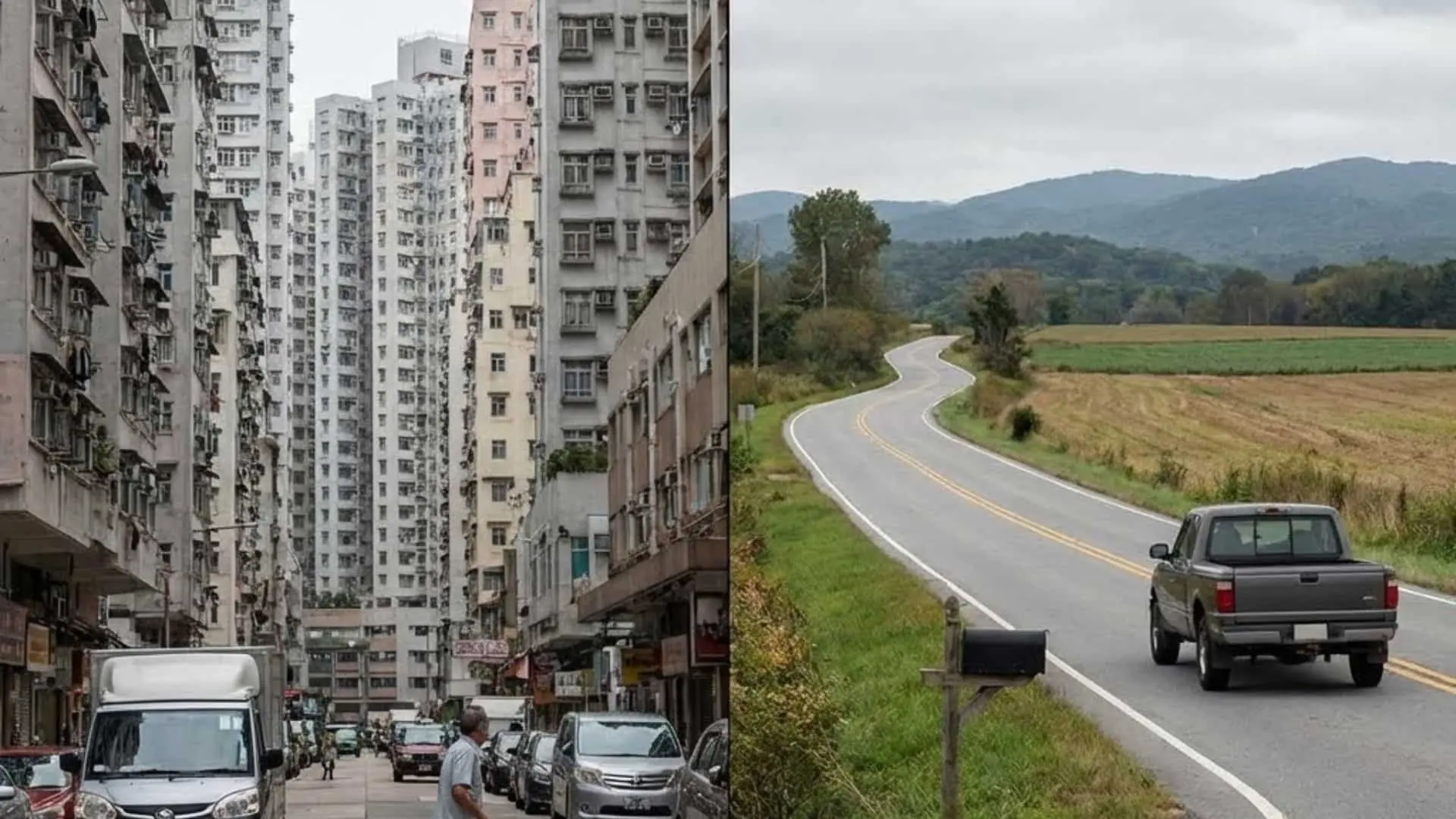
Why Dense Cities and Rural Routes Need New Last-Mile Delivery Strategies
If you manage last mile deliveries across both metro areas and regional zones, you already know the frustration: what works brilliantly in Sydney's inner west completely falls apart on a run through outback Queensland...

The Real Math Behind Multi-Vehicle Route Planning
If you manage a fleet of more than a handful of vehicles, you've probably had this thought: "There has to be a smarter way to plan all these routes." You're right. And the math behind it is fascinating...
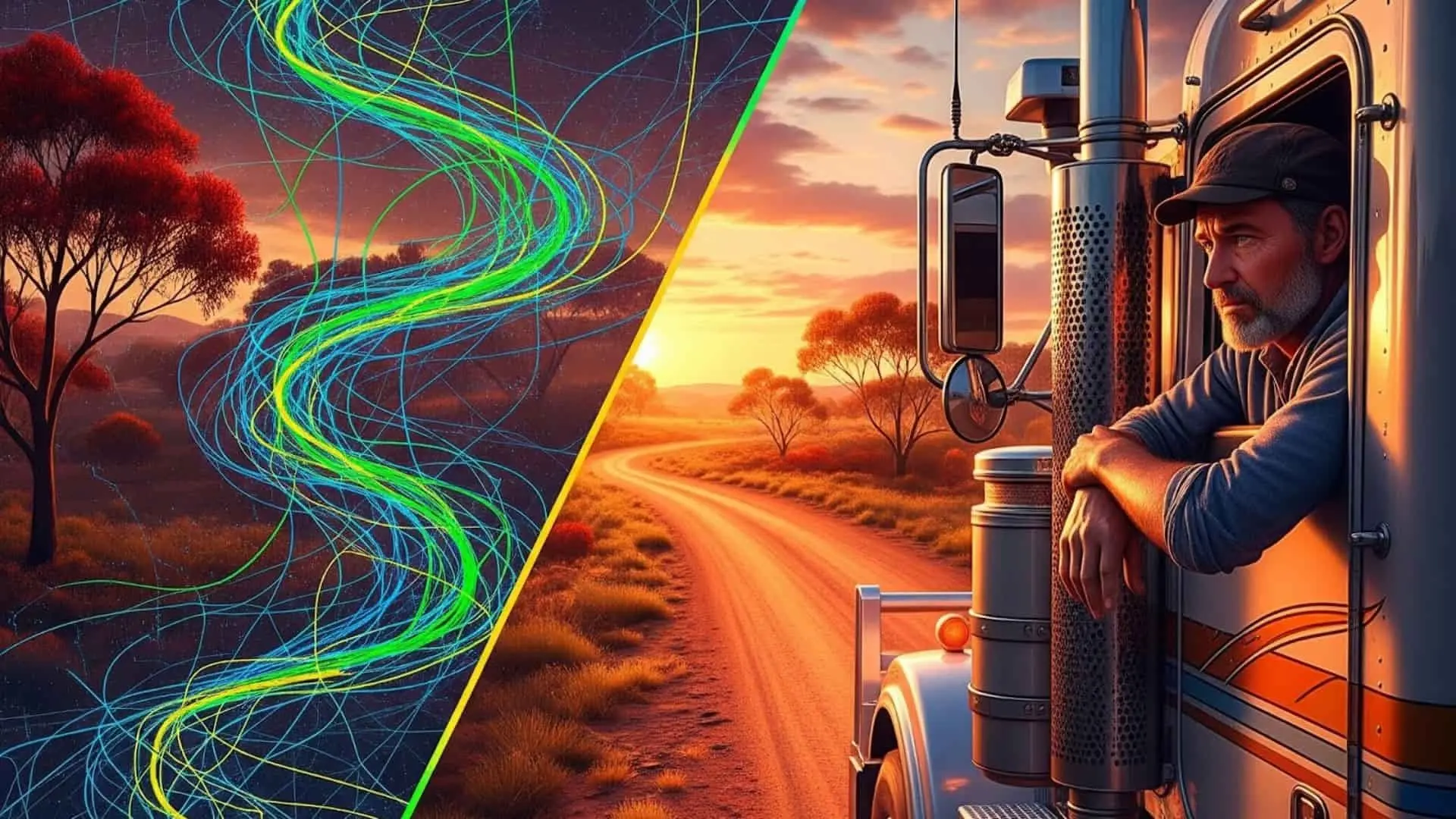
When Route Optimization Conflicts With Driver Experience
Your route optimization software says the job should take eight hours. Your driver says it took eleven. The algorithm insists the sequence is perfect. The driver insists it's unworkable. Sound familiar?...