What Happens to a Delivery Operation When Order Volumes Double Overnight?
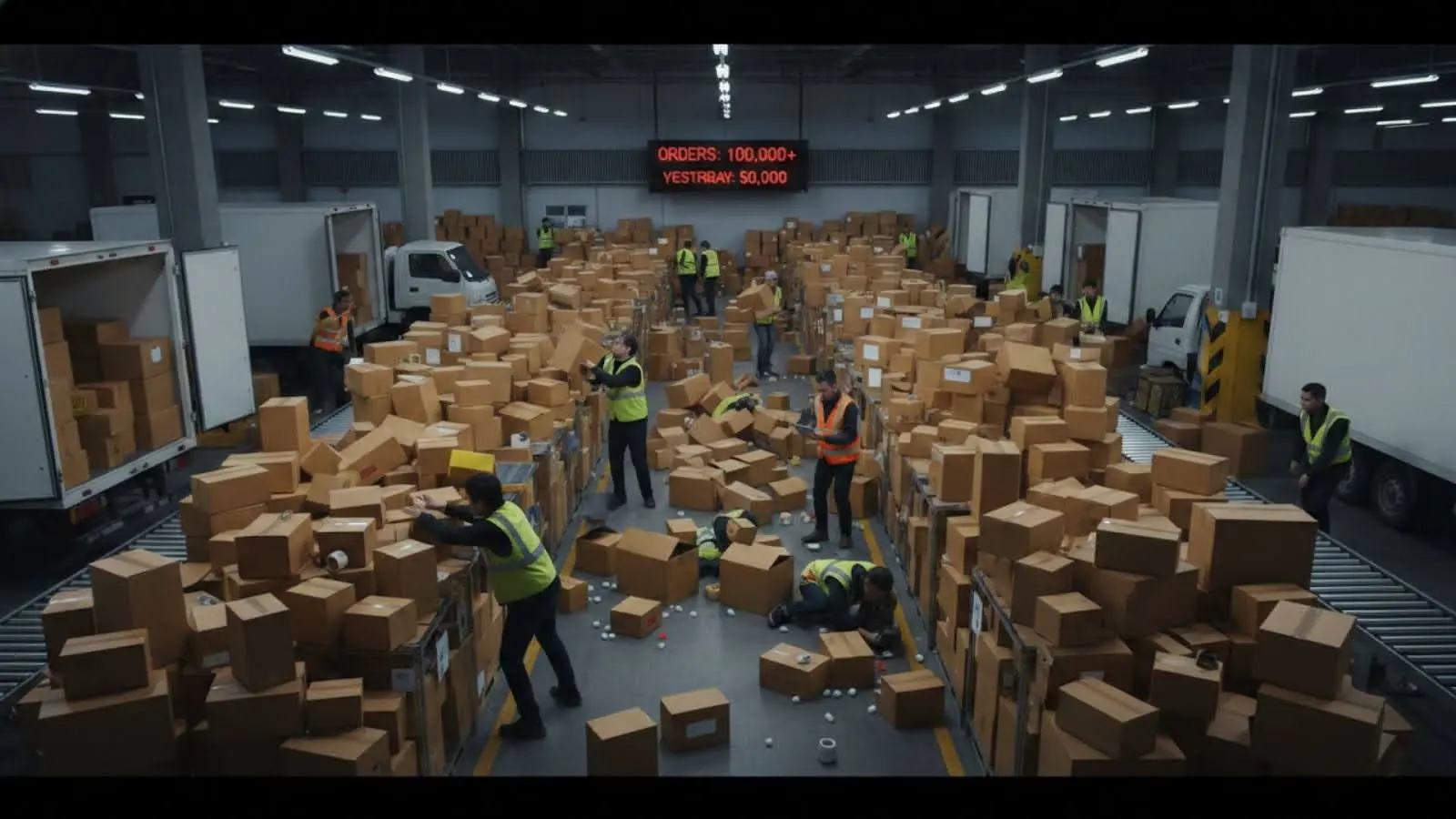
One day, everything is running smoothly. Orders are flowing in at a predictable rate, your drivers are covering their routes without drama, and your warehouse team is humming along.
Then, seemingly out of nowhere, your order volume doubles.
Maybe a marketing campaign went viral. Maybe a competitor shut down. Maybe it's peak season and the forecasts were way off.
Whatever the trigger, the result is the same: your delivery operation is suddenly under enormous pressure, and every weak link in the chain is about to reveal itself.
This isn't a hypothetical scenario. It's one of the most common stress tests in logistics, and how you respond to it determines whether a spike in demand becomes a growth story or a customer service nightmare.
The First Thing That Breaks: Your Warehouse
When order volumes double, the warehouse is usually the first place to feel the pain.
It's with the picking, packing, and shipping workflows, all of which were designed for a certain throughput, that simply cannot absorb twice the load without something giving way.
What was a minor inconvenience at normal volume turns into a full-scale traffic jam at double capacity.
Operations that have invested in automation, such as conveyor systems, robotic picking, or even just well-optimised warehouse layouts, tend to absorb these shocks more gracefully.
But automation requires upfront investment and planning. If you're relying entirely on manual processes, a volume spike can turn your fulfilment floor into chaos within hours.
Staffing Problems Compound Quickly
The natural response to a sudden surge is to throw more people at the problem. And to a point, that works.
Temporary hires can assist in bridging the gap, but here's the catch: untrained staff make more mistakes, work more slowly, and need supervision from your experienced team members, who are already overwhelmed.
The result is a compounding effect. Error rates climb. Mispicks increase. Packages go to the wrong addresses.
And every mistake generates a downstream cost, whether that's a return, a redelivery, or a frustrated customer who decides to take their business elsewhere.
The businesses that handle this well are the ones that have scalable onboarding processes and, critically, technology that guides workers through tasks rather than relying on institutional knowledge.
The Carrier Capacity Crunch
Even if your warehouse manages to keep up, you still need to get those orders out the door. And this is where carrier capacity becomes a serious constraint.
When volumes spike, you're not the only one feeling the pressure. Your carriers are too. Available delivery slots fill up fast. Surcharges appear, sometimes climbing as high as 8% above standard rates.
And cutoff times can become quite rigid barriers. For example, some overnight services require handoff by 4 PM local time on weekdays, and there's no flexibility when every slot is spoken for.
Companies that depend on a single carrier are especially vulnerable here. If your sole logistics partner can't absorb the extra volume, you're stuck.
A multi-carrier strategy gives you options, allowing you to shop rates, distribute load across providers, and keep deliveries moving even when one carrier is at capacity.
What's more, integrating route optimisation into how your drivers move your deliveries is an essential and relatively simple way to upmarket your service.
What Actually Helps: Strategies That Work Under Pressure
The operations that survive (and even thrive) during volume spikes share a few common traits.
They've built flexibility into their systems before the surge hits, and they lean on technology to scale without proportionally scaling headcount or cost.
Streamline Your Fulfilment Workflow
Before a spike ever happens, you need to take a hard look at your warehouse layout and your fulfilment process. It sounds basic, but are your pick paths actually optimised, or is your team tripping over itself?
You have to ask if your order processing is automated or if you're still relying on manual data entry that's prone to human error.
Build Scalable Partnerships
Third-party logistics (3PL) providers offer the kind of flexible warehousing and labour that can scale up in a hurry.
However, the key is establishing these partnerships well before you actually need them. There is nothing more dangerous for your margins than scrambling to sign contracts when you're already drowning in orders and desperate for a solution.
Diversify Your Carrier Network
Relying on a single carrier is a recipe for a bottleneck. A multi-carrier approach gives you the stability you need when one network starts to buckle.
Technology platforms that allow for real-time rate shopping across different carriers help you find the best available option for every single delivery — balancing speed, cost, and capacity on the fly.
Offer Tiered Delivery Options
It is a common misconception that every customer needs their order tomorrow. In reality, offering tiered shipping options — like expedited delivery for a fee alongside standard or economy choices — lets you prioritise the truly urgent orders.
This simple tactic allows you to spread the rest of the volume across a manageable timeline, which can relieve enormous pressure on your logistics network during a peak period.
The Real-Time Visibility Gap
One of the most dangerous things about a sudden volume increase is losing visibility into what's happening across your operation.
When everything is moving faster, you need better information, not less.
Real-time surveillance, both for inventory in the warehouse and packages in transit, becomes the backbone of decision-making.
Without it, you're guessing. With it, you can identify bottlenecks as they form, reroute deliveries when capacity shifts, and give customers accurate ETAs instead of ambiguous promises.
This is where tools like a driver app with live GPS tracking and proof of delivery capabilities pay for themselves many times over.
When your dispatch team can see exactly where each driver is and where every delivery stands, they can make adjustments on the fly rather than discovering problems after the fact.
What's at Stake: The Customer Experience
Ultimately, every operational failure during a volume spike lands on the customer's doorstep, sometimes literally in the form of a late, damaged, or incorrect delivery.
Operations that handle spikes well can convert them into 15–40% sustained order volume growth, with overnight delivery capabilities boosting average order value by 10–25% and customer retention by 5–20%. The upside is real.
But the downside is equally real. Delays weaken trust. Incorrect deliveries drive returns. And every negative experience is amplified by social media and evaluation platforms.
A single bad peak season can undo months of brand-building.
This is why the most operationally mature businesses treat demand increases not as emergencies but as planned-for events. They stress-test their systems, invest in scalable technology, and build redundancy into their logistics networks.
Building Resilience Before You Need It
The best time to prepare for a volume spike is before it happens.
That entails investing in route optimisation, immediate tracking, and flexible fulfilment systems when things are calm, so that when demand surges, your operation scales instead of stumbles.
This is where Locate2u comes in. Our route optimisation and delivery management software is built to handle order and driver logistical challenges, but also to be resilient enough to manage spikes in delivery volume as your business grows.
Ready to build a delivery operation that can handle whatever comes next? Request access to see Locate2u in action.
Related Articles

Why Driver Routing Decisions Still Matter in Automated Fleets
You've invested in route planning software. Your dispatch is automated. The fleet dashboard shows real-time GPS data and perfectly calculated ETAs for every driver, every stop, every address on the list. So why does your most experienced driver keep departing from the suggested route?...
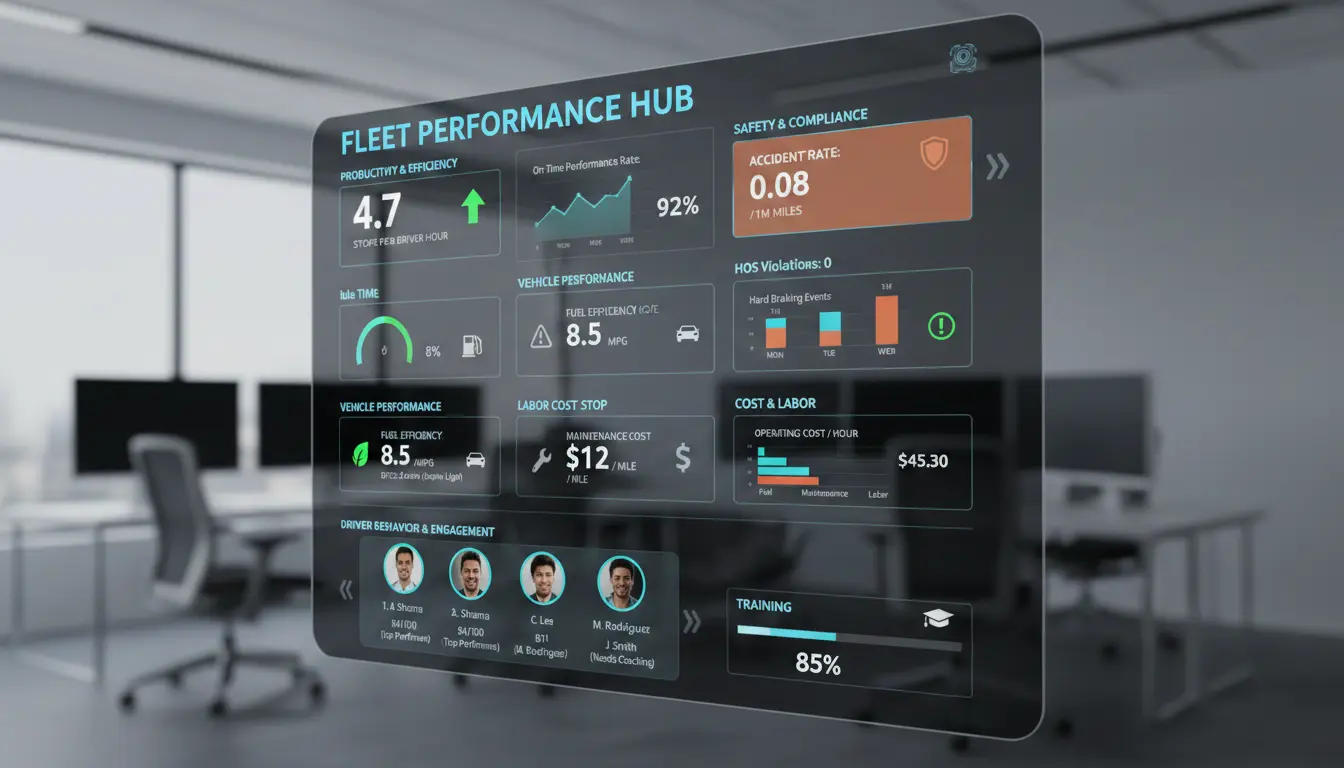
The Most Overlooked Fleet Metric: Stops Per Driver Hour
You're tracking fuel costs. Idle time is on the dashboard. You've got data on cost per mile, vehicle utilisation, maintenance schedules — the whole lot. And yet your fleet operations still feel like they're leaving something on the table...
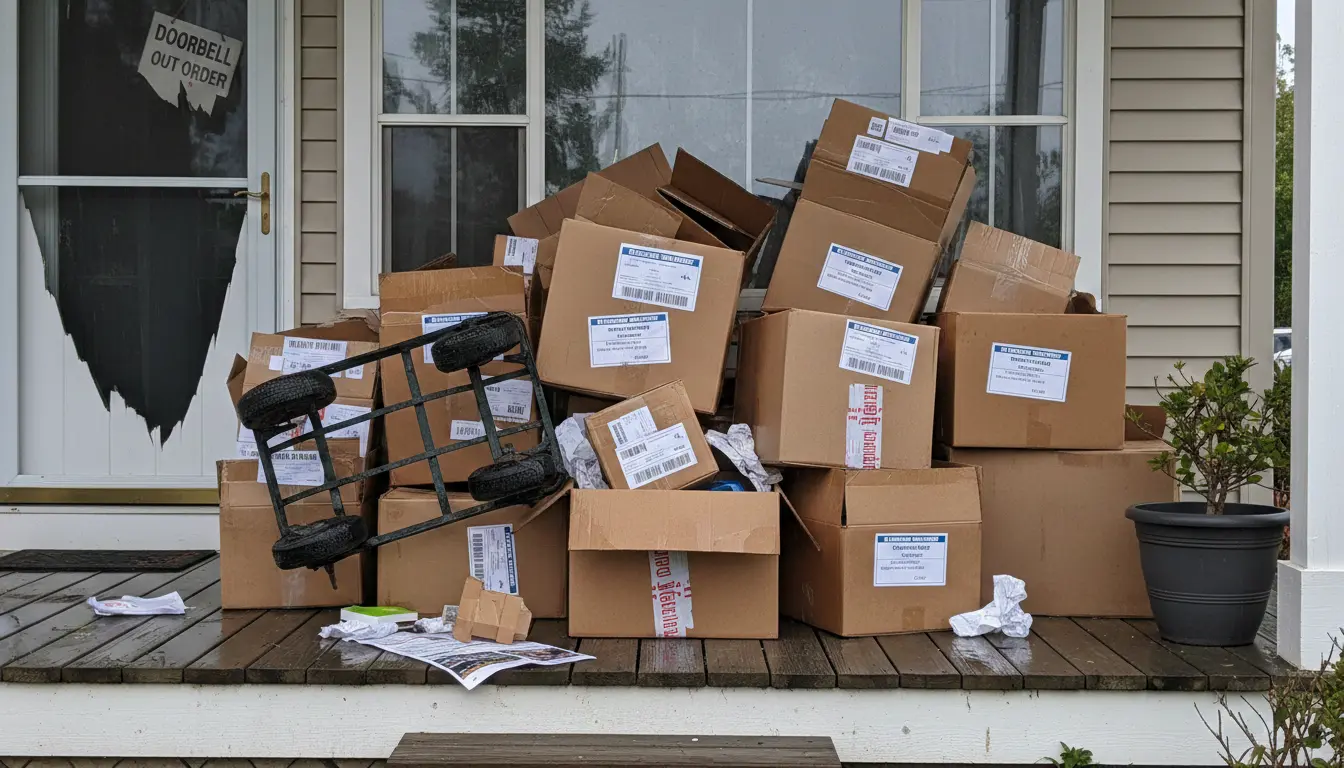
What Actually Causes Failed Deliveries And How Logistics Teams Reduce Them
Failed deliveries are one of those problems that can feel impossible to pin down because the causes are scattered across the entire supply chain. But here's the thing: most of them are preventable...