Free Route Optimizers: What They Do Well and When Canadian Fleets Upgrade
Drafted with AI assistance, edited and fact-checked by Sean Flannery. See our editorial policy.
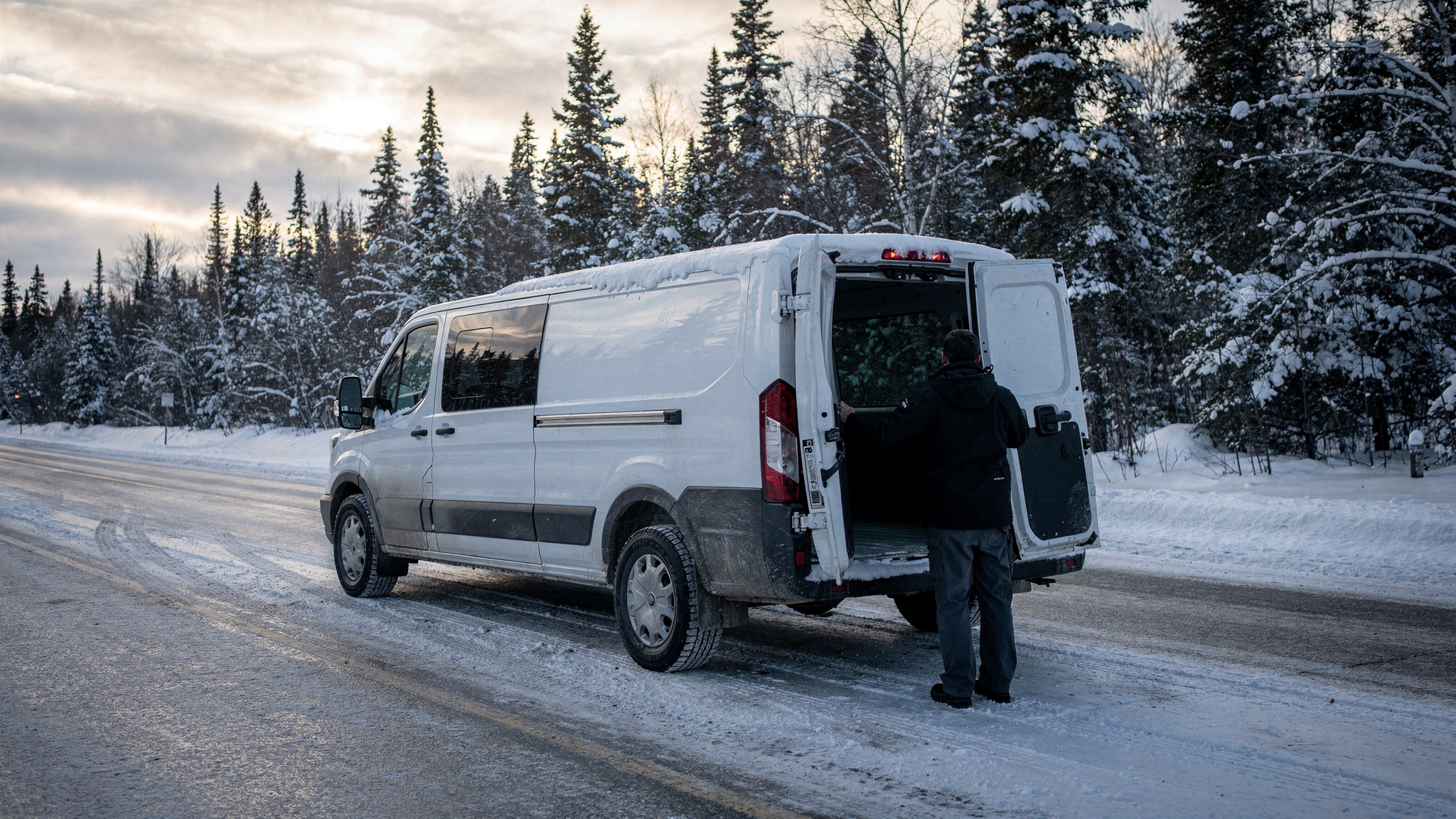
A free route optimizer sequences a list of stops into an efficient driving order, which suits one vehicle with a modest stop count. Once you run several drivers with delivery windows, winter roads and long highway legs, a paid platform that assigns stops per vehicle, adjusts routes during the day and shares live ETAs becomes the better fit.
Picture a January morning in Saskatoon. Three vans, fresh snow overnight, two farm customers past the city limits and a run of town stops promised before lunch.
Sorting those stops into a sensible order is the easy part. Splitting them across three vans, allowing for slower roads and letting each customer know when to expect a delivery is where planning tools start to differ.
Getting that right pays off quickly. SuperPharmacy's case study reports that the online pharmacy's daily route planning went from up to an hour to 10 minutes with Locate2u.
What a free route optimizer handles well for a small Canadian fleet
For a single vehicle, a free route optimizer does one job very well. It takes a list of addresses and puts them in an order that cuts down on backtracking.
That suits plenty of small operations. A florist in Halifax with one van and a morning of arrangements to drop off. A Kelowna caterer running the same weekly drop-offs. An owner-operator in Sudbury who plans tomorrow's stops each evening.
In each case the plan is simple: one driver, one vehicle, a stop list short enough to review by eye, and no customer waiting on a live arrival time.
A free tool is also a good way to learn what your routes really look like. Map a typical week and you'll soon see which neighbourhoods you cross twice and which customers could share a delivery day.
The picture changes once the plan has to carry more than addresses. Splitting stops between vans, honouring promised delivery windows, slotting in a same-day order mid-morning and sending customers a tracking link are the points to test before relying on any tool.
None of that makes a free optimizer the wrong choice. It marks the edge of what a sorted list can do. For background on the sequencing itself, see how route optimization works and why it matters for delivery fleets.
Why record driver wages and higher fuel prices make every kilometre worth planning
Canadian delivery costs have moved quickly. Statistics Canada reports that the average offered hourly wage for full-time drivers reached a record C$30.20 in the first quarter of 2026, the fourth straight quarterly increase.
Truck transportation prices in the second quarter of 2026 were 9.5% higher than a year earlier and 5.3% higher than the first quarter, amid a sharp increase in global energy prices, according to the same Statistics Canada release.
So every kilometre a van doesn't need to drive, and every minute spent waiting at the wrong end of town, is worth planning out.
As a worked example on an assumed figure: if tighter sequencing saved one full-time driver 30 minutes a day, that half hour is worth C$15.10 at the record offered wage above.
Fuel works the same way. As a second worked example, assume a van spends C$0.25 on diesel for every kilometre it drives. Trimming 20 km from one day's route would then save C$5 in fuel for that van, and you can swap in your own fuel cost per kilometre to see your figure.
The exact numbers matter less than the pattern. Small daily gains in driver time and fuel repeat across every vehicle and every working day, so they're worth measuring.
Two habits help, whatever tool you use. Record planned kilometres against actual kilometres for each route, and note where arrivals regularly run early or late.
That record shows where the plan needs adjusting. Later, it gives you a fair baseline for judging a paid platform on your own numbers.
How to plan routes that work on the road, not just on the map
The shortest line on a map isn't always the best route. A routing challenge hosted by MIT's Center for Transportation & Logistics put it plainly: "in real-life operations, the quality of a route is not exclusively defined by its theoretical length, duration, or cost."
A route that works on the road reflects how deliveries really happen. Before you optimize, give the planner the details your drivers already know:
- Service time per stop. A residential drop and a pallet delivery to a job site need very different allowances.
- Delivery windows. Enter the times you've promised, not just the address.
- Vehicle capacity and load order, so the first stop's goods come off the truck first.
- Start point, finish point and planned breaks for each shift.
- Access notes such as loading docks, gate codes and customer instructions.
Hours of work matter on longer days too. Check the current hours-of-service requirements with Transport Canada and your provincial ministry, then build those shift lengths and breaks into the plan so the optimizer only produces routes your team can run.
Customer messages belong in the plan as well. If you deliver in Quebec, New Brunswick or to French-speaking customers anywhere in Canada, check whether a tool lets you write notifications in both French and English.
Locate2u builds optimized routes around delivery locations, time windows and driver availability, so the plan starts from the same facts a dispatcher would use.
Planning around winter roads, long highway legs and remote stops
Canada's geography shapes every delivery plan. Statistics Canada's 2021 Census profile describes a country of just under 9 million square kilometres, where the three largely rural territories represent 39.1% of the landmass but 0.3% of the population. For planning, that means long stretches between customers and fewer chances to fill a route.
Road surfaces and conditions vary along the way. An average speed that suits a paved highway won't hold on gravel or in fresh snow, so the plan needs to reflect the road a van is actually on.
Add a winter buffer to highway legs and rural stops so ETAs reflect slower driving in snow and ice, and revisit it as conditions change through the season.
Group remote customers onto set delivery days. A weekly northern run that serves several remote customers together is easier to plan, and to promise, than separate trips.
On long legs, plan fuel and rest stops, and split any route that runs past a single shift into two days with a clear overnight location. Give drivers the full route details, including customer notes, before they leave mobile coverage.
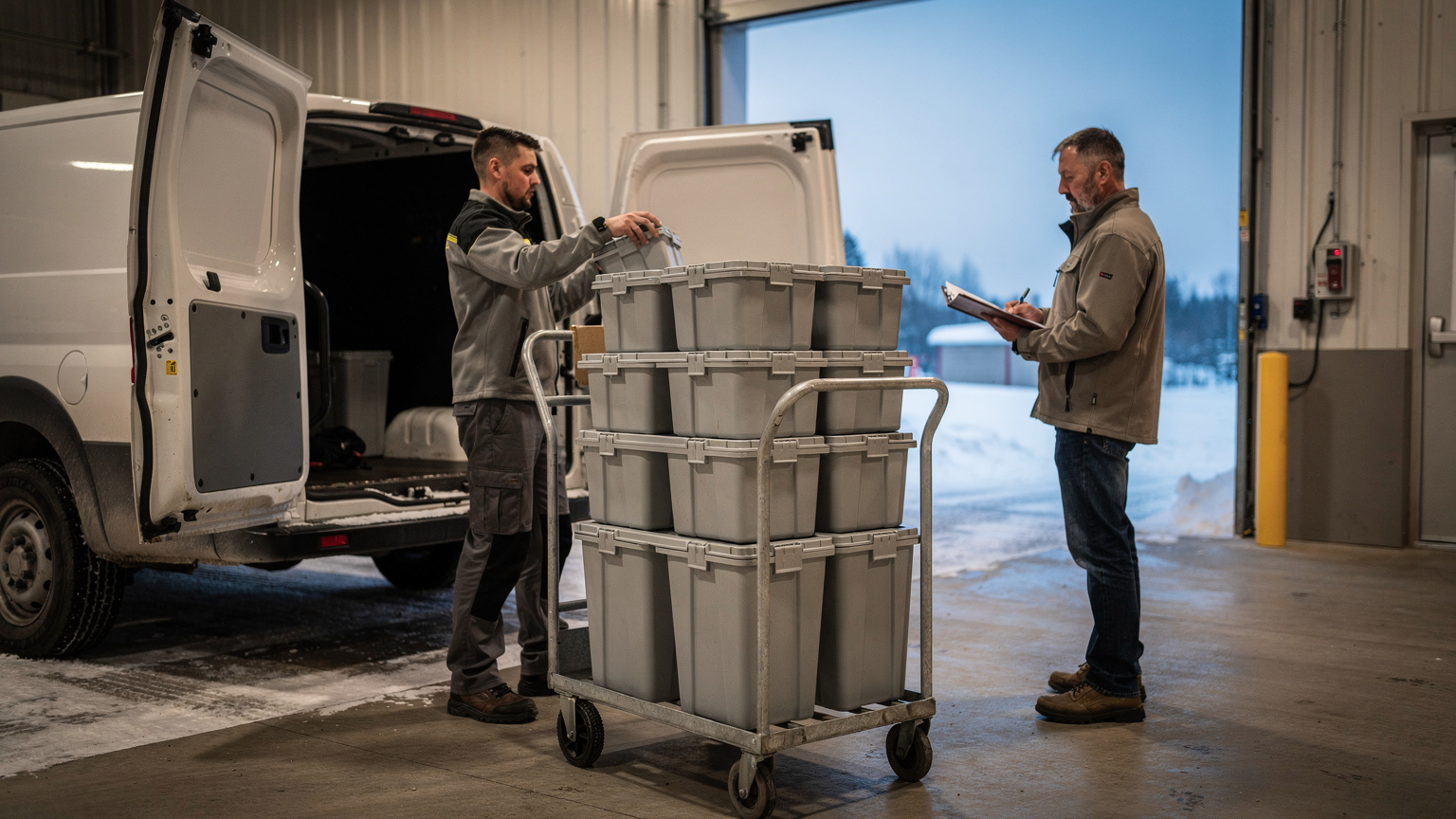
Adjusting the day's plan when wildfires or storms change the roads
Some days the plan has to change after the vans leave. Transport Canada's 2025 annual report describes domestic disruptions, including wildfires, creating more volatile conditions for transportation networks.
A simple routine builds rerouting into everyday dispatch. Check provincial road condition reports before departure. When a storm or fire closes a road, move the affected stops to a later run or another vehicle, then send customers an updated arrival time.
With real-time tracking in Locate2u, dispatchers see every vehicle on a live dashboard, can reassign a stop to another driver and slot new jobs into existing routes, while customers follow progress through their tracking link.
A practical checklist for testing any route optimizer on your own deliveries
A sample route tells you little about your own operation. Run any tool, free or paid, against a recent week of your actual stops.
Work through each row and note how the tool handled it:
| What to check | How to test it on your deliveries |
|---|---|
| Your busiest day | Load every stop from your busiest recent day and see whether the plan finishes within your drivers' shifts. |
| Several vehicles | Split the same stops across your vans and check that each route is balanced and sensible. |
| Windows and service times | Enter promised windows and realistic time at each stop, then confirm the plan respects them. |
| Mid-day changes | Add an urgent order mid-morning and see whether the rest of the route stays intact. |
| Winter and rural legs | Compare planned arrival times with actual times on a snowy or gravel run. |
| Customer updates | Check whether customers receive a tracking link, and whether messages can be written in French and English. |
| Proof of delivery | Confirm drivers can capture a photo, signature and timestamp at each drop. |
Include a bad-weather day in the test if you can. A plan that holds up in a January storm will handle an ordinary Tuesday.
Ask the drivers who run the routes to compare the plan with what they see on the road. Their knowledge of service times and access details improves every plan that follows.
How a pharmacy delivery team cut daily planning from an hour to 10 minutes
SuperPharmacy's case study reports that the business has operated as an online pharmacy in Australia since 2000, delivering prescription medications, over-the-counter products and health essentials to customers nationwide.
As demand for faster delivery grew, its delivery team was spending up to one hour every day planning prescription routes by hand. When an urgent prescription arrived or a delivery needed rescheduling, the route had to be regenerated from scratch.
With customers increasingly expecting same-day prescription delivery, the team needed planning that could keep pace.
SuperPharmacy implemented Locate2u's route optimization to automate daily planning. What once took an hour now takes just 10 minutes, with routes generated automatically from delivery locations, time windows and driver availability. The case study describes this as cutting route planning time by 83%.
The bigger change was flexibility. New prescriptions can be slotted into existing routes during the day without disrupting other deliveries, which enabled SuperPharmacy to offer same-day prescription delivery as a core service.
As the team puts it: "Before Locate2u, we had to generate new routes if we wanted to change anything. Now we can adjust the day's deliveries on the fly."
It is one business's result, and the pattern carries over well to Canada. Picture a pharmacy delivery team in Winnipeg adding prescriptions through a cold afternoon, slotting each one into a live route rather than rebuilding the whole day's plan.
Signs your fleet is ready for a paid dispatch and tracking platform
A free optimizer can carry a small fleet a long way. These signs suggest it's time to look at a paid platform:
- Several vehicles share the same pool of stops each day, and splitting them takes real dispatcher time.
- Customers call to ask when their delivery will arrive.
- You promise delivery windows and need the plan to respect them.
- Same-day orders arrive after routes have gone out.
- Customers want signed, photographed proof of each delivery.
- Addresses get re-entered into a separate app before the day starts.
Each of these points to a gap between planning the day and running it. A dispatch platform closes that gap by keeping planning and live delivery in one place.
With Locate2u dispatch planning, stops are assigned per vehicle and routes can be adjusted during the day. Through the Locate2u driver app, drivers capture proof of delivery with photos, signatures and timestamps for every delivery.
Locate2u is a paid platform from the first day, with no free version. The practical way to judge it is the same as any tool: run it against the checklist above using your own deliveries. The Locate2u pricing page sets out the current plans.
Frequently asked questions
Can a route optimizer handle several hundred stops in one plan?
The reliable answer comes from your own data: load every stop from your busiest recent day, split across your vehicles, and check the plan finishes within shifts and respects every window. Then add an order mid-morning and see how the tool rebuilds the rest of the day.
Is a free route optimizer enough for a one-truck business?
Often, yes. A single-vehicle operator can begin with a free tool, then move to a paid platform once customers expect live ETAs or signed proof of delivery.
Can better routing and customer updates reduce re-deliveries?
A 2024 US analysis of last-mile handovers estimates that 10 percent of last-mile packages need to be re-delivered, at a cost of 1 to 3 percent of revenue for business-to-consumer carriers. Planning realistic delivery windows and sending customers a live tracking link helps more recipients be ready when the driver arrives.
Does a route optimizer still help on long rural runs with few stops?
Yes, though on sparse runs, the gain comes less from stop order and more from grouping rural customers onto the right day and vehicle, so plan those clusters weekly rather than route by route.
A free optimizer is a sensible first step when one vehicle and a short stop list are all you run, and keeping a record of planned against actual kilometres will tell you when that changes. Once several drivers, promised windows and Canadian winter roads enter the picture, Locate2u route optimization builds delivery windows, driver availability and live changes into every plan your team runs.