Same-Day Delivery Software: How UK Couriers and Retailers Hit Their Cut-Offs
Drafted with AI assistance, edited and fact-checked by Sean Flannery. See our editorial policy.
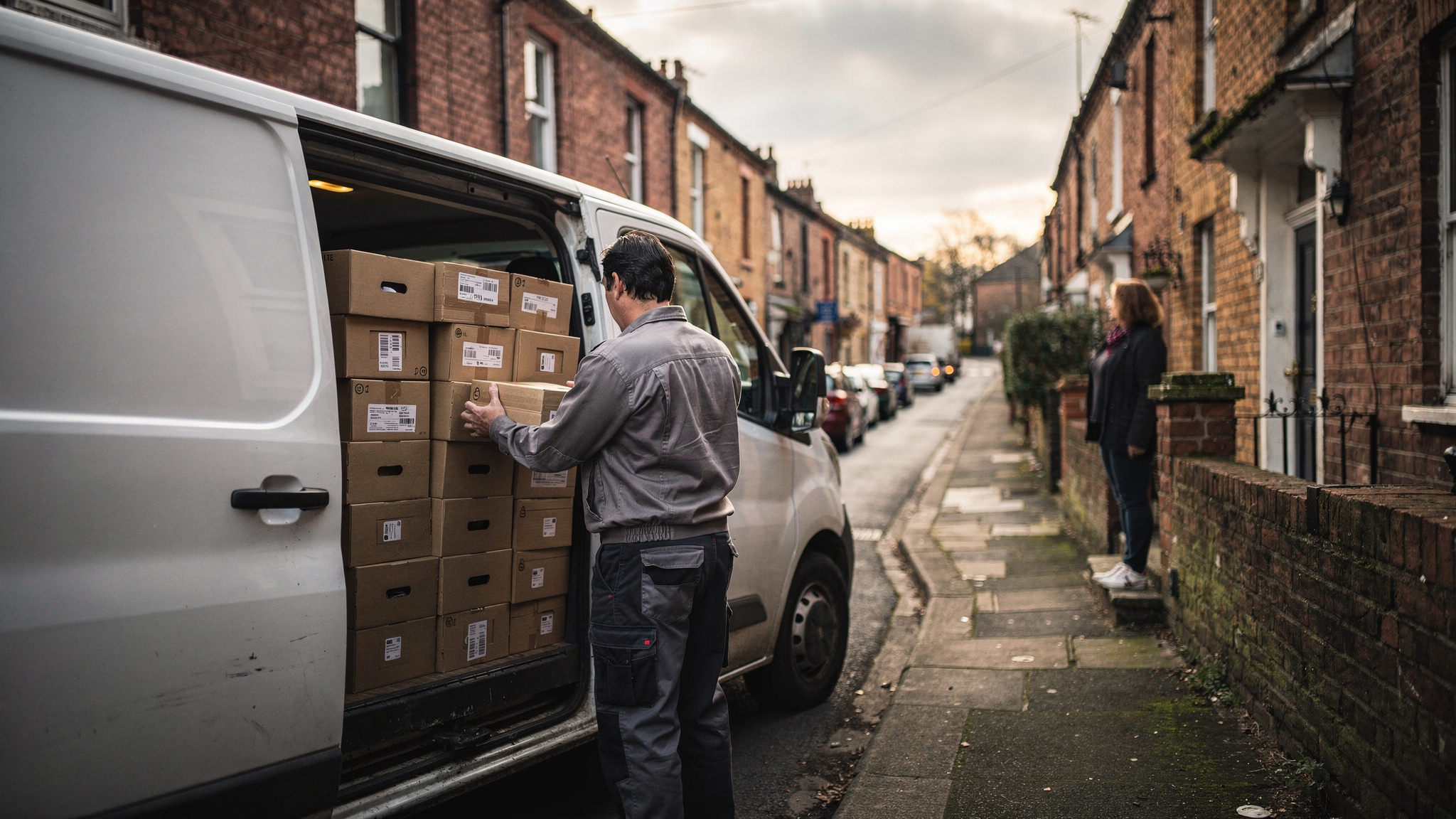
Same-day delivery software takes orders as they arrive, groups them into van routes, assigns drivers and sends live tracking links, so a dispatch team can accept late orders and still meet the cut-off. For UK operators, that means planning for busy town centres, minor-road drops and a growing share of zero-emission vans.
Picture a Thursday afternoon in late November. Orders are still landing after lunch, the high street near the depot is slowing to a crawl, and many of the drops sit on residential side streets.
Good same-day tooling turns that afternoon into a plan. It decides which van takes each order, how late the desk can keep saying yes, and what each customer is told about their arrival.
What same-day delivery software does for a UK dispatch desk
Same-day dispatch is a timing job. Every order carries a promise made at checkout, and the desk has to match it to a van and a slot on a route that may already be moving.
The software handles that match as one connected flow, from the moment an order lands to the photo taken at the door.
Locate2u brings that flow into one platform, with dispatch, route optimisation, live tracking and proof of delivery all working from the same plan.
On a quiet day, a spreadsheet and an experienced dispatcher can keep up. As volume grows, re-planning by hand starts to limit how many late orders the desk can accept.
SuperPharmacy, an Australian online pharmacy operating since 2000, shows what changes when that limit lifts. SuperPharmacy's case study reports that the business cut route planning time by 83% with Locate2u.
Its delivery team had been spending up to one hour every day planning prescription routes manually. If a new urgent prescription came in during the day, the whole route had to be regenerated from scratch.
With Locate2u's route optimisation, that hour became 10 minutes, with routes generated automatically from delivery locations, time windows and driver availability. New prescriptions can now be slotted into existing routes during the day, and that flexibility let SuperPharmacy offer same-day prescription delivery as a core service.
In the team's words: "Before Locate2u, we had to generate new routes if we wanted to change anything. Now we can adjust the day's deliveries on the fly."
That is one business's result, in the Australian market, reported in its own measure.
How growing online spending shapes same-day planning
For retailers running their own vans, online orders are where same-day demand starts. The latest UK figures are worth reading with a dispatch plan open.
The Office for National Statistics retail sales bulletin for April 2026 shows online spending in the three months to April 2026 was 9.3% higher than in the same three months of 2025.
So capacity sized for last year's order book may not stretch to this year's. Review van hours and cut-off times against current volumes, not last spring's.
The monthly picture moves around more. In the same ONS bulletin, the proportion of retail sales made online in Great Britain fell from 28.7% in March 2026 to 28.1% in April 2026.
Demand that climbs over a quarter but shifts month to month suits a plan rebuilt each day around actual orders, rather than a fixed timetable.
A few planning habits help:
- Look at when orders arrive by hour each week, not just how many arrive.
- Move a cut-off later only when afternoon routes regularly finish with spare time.
- Book extra van hours well ahead of the November and December peak.
- Keep order intake connected to dispatch, so a spike shows on the plan the moment it happens.
Planning van routes for minor roads and busy town centres
Minor roads carry a big slice of van work across Great Britain. According to the Department for Transport's road traffic estimates for 2025, van traffic on minor roads was 20.8 billion vehicle miles, 35% of total van miles, out of 58.8 billion van miles overall.
That makes side-street time worth planning for on its own terms. Narrow streets, parked cars and tight turning space add minutes that a straight distance calculation leaves out.
Zone first, then sequence. Group drops into compact areas so a van works one estate or one side of town before moving on, instead of crossing a congested centre several times.
Where windows allow, keep town-centre drops away from the school run and the evening commute. A short hop through the centre takes longest at weekday peaks.
Then let the software handle the sequencing. Locate2u's route optimisation builds routes around delivery locations, time windows and driver availability, so the dispatcher sets the rules and the routes follow them.
Back on that November Thursday, the afternoon drops split into tight zones, each worked by the nearest van, instead of one route threading through the busiest streets for every late order.
Building realistic stop times and access notes for city drops
A route is only as accurate as the time it allows at each door. Drive time is only part of the story. Finding a place to stop, walking to reception and handing over the goods all count.
Set stop times by type of drop rather than one figure for everything. A house on a quiet street, a flat above a shop and the goods-in door of an office block each take a different amount of time.
Then refine with real records. Locate2u's proof of delivery captures photo evidence, signatures and timestamps for every delivery, giving dispatchers a record to compare planned stop times against.
Access notes do the rest. Record where to stop, which entrance to use, any door codes or gate hours, and where the nearest loading bay sits for a pedestrianised street.
Save those notes against the address, not the order, so they appear on every future delivery there. A driver visiting a building for the first time then arrives with the same knowledge as someone who goes there every week.
Stopping and loading arrangements vary by road and by area, so check the current requirements with the local council or, in London, with Transport for London.
Slotting late orders into live routes before the cut-off
The cut-off is where same-day capacity is decided. Move it later and the desk accepts more orders. Move it beyond what the routes can absorb and afternoon windows get squeezed.
A single cut-off for every postcode can sit awkwardly with UK geography. A long rural run needs to leave earlier than a dense town-centre round where drops sit close together, so set separate cut-offs by zone.
Once vans are on the road, each late order needs a quick answer. Which van can take it without pushing other customers outside their windows?
Answering that by hand means rebuilding routes. With Locate2u's dispatch planning, new orders can be slotted into existing routes on the fly, without disrupting other deliveries.
Speed of intake matters just as much. An order that has to be re-keyed waits in an inbox while the vans drive away from it.
Locate2u's integrations connect online stores and order systems, so a new order arrives in dispatch automatically with the delivery window the customer chose at checkout.
A simple afternoon routine keeps late orders flowing. Check each one against the nearest van's remaining stops, accept it if it fits a window, and send updated arrival times to any customer whose slot moves. When nothing fits, offer the next morning at checkout.
Review the pattern weekly. If late orders keep fitting comfortably, that zone's cut-off can move later. If they keep squeezing the last stops, bring it forward or add a van for the afternoon.
How live tracking and proof of delivery keep each same-day promise
A same-day delivery goes well when the customer is ready to receive it and both sides have a clear record of the handover. Live tracking supports the first. Proof of delivery supports the second.
First-attempt delivery is worth planning for. A 2021 IMRG report on failed delivery, based on 2020 volumes, put the total potential cost at £5.7bn, or £36 per event across consumer, retailer and carrier.
Those figures are from 2021, so treat them as background. The practical step is to give every recipient what they need to be ready when the van arrives.
Locate2u's real-time tracking gives customers a live link to follow their delivery, and automated notifications keep them informed about its status.
The dispatch desk gets the same live view across every van. If a route runs behind, the team can see it early and reassign the next drop or update the customer's arrival time.
At the door, proof of delivery records a photo, a signature and a timestamp. The customer gets a clear record of the handover, and the business gets a tidy file for every completed drop.
Those records feed straight back into planning. Photos of where goods were left help the next driver find the same spot, and timestamps show which addresses need a longer stop time.
Planning dispatch around a mixed and electrifying van fleet
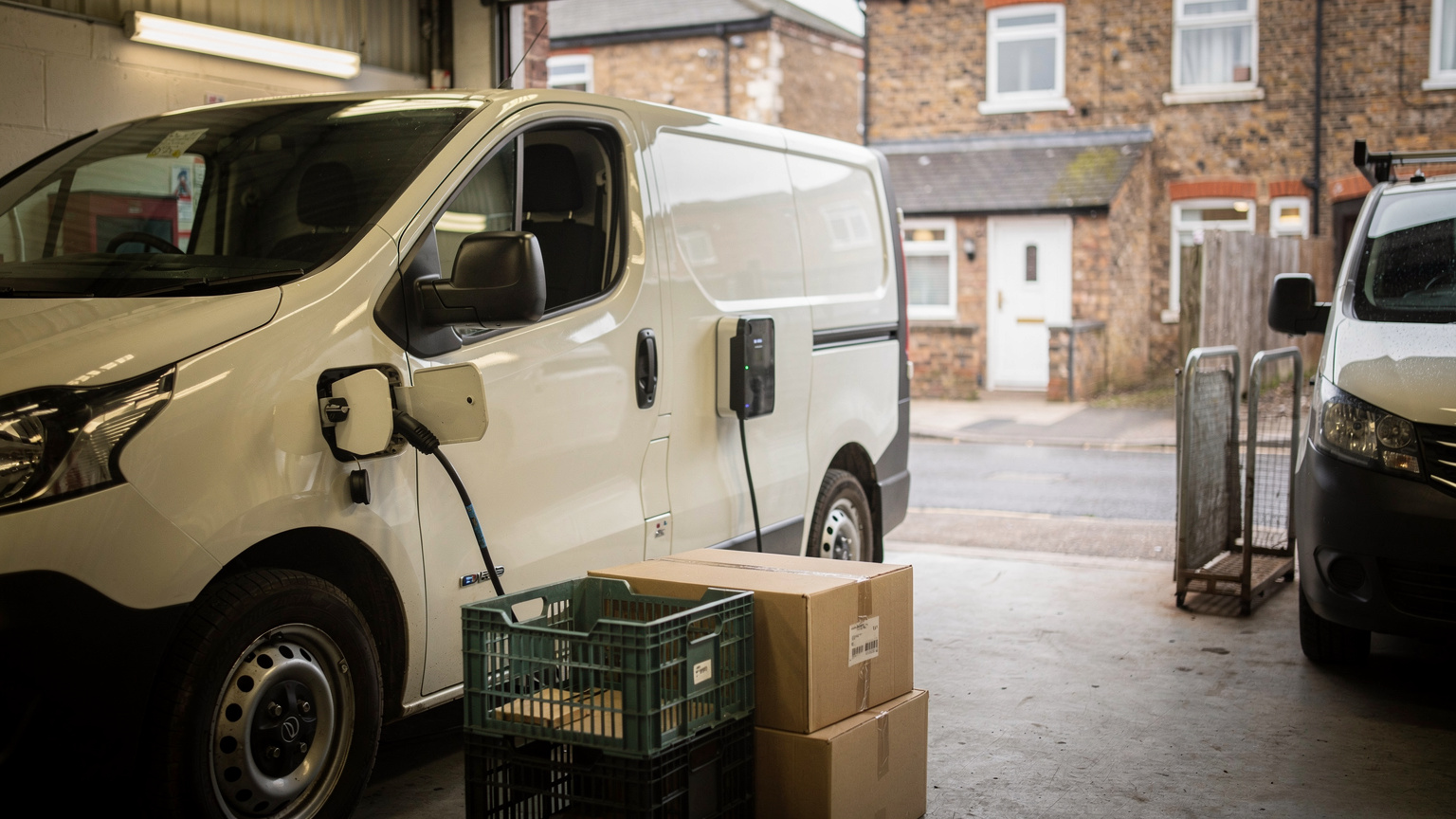
UK van fleets are changing shape. Department for Transport vehicle licensing statistics show zero-emission LGVs accounted for 9% of all new registrations in 2025, compared to 6% in 2024.
For a dispatcher, that means more shifts with different vans in the yard: different sizes, payloads and ranges. Routes work best when they are built for the van that will actually drive them.
Give each vehicle a profile covering load space and, for electric vans, a realistic range for the day's conditions. Compact town rounds suit vans with less range, while longer rural runs go to vans that can cover the miles comfortably.
Plan charging into the day as well. If electric vans return to the depot between rounds, shape the morning route so the charge taken at lunchtime covers the afternoon.
When comparing platforms, check that routes can be assigned by vehicle type and capacity, so a bulky late order goes to a van with room for it.
A checklist for choosing a same-day delivery platform
Sample data always plans neatly. The real test is your own busy Thursday, with real addresses, real cut-offs and late orders arriving mid-afternoon.
Use these checks when comparing platforms:
| What to check | What good looks like | Why it matters for same-day |
|---|---|---|
| Order intake | Online orders arrive in dispatch automatically, with the chosen window | Late-morning orders reach a route without re-keying |
| Live re-planning | New orders slot into routes already on the road | More orders accepted before the cut-off |
| Zones and cut-offs | Separate windows for rural runs and town-centre rounds | Checkout promises match what each route can deliver |
| Stop times and access notes | Stop duration by drop type, notes saved to each address | Realistic timings for city drops |
| Vehicle profiles | Routes assigned by van type, capacity and range | Mixed and electric fleets planned with confidence |
| Customer updates | Live tracking links and automated status notifications | Recipients ready when the van arrives |
| Proof of delivery | Photo, signature and timestamp on every drop | Clear records for customers and for planning |
| Reporting | On-time against window, first-attempt rate, stops per van | Shows when to move a cut-off or add a van |
| Pricing model | Billing basis, contract length and any setup fees set out clearly | Costs you can plan around as volume grows |
During a demo, ask to see a real day of your orders planned, with a few late orders added mid-afternoon. Watch how quickly the routes update and what each customer is told.
For a wider look at dispatch, tracking and reporting beyond same-day work, the guide to choosing delivery management software covers each area in more depth.
Score every platform against the same rows. A short list of answers to the same questions makes the final decision far easier to explain to the rest of the team.
Frequently asked questions
What should you measure to know if same-day delivery is working?
Track on-time arrivals against the window the customer was promised, first-attempt delivery rate, stops completed per van and the number of late orders accepted after midday. Reviewing those four weekly shows whether the cut-off can move later or the route plan needs more capacity.
Is same-day delivery software only for courier companies?
No. Retailers with their own vans, pharmacies, wholesalers and trade suppliers use the same dispatch, routing and tracking tools to deliver on the day, and the deciding factor is whether orders arrive during the day and need to reach customers before evening.
Can one platform handle different cut-off times for rural and city orders?
Check that the platform lets you set separate order windows or zones, so earlier cut-offs apply to longer rural runs and later ones to dense town-centre rounds. That keeps promises at checkout matched to what each route can really deliver.
How do orders get from an online shop into same-day routes?
Through an integration or API that pulls each new order, with its address and chosen window, straight into dispatch. Removing manual re-keying is what lets a late-morning order join a route within minutes rather than waiting for the next planning round.
Same-day delivery runs best when the cut-off, the routes and the customer updates all come from one plan that adjusts as orders arrive. Start by measuring on-time arrivals against promised windows, then look at where zoning or live re-planning would let the desk accept more afternoon orders. When you are ready to compare options, Locate2u's UK pricing page sets out the plans.