How to Choose a Last Mile Delivery Platform for UK Van Rounds
Drafted with AI assistance, edited and fact-checked by Sean Flannery. See our editorial policy.
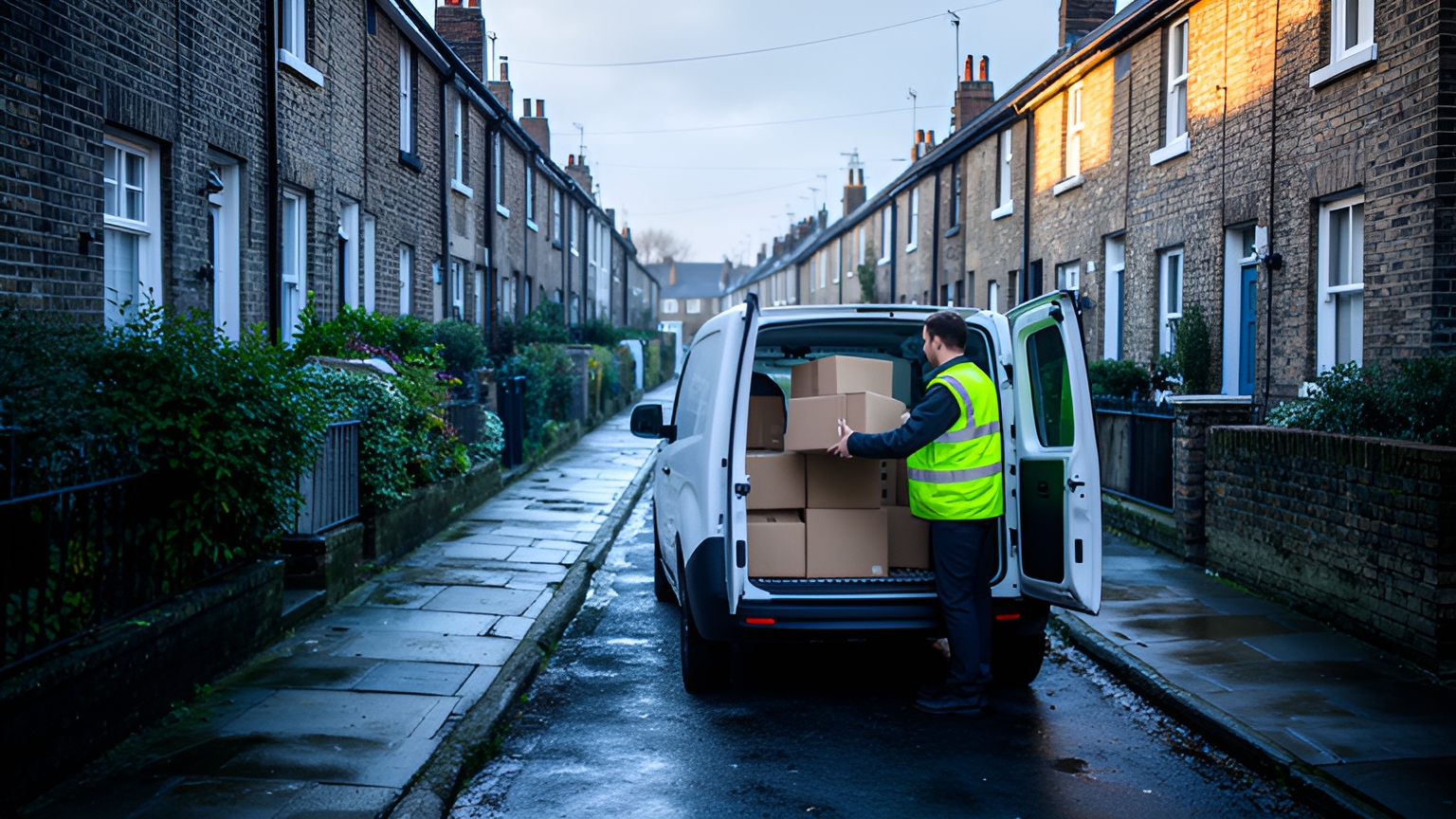
A last mile delivery management platform plans, dispatches, tracks and confirms the final leg from depot to doorstep. For UK van fleets, the useful test is whether it matches compliant vans to emissions zone rounds, sends live ETAs, records photo proof of delivery and lets dispatchers re-sequence rounds when weather or late orders change the day.
Each of those tests has a local answer. Which van takes the round into Birmingham's zone? What does a customer on a narrow terraced street see before the van turns in?
And when heavy rain slows the morning, how quickly can the plan change?
What a last mile delivery platform handles for a UK van fleet
The final leg is the part of the journey customers see. It starts when a van leaves the depot and ends with the goods in someone's hands.
A last mile delivery management platform is the software that runs that leg. Orders come in from your shop, order system or customer service team, and the platform turns them into rounds.
Each round gets a van, a driver and a running order on the driver's phone. Customers get an arrival time and a tracking link.
Dispatchers see every van on one map. Each completed drop comes back to the office with a photo, signature or note attached.
For a UK van fleet, a few extra jobs matter just as much:
- Matching vans to rounds, so vehicles that meet an emissions zone standard take the zone work and electric vans get rounds that suit their range.
- Sequencing stops on dense residential streets, where a sensible order saves turning in narrow roads.
- Re-planning during the day, so late orders and weather delays become edits rather than a fresh start.
- Planning collections and returns on the same round as deliveries.
Locate2u brings route optimisation, live tracking, customer notifications and proof of delivery into one platform, with a driver app that carries each round from the first stop to the last.
The outcome to aim for is easy to describe. More deliveries completed on the first visit, rounds that finish on time, and drivers who start the day with a clear plan.
Planning rounds around weekday peaks and minor-road miles
Your rounds share the road with a great many other vans. The Department for Transport's road traffic estimates show van traffic in Great Britain increased by 1.3% and reached 58.5 billion vehicle miles in 2024, with van traffic on minor roads at 20.6 billion vehicle miles, 35% of total van miles.
The same DfT release shows vans travelled at similar times of day to cars in 2024, with peaks on weekday mornings and afternoons and fewer vans on the road at weekends.
Both patterns are planning inputs. Time-windowed drops are easier to keep when arrival estimates reflect the time of day, so check that a round planned for an early start shows different timings from the same round planned after lunch.
Minor roads cover residential streets and rural lanes alike. That is where stop order earns its keep: a round that doubles back along a narrow street, or crosses the same busy junction twice, adds time without adding a drop.
Planning time is part of the picture too. SuperPharmacy's case study reports that its delivery team spent up to one hour every day planning prescription routes by hand, and any change meant regenerating the route from scratch.
With Locate2u's route optimisation, that daily planning takes 10 minutes, the 83% cut in route planning time this Australian online pharmacy reports, with routes built from delivery locations, time windows and driver availability.
The flexibility mattered just as much. New prescriptions can be slotted into existing routes during the day without disrupting other deliveries, which let SuperPharmacy offer same-day prescription delivery as a core service.
In the team's words: "Before Locate2u, we had to generate new routes if we wanted to change anything. Now we can adjust the day's deliveries on the fly."
A simple way to try this on British streets: time your own morning plan for a week, then run one of those days' orders through a platform on a demo and compare.
Matching Euro 6 and electric vans to clean air zone rounds
Zero emission vans are joining UK fleets in growing numbers. The Department for Transport's vehicle licensing statistics report 31,000 road using zero emission light goods vehicles registered for the first time in the UK in 2025, an increase of 36% compared to 2024.
For a dispatcher, a mixed yard means each van brings its own strengths. An electric van and a Euro 6 diesel can sit side by side on the fleet list and still suit very different rounds.
Emissions zones add a second input. GOV.UK's guidance on driving in a clean air zone says the zones operate 24 hours a day, 7 days a week, every day of the year. Vehicle standards and charges vary by zone.
Check the current requirements for each zone on GOV.UK before planning zone rounds, and with Transport for London for the ULEZ, the Congestion Charge and the Direct Vision Standard before planning London work.
The planning step is to make vehicle details part of the plan. Record each van's Euro standard or fuel type, mark the delivery addresses inside a zone, and send zone rounds only to vans that meet the standard.
Locate2u's routing accounts for vehicle types and driver availability when it builds schedules, and its fleet management tools keep the vehicle side of the operation in the same place as the rounds.
Electric vans bring one more input: range. Ask whether you can keep longer rounds, such as a run out to rural villages, on vans with the range for them, or set a round-length limit for each electric van.
Then test it directly. Load a real day that includes zone addresses and see whether every zone stop lands on a compliant van before anyone leaves the yard.
Live ETAs and delivery preferences that help parcels arrive first time
First-time delivery is where good planning meets the doorstep. Consumer research reported by CILT UK found one in three parcels fails on the first attempt and 83% of consumers report at least one delivery issue, with parcels left in insecure safe places, at 40%, and last-minute time-slot changes, at 36%, among the issues most commonly reported.
Both of those come down to information. A customer who knows when the van is coming, and a driver who knows where the customer wants the parcel, are working from the same plan.
Live ETAs carry the first half. Locate2u's real-time tracking gives dispatchers a live view of every van and lets you share a tracking link with each customer, backed by automated notifications as the delivery approaches.
When the timing moves, the customer hears early. A last-minute change becomes a planned one, with time to arrange a neighbour or a safe place.
Delivery preferences carry the second half. Useful ones include a preferred safe place, a neighbour's address, a gate or door code, extra time to answer the door, and an accessible drop point for customers who need one.
The test is where those notes end up. A preference entered at checkout should appear on the driver's screen at that stop, not in a separate inbox back at the office.
All of this supports the driver's own judgement at the door. Each stop starts with what the customer asked for.
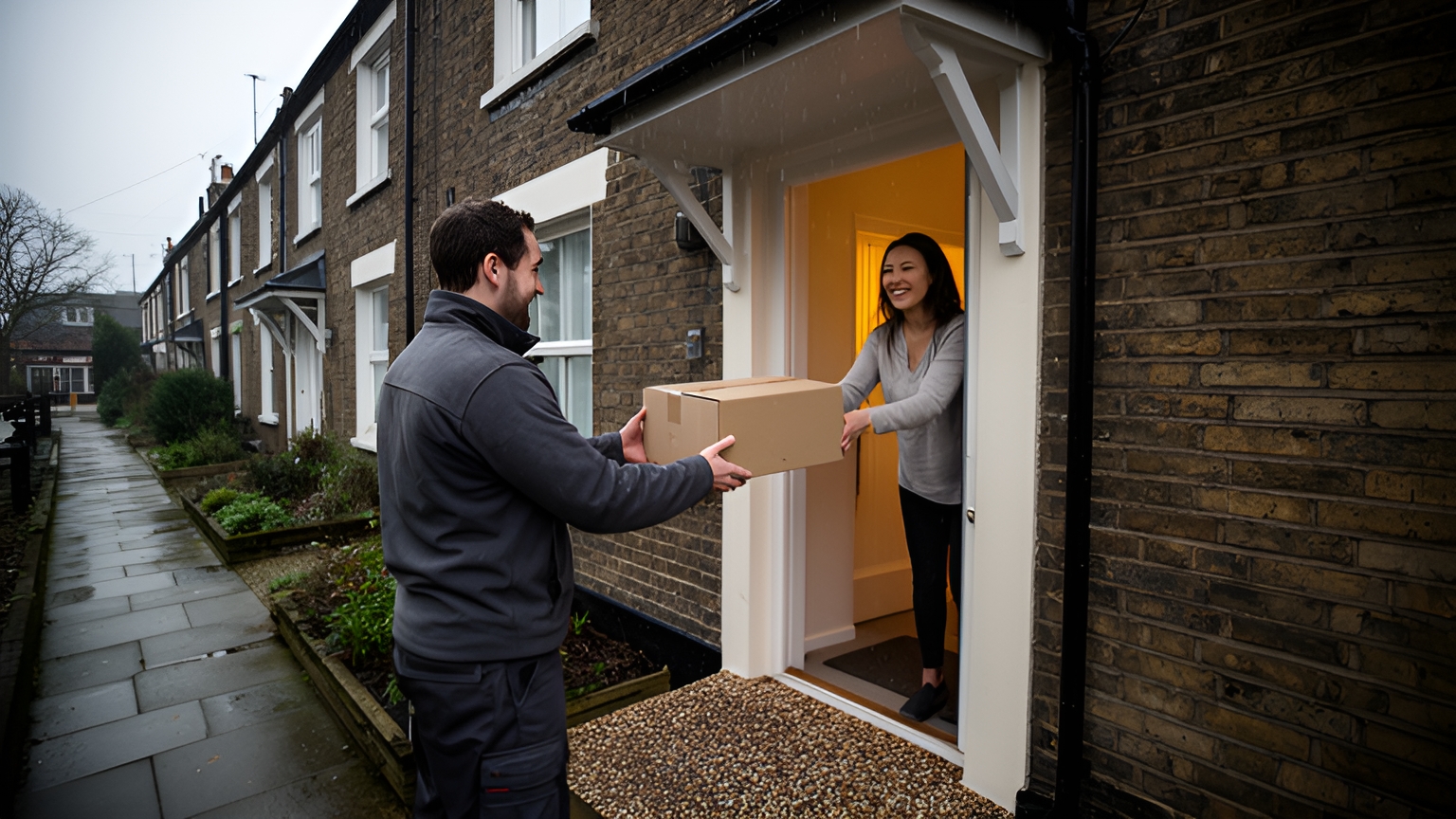
Proof of delivery that gives customers and teams clear records
Proof of delivery is the record that closes each drop. A photo, a signature, a timestamp and a location together show what arrived, where and when.
Locate2u's proof of delivery captures photos, signatures and timestamps for every delivery, with location data attached, so the record reaches the office as the driver moves on.
It works hand in hand with delivery preferences. The customer's chosen safe place tells the driver where the parcel should go, and the photo shows it went there.
Rain makes that photo more useful. In the consumer research reported by CILT UK, weather exposure was among the issues most commonly reported, at 37%, so a photo of a parcel tucked into a porch gives the customer confidence before they get home.
For the office team, a customer query about a parcel becomes a quick look at the record. For drivers, it is a clear account of a job done well.
Adjusting the day's routes as new orders arrive
The morning plan is a starting point. Late orders arrive, a customer asks for a different slot, or a van comes off the road unexpectedly.
A good platform treats each of those as an edit. The dispatcher drops the new stop into the round passing closest, sees how every later arrival time shifts, and confirms.
With Locate2u, dispatchers can slot new orders into existing routes during the day without disrupting other deliveries. The live dashboard shows when a van is running behind, so a later stop can move to another vehicle in good time.
The updated running order goes straight to the driver app. Drivers keep working from one clear list, with no call to the office needed to confirm what changed.
Customers on the affected round see their new ETA through the same tracking link, well before the van reaches their street.
On a demo, add an urgent order to a loaded round halfway through the day. Then look at where the stop lands, how the other customers' arrival times move and what the driver sees.
Keeping rounds moving on heavy-rain days and through seasonal peaks
Rain is part of planning UK rounds. In the present-day climate, the Met Office reports an average of seven days per year, six to nine days, with more than 80mm of rain in a day.
The same release points transport operators to hazard summaries covering flooding, snow and ice. They are worth reading before winter planning starts.
On one of those days, the live map shows the effect early. Vans move more slowly, arrival estimates start to slip and a flooded road can cut off part of a round.
The dispatcher's job is to adjust before the delay reaches customers. Re-sequence rounds around closed roads, move later stops to a van with spare time, and send revised ETAs while customers can still plan around them.
Saved delivery preferences help here too. A customer who has already named a porch, a neighbour or a sheltered spot gives the driver a dry option without a phone call.
Seasonal peaks call for the same flexibility on a larger scale. The Office for National Statistics reports that online spending in July to September 2026 was 7.4% higher than in the same quarter of 2025, and more online orders mean more home drops to plan.
Before the run-up to Christmas, look back at the previous peak's round data: which rounds ran long, which days were busiest and where vans had room for more. Build peak rounds from that picture rather than from a standing plan.
There is plenty to gain from the vans already in the yard. This guide to improving last mile delivery without adding vehicles looks at ways to lift capacity before peak.
A checklist for testing a platform on your own UK rounds
The quickest way to judge a last mile delivery management platform is on a real day's work. A demo on sample data shows how a platform looks, while a test on your own orders shows how it works.
Bring a real day's order export, your van list with each vehicle's Euro standard or electric range, your usual delivery windows and a few addresses on streets your drivers know well.
Then work through this list and score each row as strong, partial or missing for your operation.
| What to check | How to test it | What good looks like |
|---|---|---|
| Order import | Load a real day's export or connect your order system | Orders arrive ready to plan, with no retyping |
| Time of day | Plan the same orders for an early start and an afternoon start | Arrival times that change with the time of day |
| Street order | Open a dense residential round on the map | Stops follow the street, with no doubling back |
| Zone matching | Add each van's Euro standard or fuel type and include zone addresses | Zone stops land only on compliant vans |
| Electric range | Plan a long rural round with an electric van selected | The round fits the van, or you can set a limit |
| Customer updates | Send yourself a tracking link, then change the round | A clear ETA that updates when timing moves |
| Delivery notes | Add a safe place and door code to a test order | The note appears on the driver's screen at that stop |
| Proof of delivery | Complete a test drop on the driver app | Photo, signature, time and location reach the office |
| Mid-day changes | Add an urgent order to a loaded round | The stop is slotted in and the driver's list updates |
| Patchy signal | Complete a drop with mobile data switched off, then reconnect | The record syncs once the phone is back online |
| Collections | Add a return pick-up to a delivery round | The pick-up sits in the same round as the drops |
When the list is ready, book a call with the Locate2u team and run it on your own orders. The same call is the right place to talk through setup and cost for your fleet.
Frequently asked questions
Do clean air zone charges apply to vans at night or at weekends?
GOV.UK's guidance on driving in England's charging zones says the zones operate 24 hours a day, 7 days a week, every day of the year. A platform's trip history then helps match each zone entry to the right van.
What is the difference between last mile and final mile delivery?
CILT UK describes final mile deliveries as the last step of the supply chain, when goods are delivered directly to the end customer's doorstep. This guide uses last mile and final mile for that same leg, from the depot or hub to the recipient.
Will a delivery platform work with the order system you already use?
Check how orders will reach the platform before anything else, because re-keying orders by hand slows every morning plan. Locate2u lists its ready-made integrations and API options on its integrations pages, a useful list to compare against your own order, e-commerce and accounting tools.
What should you bring to a delivery platform demo?
Bring a real day's order export, your van list with the Euro standard or electric range for each vehicle, and your usual delivery windows, so the routes you see reflect your own streets. You can book a call with the Locate2u team on the UK request access page to run that test.
The right platform is the one that handles an ordinary UK weekday well: the zone round, the terraced streets, the late order and the wet afternoon. Start with the checklist, then see how Locate2u's last mile delivery tools plan, track and confirm a real day of your own rounds.