Fleet Management Optimisation: How UK Delivery and Service Fleets Get More Jobs From Every Van
Drafted with AI assistance, edited and fact-checked by Sean Flannery. See our editorial policy.
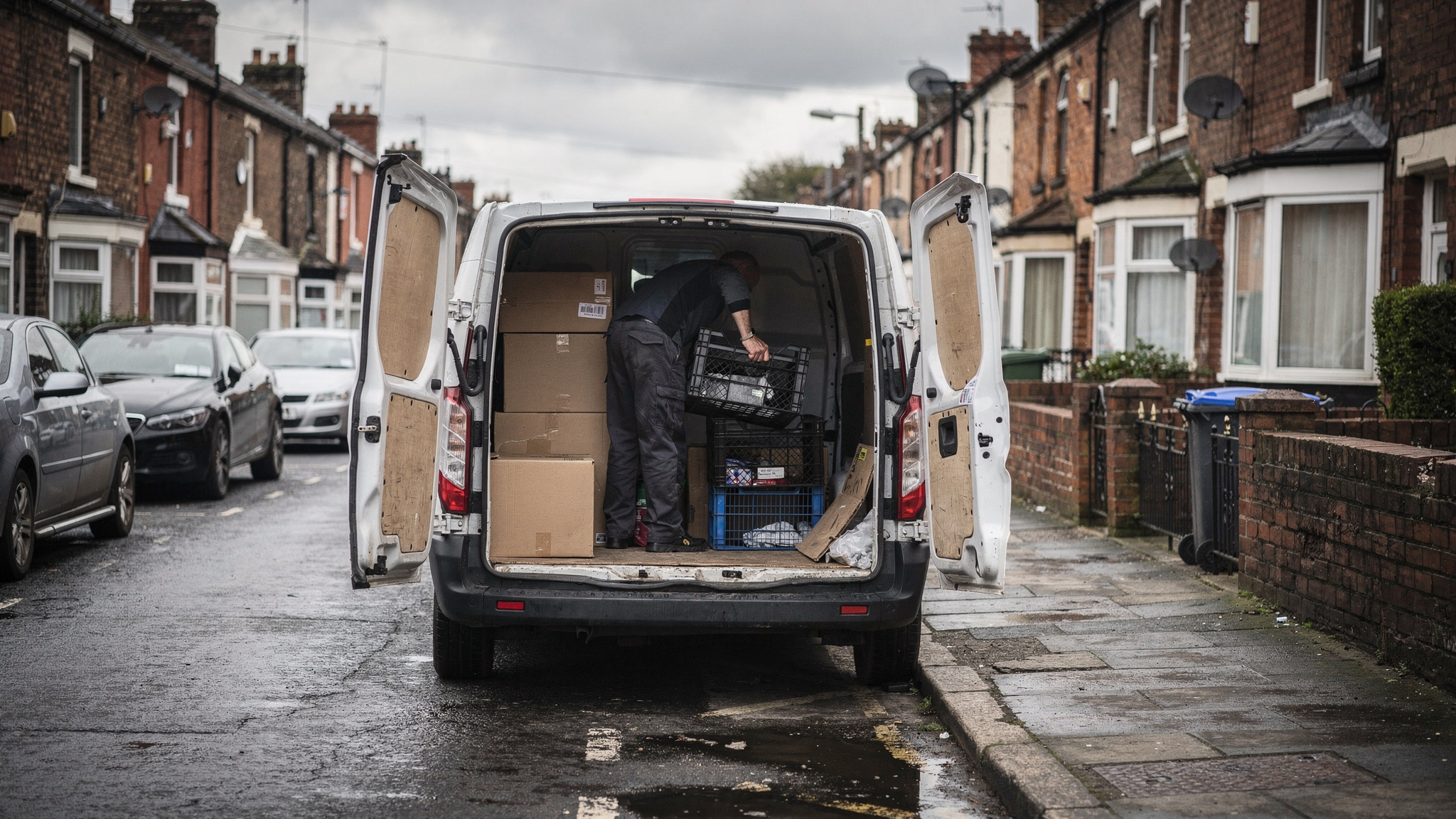
Fleet management optimisation means getting more completed jobs from the vans you already run: planning routes around real urban speeds, assigning each job to the right vehicle, adjusting the plan as work changes during the day, and keeping vans maintained and available. For UK fleets, slow town traffic and repeat delivery attempts are two good places to start.
What optimising a UK van fleet looks like on a normal working day
An optimised day starts when the order list becomes routes, either the evening before or first thing in the morning.
Every job has an address, a time window and a type of work: a parcel drop, a pallet of plasterboard, a boiler service. The plan puts those jobs in a sensible order for each van and checks that every window is achievable.
Then the vans go out and the day starts to change. A customer moves their slot. An urgent job arrives. A site asks for an earlier drop.
On a well-run day, those changes slot into the routes that already exist. Customers get updated arrival times, drivers see the revised sequence, and every completed job leaves a timestamped record. The office knows what was done, where and when, without a pile of paperwork to reconcile at the end of the day.
That is fleet management optimisation in practice. Good planning in the morning is only part of it. The rest is how easily the plan adapts once the vans have left the yard.
SuperPharmacy's case study shows this clearly. SuperPharmacy is an online pharmacy operating in Australia. As customers increasingly expected same-day delivery for their prescriptions, its delivery team was spending up to one hour every day manually planning routes. Whenever an urgent prescription came in or a delivery needed rescheduling, the entire route had to be regenerated from scratch.
The case study reports that after moving to Locate2u route optimisation, the same planning takes just 10 minutes, an 83% cut in route planning time for this one Australian pharmacy. New prescriptions can also be slotted into existing routes during the day without disrupting other deliveries. That flexibility let SuperPharmacy offer same-day prescription delivery as a core service.
The pattern behind that result, a planned morning run plus urgent work added during the day, is the same pattern a UK parcel, parts or trade van fleet works to.
As the team puts it: "Before Locate2u, we had to generate new routes if we wanted to change anything. Now we can adjust the day's deliveries on the fly."
Locate2u's route optimisation builds routes from delivery locations, time windows and driver availability, and supports real-time adjustments throughout the day.
A simple test for your own fleet: time tomorrow's planning from the first order to the last van leaving the yard. That gives you a baseline to judge any change against.
How realistic urban speeds keep van schedules achievable
A schedule is only as good as the travel times inside it.
The Department for Transport's travel time measures for local 'A' roads put the average speed on urban classified local 'A' roads in England at 16.2 mph for the year ending December 2024.
That slow town pace should shape the targets you set for each route.
A route built on rural or motorway assumptions looks tidy at the depot and falls behind by lunchtime. A route built on town speeds finishes when it says it will.
Four adjustments keep town schedules achievable:
- Set travel expectations by area. Plan town centre stops with slower travel than ring roads and rural runs, rather than using one speed for the whole map.
- Give each job type its own service time. Unloading bulky materials at a building site takes longer than handing over a parcel, and the plan should reflect that.
- Compare planned arrivals with actual arrivals. Tracking history shows where the plan and the road disagree, street by street, so the next plan can be corrected.
- Plan ahead for winter. When snow and ice warnings are issued, widen time windows and trim stop counts before the vans leave.
The result is a schedule drivers can finish with confidence, and arrival times customers can rely on.
How live ETAs and proof of delivery help more jobs finish first time
A repeat visit is a whole extra stop: the drive back, the parking and the walk to the door.
IMRG's Valuing Home Delivery Review 2021 used an average carrier cost of £1.65 for each repeat delivery attempt. It is a 2021 model estimate rather than a measured cost, but it gives you a reasonable starting point for putting a value on first-time completion.
Illustrative example, using assumed inputs: a van that makes 5 repeat attempts a week and works 50 weeks a year makes 250 second visits. Multiply those 250 visits by IMRG's £1.65 and you have the carrier-cost element of repeat attempts for that van over a year.
That covers the visits alone. Driver time and the capacity those stops take away from new work come on top. Swap in your own figures from your delivery records to see what first-time completion is worth to your fleet.
Two things help a job finish first time. The recipient knows when the van is coming, and the driver arrives with everything needed to complete the handover.
Live ETAs take care of the first. A tracking link sent ahead of arrival lets the recipient watch the van approach and be ready, or arrange for a site manager or neighbour to receive the goods.
Locate2u's real-time tracking gives each customer a live tracking link and sends automated notifications about their delivery status, so they know when to expect the van without phoning the office.
Proof of delivery takes care of the record. Each stop can capture a photo, a signature and a timestamp, so the office, the driver and the customer all have the same clear picture of what arrived and where.
Add delivery notes to each job as well: gate codes, site contacts, loading bay details. The driver then arrives with the information that makes a first-time handover likely.
A practical check: pull last month's repeat attempts and sort them by postcode area and time of day. Where they cluster, adjust that delivery window before you rebuild the route.
How in-day dispatch changes add jobs without replanning the whole fleet
New work arrives once the vans have left: an urgent repair, a missing part, a customer who rebooks for the afternoon. Each one needs a van, and the best choice is often a van that is already nearby and has room in its schedule.
Replanning the whole fleet for one new job moves stops that customers have already been told about. Insertion works better. The new job goes into the route where it fits best, and everything else stays put.
The process is short. Check where every van is right now. Test the new job against the vans with the closest stops and spare time before their next window. Insert it where it adds the least extra driving while keeping every existing window intact. Then send updated ETAs to the customers affected.
That least-extra-driving test matters. The van that is free first is not always the van that adds the fewest miles, so compare the extra distance before you accept the first option.
Locate2u's dispatch planning gives the dispatch team a live view of every vehicle and lets new jobs be slotted into existing routes during the day without disrupting other deliveries. If a van is running behind, a later job can be reassigned to another vehicle and the receiving customer told the revised arrival time.
For more on how routes re-sequence as conditions change, see the guide to dynamic route optimisation.
One habit makes insertion work even better: build a little slack into every route. A van planned to the last minute has nowhere to put a new job, while a van with a small buffer can absorb one.
How to match each job to the right van in a mixed fleet
A mixed van fleet is a strength when each job lands on the vehicle best suited to it.
A compact van handles narrow terraced streets and tight town centre kerbs. A large van carries a pallet of tiles or the full kit for a day of service calls. An electric van suits predictable local rounds that bring it back to base for charging.
The gains come from assigning work by fit rather than by whichever van happens to be free first. This table gives a starting point for tagging recurring jobs.
| Job type | Van to favour | What to check |
|---|---|---|
| Multi-drop parcels in dense town centres | Compact van | Kerb access and short stop times |
| Heavy or bulky trade materials | Large van | Load weight and unloading space on site |
| Service visits with tools and parts | Van fitted with the right kit | Stock on board before the van leaves |
| Short, repeatable local rounds | Electric van | Route mileage history and return-to-base charging |
| Jobs inside central London | Vehicle suited to the area | Grouping jobs onto fewer vans and days, plus current Transport for London requirements |
Locate2u's routing takes vehicle types and driver availability into account when it builds routes. Job requirements and van capabilities are matched in the plan itself, rather than worked out at the yard gate each morning.
For central London work, the Congestion Charge rose at the start of 2026, so it pays to group those jobs onto as few vans and as few days as your customers' windows allow. Check the current Congestion Charge, ULEZ and Direct Vision Standard requirements with Transport for London before assigning jobs there.
A quick way to start: list each van's usable load space, kerb access and typical daily range, then tag every recurring job with the van type it needs. That tagging alone makes the next plan sharper.
How planned maintenance keeps large vans available for work
The Driver and Vehicle Standards Agency's MOT test results by class of vehicle show a 34.00% initial fail rate for Class 7 goods vehicles, those between 3,000 and 3,500 kg gross vehicle weight, in 2025 to 2026, across 1,107,819 tests.
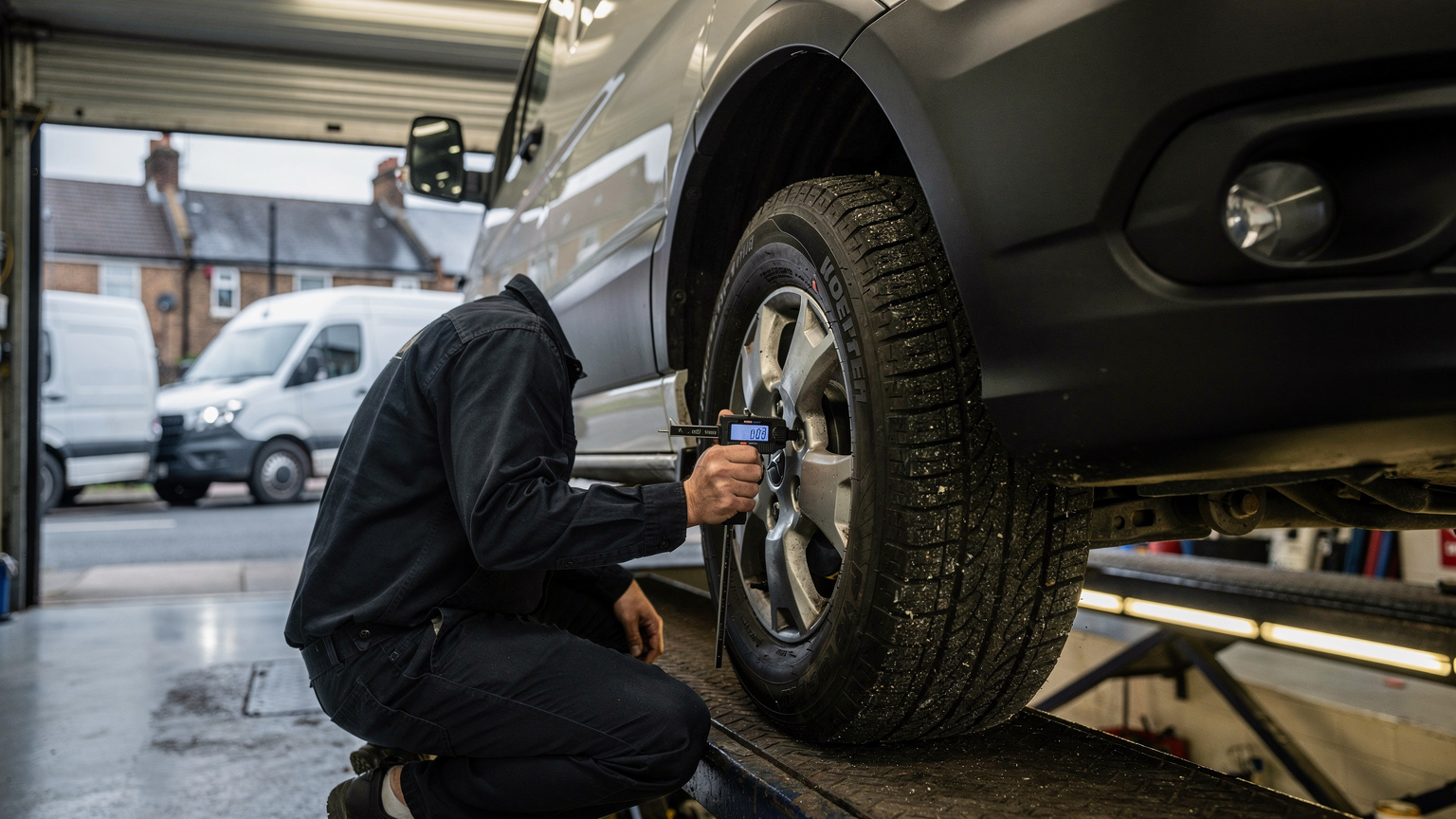
For fleets built around large vans, that is a good reason to plan servicing ahead of each test. Book services by mileage as well as by date, using each van's tracking history. Schedule pre-test checks a few weeks early, on a quieter day, so the van's work can be spread across the fleet.
When a van is booked in, plan the day without it, so the remaining routes are realistic from the start. Locate2u's live dashboard of every vehicle makes it straightforward to rebalance work while one van is off the road.
Operators should check current testing and maintenance requirements with the Driver and Vehicle Standards Agency.
How to plan capacity as online orders keep growing
The Office for National Statistics retail sales bulletin for March 2026 reports that the proportion of Great Britain retail sales made online rose from 28.2% in February 2026 to 28.7% in March 2026.
That is a single month's movement, so it is not a trend on its own. Read it alongside the road data, which points the same way over a full year.
The Department for Transport's road traffic estimates for Great Britain show that, compared with 2023, van traffic increased by 1.3% and reached 58.5 billion vehicle miles in 2024.
For a fleet manager, the practical question is when growth calls for another van, and when it only calls for better use of the vans already running. A few habits make that decision clearer:
- Track completed jobs per van per day, every week. Growth then shows up as a trend you can plan for.
- Watch the end of the day. If routes regularly run past their planned finish, capacity is tighter than the plan suggests.
- Model the peak before it arrives. Re-run a busy week's orders with extra volume added and see where the routes stop fitting.
- Choose the lightest fix first. Tighten sequencing, then consider an extra shift or a later delivery window, and add a van once those options are used up.
Route planning software makes these tests quicker, because the same order list can be re-planned under different assumptions without starting from a blank sheet. The decision to grow the fleet is then made early, with your own job data in front of you.
Frequently asked questions
Is empty running something van fleets should measure too?
The Department for Transport publishes empty running only for HGVs. Its domestic road freight statistics show that 31% of distance travelled by GB-registered HGVs in 2025 was empty, and there is no van equivalent, so van operators can measure their own unladen miles from vehicle tracking history instead of borrowing the lorry figure.
Does route optimisation suit service and trade vans, not just parcel delivery?
Yes. The Department for Transport's last van survey, using 2019 to 2020 data published in 2021, found the most common primary use of licensed vans was carrying equipment, tools and materials, at 54%, so multi-stop planning with time windows suits trade and service rounds as well as deliveries.
How many vans on UK roads are zero emission?
Department for Transport licensing statistics show 4,880 thousand licensed light goods vehicles in the UK at the end of 2025, of which 113 thousand, or 2.3%, were zero emission. When choosing which rounds to electrify first, favour short rounds that repeat every day, return to base for charging, carry steady loads and avoid long motorway stretches, and use your route mileage history to pick them out.
Fleet management optimisation works best in small, measurable steps: realistic town speeds, live ETAs, a clear match between job and van, and in-day changes handled by insertion. Pick the one that would make the biggest difference to your fleet this month, measure it, then move on to the next. To see how Locate2u's fleet management tools fit your own vans and routes, book a call with the Locate2u team.