How to Route Deliveries: Planning Multi-Drop Routes That Work on UK Roads
Drafted with AI assistance, edited and fact-checked by Sean Flannery. See our editorial policy.
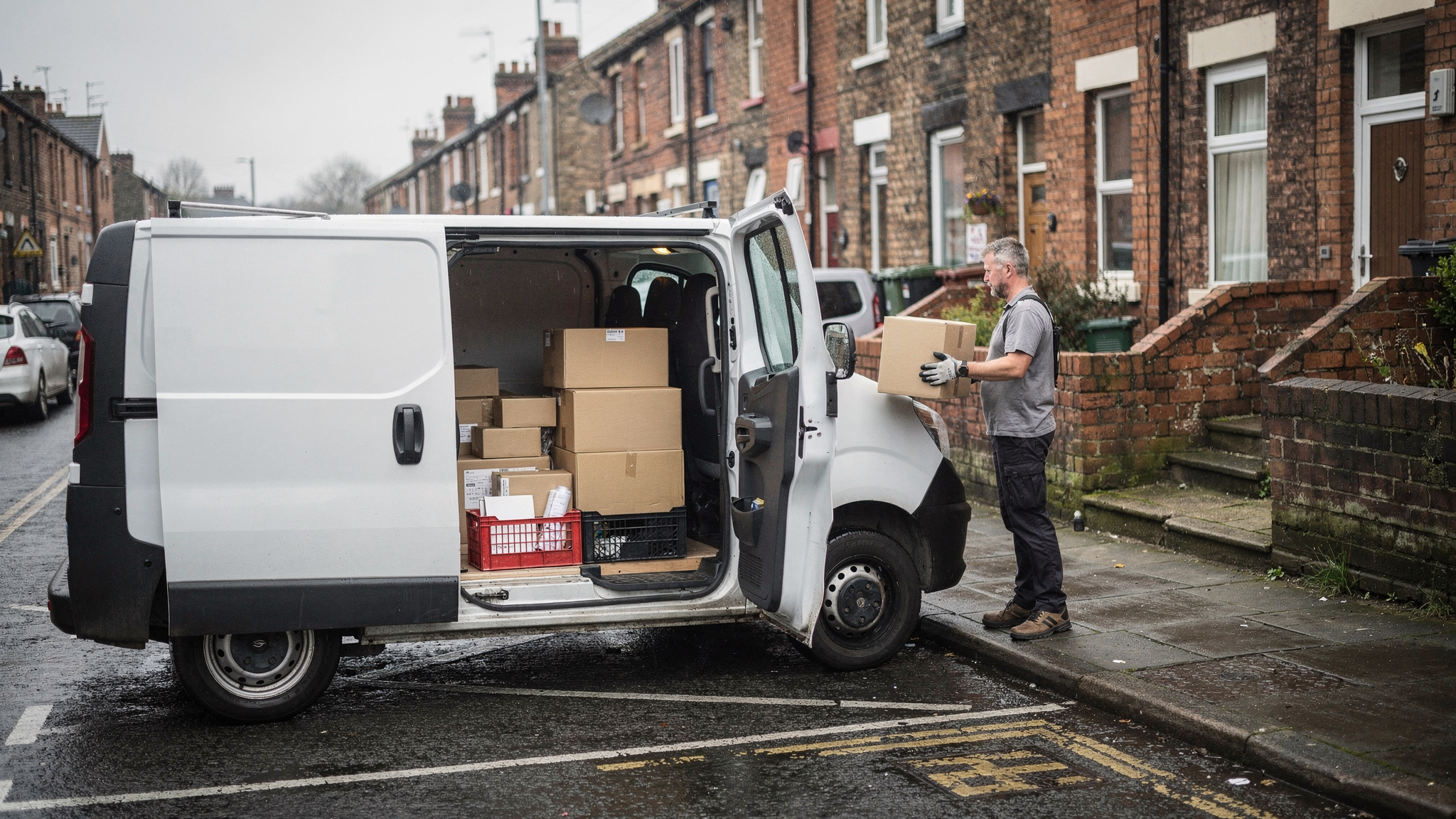
To route deliveries, gather addresses and delivery windows, group stops by area, sequence them to avoid backtracking, then adjust for time of day and kerbside access. The Department for Transport puts the average speed on local ‘A’ roads in Great Britain at 24.6 mph for the year ending March 2026, so plan timings on real speeds.
That number is where realistic planning starts. A round that looks tidy on a map still has to work on narrow terraced streets and through busy town centres. It also has to work at the kerb, where a van needs somewhere to stop.
Knowing how to route deliveries on UK roads means planning for all of that before the van leaves the yard, with each van in a mixed fleet matched to the streets it serves.
How to route deliveries step by step, from order list to driver app
Work through these steps in order each planning cycle, starting with a clean order list:
- Collect every order in one place: address, postcode, delivery window, size or weight, and any access notes.
- Match orders to vans. Bulky and heavy items go on the larger vans, and small vans take the tight town-centre streets.
- Group stops into zones. Postcode sectors are a sensible first cut.
- Sequence each zone so the van never doubles back, keeping fixed delivery windows in their slots.
- Run a kerbside check on every stop, using the checklist table in the kerbside section below, so each one is workable on the day.
- Send the finished route to each driver's phone with the stop notes attached.
- Follow the day as it runs, and adjust when new orders arrive.
Sequencing is where software earns its place. Ordering a handful of drops by hand is manageable. Ordering a full day of drops across several vans, each with its own windows, is a different job.
SuperPharmacy's case study, covered in the pharmacy section below, shows how much daily planning time that sequencing step can take back.
Our guide to finding the best route for multiple locations explains how stops get put in order once the zones are set.
Doing the assignment step in a dispatch planning tool keeps orders and vans side by side, so capacity decisions happen before sequencing rather than after it.
Then comes the handover. A driver app that carries the window, access notes, contact number and proof-of-delivery requirement for every stop gives drivers everything they need in one place, in the order they need it.
How to time drops around the weekday peaks on local A roads
Speeds on local A roads change through the day, and the pattern is steady enough to plan around.
Department for Transport travel time figures for local ‘A’ roads note that, in general, the lowest speeds and highest delays fall in the morning and evening peak periods.
So the planning question is simple. Which parts of the round can sit outside the weekday morning and evening peaks?
Here is a worked example on assumed speeds, not Department for Transport data. Take 30 miles of local A road driving in one round. At an assumed 20 mph in a peak, those miles take 90 minutes. At an assumed 30 mph outside the peaks, they take 60 minutes. On those assumptions, moving that driving out of the peak frees 30 minutes for that van on that round.
If delivery windows allow an early start, the long leg from the depot to a distant zone can run before the morning peak begins.
During the peaks, work dense clusters where stops sit close together. Slower traffic then touches fewer miles.
Plan the final drops and the return to depot to finish before the evening peak where you can, and add time where you can't.
And time each part of the route on the speed for its period, not the all-day figure. A plan built on the daily average will look generous off-peak and tight at teatime.
How a kerbside check makes every stop workable before the van leaves
The quickest road route only works if the van can stop near the door. That last stretch, from kerb to customer, deserves the same planning as the drive.
Think of a Victorian terrace with cars parked on both sides, a high street with timed loading, or a new estate with shared driveways. In each one, the stopping point decides how long the drop takes.
A kerbside check asks one question of every stop. Can the van reach the street, stop close by, unload and get to the door in a sensible time?
Record the answers on the stop itself, so they travel with the route every time that address comes round:
| Check | What to note on the stop | How it helps the route |
|---|---|---|
| Stopping point | The nearest place the van can pull in, such as a loading bay or a quieter side street | Keeps stop time predictable |
| Access times | Any timed access to the street or site, plus the customer's receiving hours | Puts the stop in a slot that works |
| Walk to the door | Rough walking time from the stopping point, including stairs or lifts | Turns kerb-to-door time into planned time |
| Vehicle fit | Narrow streets, tight turns or low clearances that suit a smaller van | Sends the right van at assignment |
| Entry details | Gate codes, loading point, site contact and phone number | Keeps the driver moving without a call to the office |
Gather these details once and they pay back every week. Trade accounts, repeat customers and regular collection points get quicker to plan each time.
For anything with a legal limit attached, such as loading restrictions or access schemes in London, check the current requirements with the local highway authority or Transport for London before relying on a stopping point.
Then add the walking time to the stop duration. A route that allows for the kerb and the walk gives drivers a schedule they can keep comfortably.
How to group urban and rural drops so each mile carries more deliveries
Department for Transport road traffic estimates put van traffic in Great Britain at 58.5 billion vehicle miles in 2024, 1.3% higher than 2023 and 9.5% higher than 2019.
Every one of those miles costs fuel and driver time. So the figure worth tracking on your own rounds is deliveries per mile: work it out for each round every week, and start your planning changes on the rounds with the lowest number.
Towns and countryside call for different approaches.
In dense urban areas, drops sit close together and the work is in the order. A tight cluster needs sequencing that moves the van steadily through one-way systems without looping back on itself.
Rural rounds are a different shape. Research for the Local Government Association found that very dispersed demand across a large geographic area brings a series of extra challenges for home deliveries.
That makes consolidation the main lever in the countryside. IMRG's Valuing Home Delivery Review, published in 2021, found that fast, high-frequency delivery cuts into how naturally routes can be optimised and consolidated, which pushes delivery costs up.
A few ways to give each mile more deliveries:
Set regular delivery days for outlying villages and farms, so orders for the same area travel together on fuller runs.
Keep small vans on the dense town clusters, and give the rural legs to the larger vans, where load space matters more than turning circles.
Where a rural round passes through a market town, fold that town's drops into the same run instead of serving it separately.
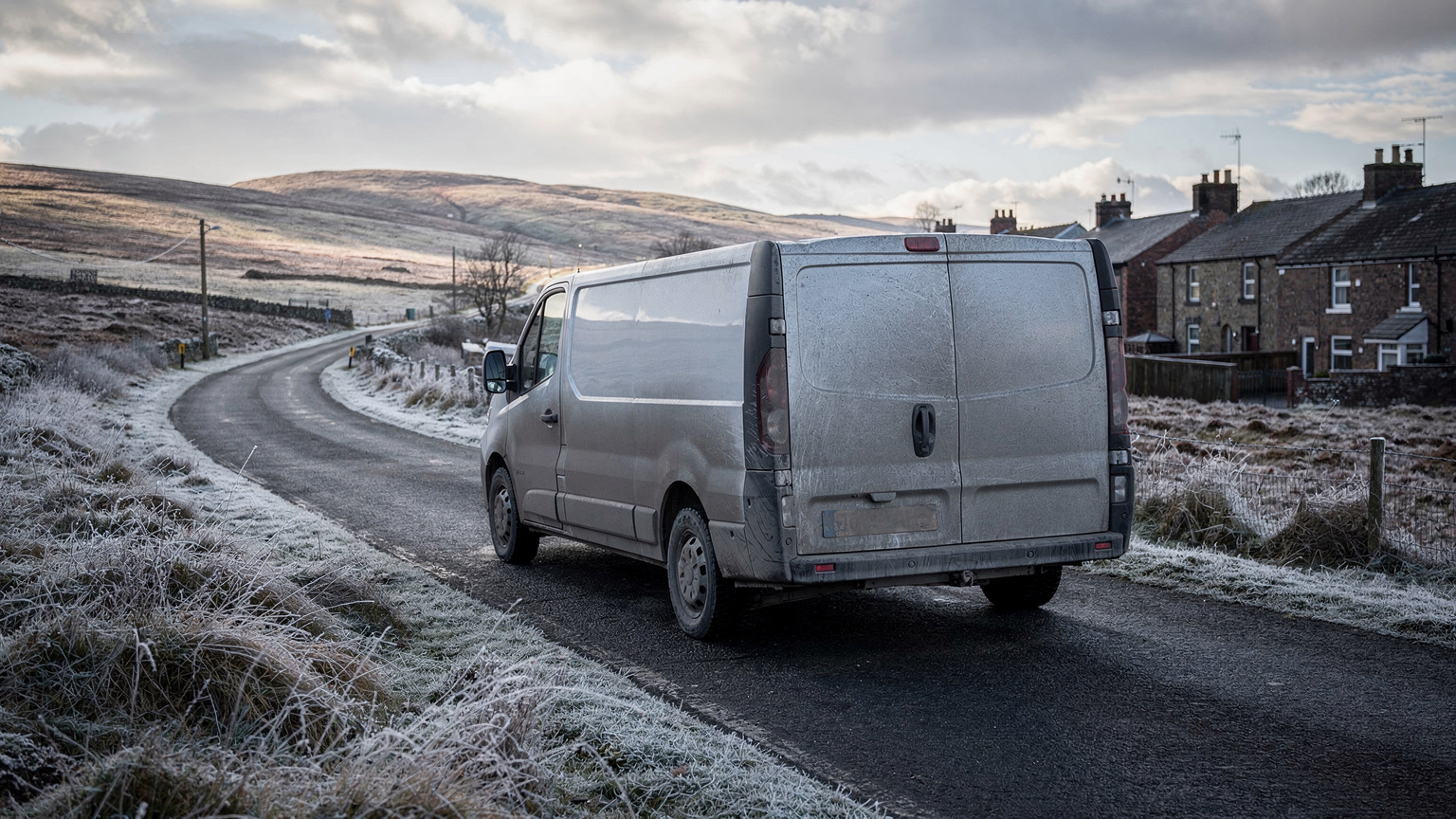
How to add winter buffers for upland routes in Scotland and northern England
Average road speeds are right for planning a typical day. A snowy morning on high ground is a different day.
In 2025, a Met Office warning said snow could bring some disruption to travel and infrastructure across higher parts of Scotland.
Winter planning for upland rounds, in Scotland and on the high routes of northern England, works best as a routine. Check forecasts and warnings the afternoon before, while tomorrow's routes are still easy to change.
Group the high-ground drops into one block in the middle of the round, in daylight. A change of plan then touches one block of stops rather than the whole day.
Keep a time buffer at the end of upland rounds through the winter months. If the roads stay clear, a nearby collection fills the spare time nicely.
How first-time delivery planning protects your margins on every route
The Office for National Statistics reports that the proportion of Great Britain retail sales made online was 28.8% in August 2026.
At that level of online demand, if your rounds carry home deliveries, completing each one at the first visit is where planning pays back.
IMRG's Valuing Home Delivery Review put the total cost of a failed first delivery that had to be rearranged at £11.73, split into £2.22 for the consumer, £4.70 for the retailer and £4.81 for the carrier.
Those figures are from 2021, so read them as a guide to how the cost is shared, not as today's price. The planning point is clear either way: a second attempt adds cost for everyone in the chain.
Much of first-time success is set at the planning desk.
Offer delivery windows customers can choose, then route to those windows rather than around them.
Let recipients see the van coming. Locate2u's real-time tracking lets you share live tracking links with customers, and automated notifications keep them informed of their delivery status, so they can plan to be in.
Put the access notes, gate codes and contact number from the kerbside check on every stop.
Capture proof of delivery in the driver app as each drop completes. Locate2u's proof of delivery records photos, signatures and timestamps, giving the customer and the office the same clear record.
And plan stop counts on peak-hour speeds with time for the walk to the door. Drivers then have room to complete every drop properly.
How one pharmacy cut daily route planning from an hour to 10 minutes
Prescription delivery is a demanding test for any routing process, because new orders keep arriving after the day's routes are set.
SuperPharmacy has been operating as an online pharmacy in Australia since 2000, delivering prescription medications, over-the-counter products and health essentials to customers nationwide.
SuperPharmacy's case study reports that, as customers increasingly expected same-day delivery, the delivery team was spending up to one hour every day manually planning routes. When an urgent prescription arrived or a delivery needed rescheduling, the whole route had to be regenerated from scratch.
After the move to Locate2u's route optimisation, the case study reports that daily planning now takes just 10 minutes, an 83% cut in route planning time for this one Australian pharmacy, with routes generated automatically from delivery locations, time windows and driver availability.
Flexibility was the other big change. New prescriptions can be slotted into existing routes during the day without disrupting other deliveries, which let SuperPharmacy offer same-day prescription delivery as a core service.
The case study quotes the team: "Before Locate2u, we had to generate new routes if we wanted to change anything. Now we can adjust the day's deliveries on the fly."
On UK rounds, the same approach means a mid-morning order for a street the van is already working can join the existing route, rather than prompting a full replan of the day.
To test the idea on your own rounds, time your route planning for one week and count how often a mid-day order forces a rebuild. Those two numbers show how much of your day would benefit from dynamic route optimisation, which recalculates routes as orders change.
Frequently asked questions
How many stops can you fit on one delivery route?
Work it out from the shift rather than a fixed number: subtract breaks and depot time, then divide the remaining minutes by the drive time between stops plus the time spent at each door. Run that sum separately for town and rural rounds, because the answer changes sharply between them.
Is routing by postcode good enough for multi-drop deliveries?
Postcode sectors make a sensible first grouping, but sequencing within each sector still needs to account for one-way streets, delivery windows and where the van can stop. Treat postcodes as zones to start from, then let route optimisation set the order of drops inside them.
What is the difference between route planning and route optimisation?
Route planning decides which stops go to which van and roughly when. Route optimisation calculates the most efficient sequence for those stops against constraints such as time windows and vehicle capacity, and can recalculate when orders change during the day.
What should a driver know about each stop before setting off?
Each stop works best with the delivery window, access notes such as gate codes or loading points, a contact number and any proof-of-delivery requirement like a photo or signature. Holding all of that in a driver app keeps it with the route rather than on separate notes.
Routing that works on UK roads rests on three habits: timing legs around the weekday peaks, checking every kerb before the van leaves, and grouping drops so each mile carries more deliveries. Start with a clean order list and good stop notes, then let Locate2u's route optimisation sequence the drops against time windows and driver availability, and adjust the plan as the day changes.