How Medical Courier Software Keeps Specimens Tracked From Pickup to Lab
Drafted with AI assistance, edited and fact-checked by Sean Flannery. See our editorial policy.
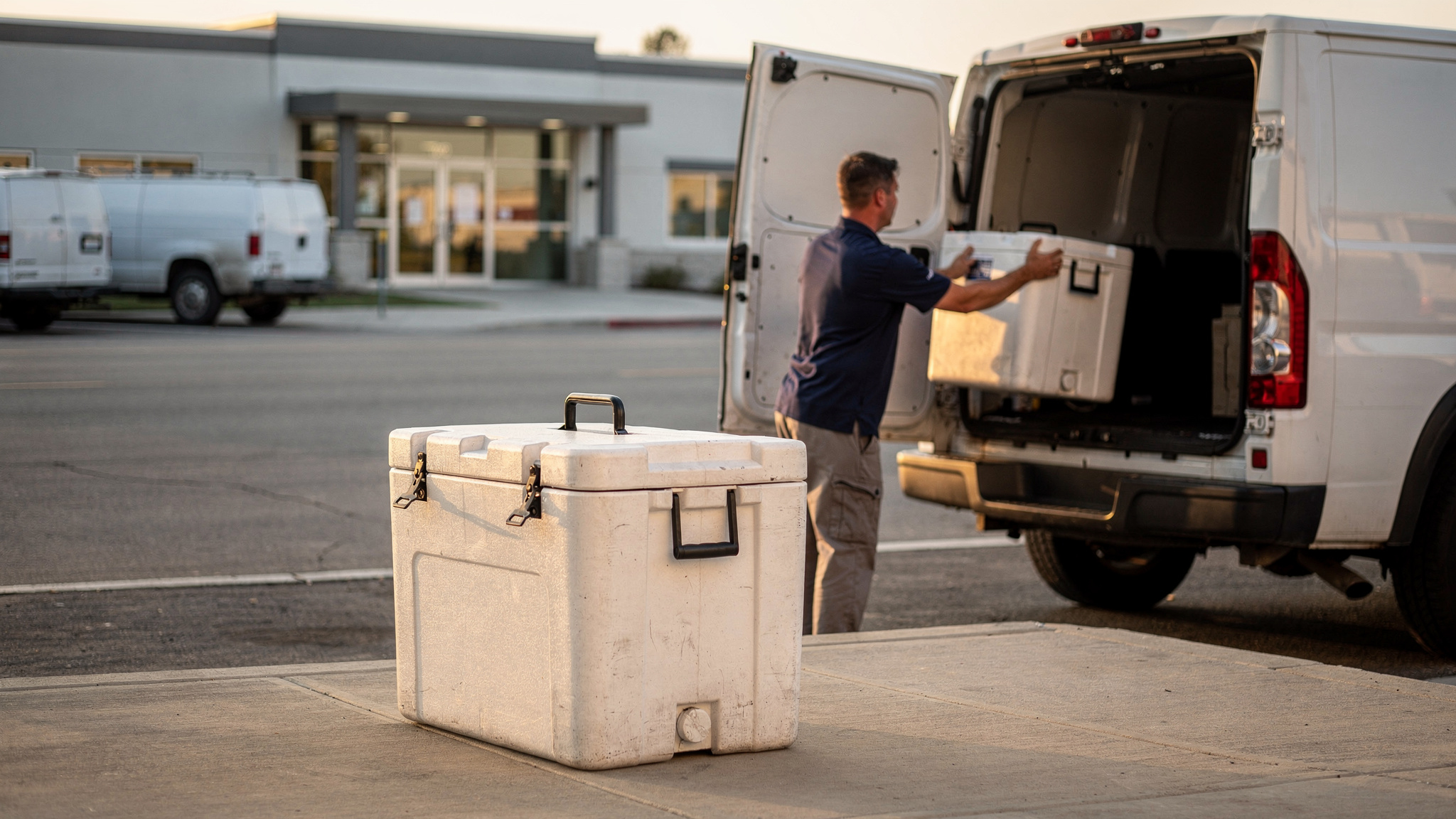
Medical courier software plans multi-stop specimen and prescription routes, tracks each vehicle live and records a timestamped chain of custody from pickup to lab. Locate2u combines route optimization, real-time tracking and proof of delivery with photos, signatures and timestamps, so US courier teams can plan around rural miles and weather and show every handoff.
Picture the late-afternoon board at a regional lab network. Metro clinics want one more pickup before close. A rural site well down the interstate has a cooler ready. The forecast says freezing rain after dark.
That kind of day runs well when the plan already accounts for the distances, the weather and the lab's receiving cutoff. It also helps when each handoff leaves a record the lab can check in seconds.
What medical courier software does for US lab and home health routes
Lab work is at the center of US courier employment. According to the U.S. Bureau of Labor Statistics, medical and diagnostic laboratories employed 15,740 couriers and messengers in May 2023, more than any other industry.
So the software decision is a lab decision first. Routes are built around collection sites, stat calls and receiving desks.
Demand is still building. The U.S. Census Bureau Quarterly Services Survey puts seasonally adjusted revenue for taxable medical and diagnostic laboratories at US$20,305 million in Q2 2026, up 3.9 percent on Q2 2025, a preliminary figure. The same release estimates home health care services revenue at US$44,821 million, up 8.5 percent year on year.
For a dispatch manager, that growth points toward more stops per route and more home addresses in the mix. Planning capacity is worth building ahead of it.
In day-to-day terms, medical courier software covers four jobs:
- Planning: route optimization sequences pickups and drop-offs around time windows, driver availability and vehicle types.
- Visibility: live vehicle tracking on a dispatch map, plus a tracking link that tells the receiving lab when a run will arrive.
- Proof: photos, signatures, timestamps and location data captured at each stop.
- Change: new stops slot into live routes during the day, without rebuilding the plan.
Home health teams use the same tools. A nurse visit or a home specimen collection is a scheduled stop with a window, just like a clinic pickup.
Planning speed matters as much as route quality. On its case study page, the Australian online pharmacy SuperPharmacy describes going from up to one hour of manual route planning every day to 10 minutes with Locate2u. More on how that happened in section seven.
How a clear chain of custody follows each specimen from pickup to lab
A chain of custody is simply a record of who held a specimen, when and where. The more handoffs a route has, the more useful that record becomes.
Paper logs can do the job on a single short run. Across a day of clinic stops, a digital record is far easier to search and share with the lab.
Locate2u's proof of delivery with photos, signatures and timestamps captures that evidence at the stop. Each record also carries location data, so the lab can see where a handoff took place as well as when.
Here is a simple way to structure it:
Treat the pickup as a stop in its own right. The courier photographs the sealed bag or cooler and captures a signature from clinic staff before leaving.
In transit, the vehicle shows on the live map. If a run is ahead or behind, dispatch sees it straight away.
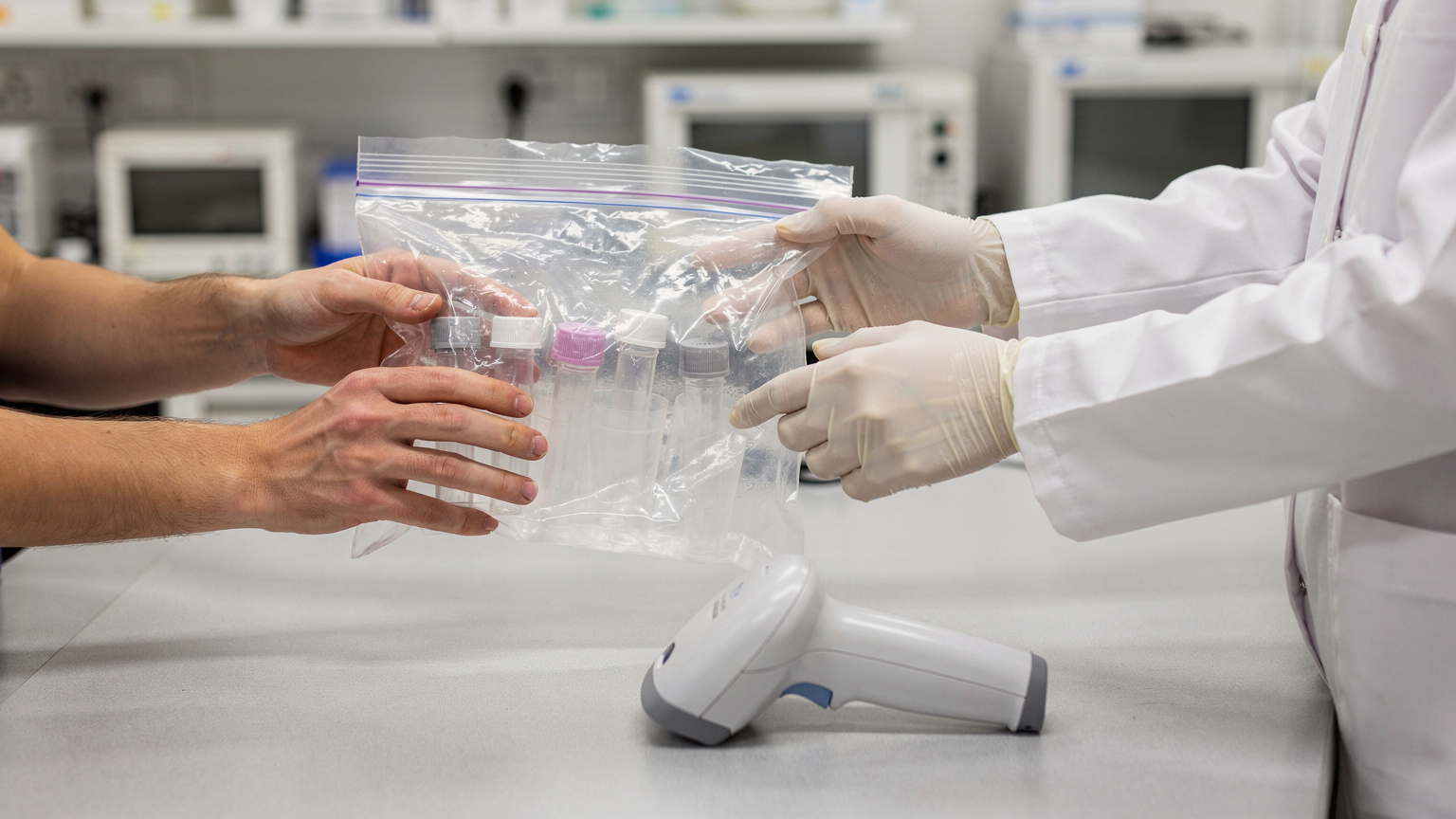
At the lab, the receiving desk signs, and the courier adds a photo of the package on the bench. The timestamp closes that leg of the record.
Then the whole journey sits in one place. When accessioning staff want to confirm the pickup time for a batch, they open the record instead of calling dispatch.
Planning routes that reach rural clinics and long regional runs
Rural reach is a core part of US lab logistics. In the 2020 Census, 20.0 percent of the US population, 66,300,254 people, lived in rural areas, according to the U.S. Census Bureau.
That's one in five patients whose samples often start the day a long drive from the lab. Rural stops mean longer routes, so they need their own planning rules rather than the metro defaults.
Start with the lab's receiving cutoff and work backward. The last rural pickup has to leave enough drive time to arrive before the bench closes.
Group clinics by corridor. Sites strung along the same highway belong on the same loop, even if they sit in different counties.
Set fixed pickup days for low-volume sites. A small clinic that ships a few samples a week can share a scheduled run with its neighbors instead of triggering a dedicated trip.
Keep a metro vehicle free for stat calls. When the long regional run is committed for the afternoon, a second driver closer in can absorb urgent pickups without pulling the rural route off course.
Route optimization does the sequencing once these rules are in place. It weighs time windows and driver availability, then orders stops so the long legs happen once, not twice.
For a closer look at how optimization handles mixed metro and regional work, see this guide to choosing courier route optimization software.
Building rain, snow and ice into daily courier schedules
Weather is a planning input, not a surprise. The Federal Highway Administration estimates that 23 percent of non-recurrent delay on highways across the nation is due to snow, ice and fog. It adds that travel-time delay on arterials can increase by 11 to 50 percent depending on the severity of the weather.
That range is the useful part. A light snow day and an ice storm need different buffers, so a single winter setting won't fit both.
Snow is also widespread. FHWA reports that over 70 percent of the nation's roads are in snowy regions that receive more than five inches (13 cm) of average snowfall annually. The same page notes the Southeast and South Central US are not affected by snow.
So build buffers by region. Snowy-region teams benefit from two or three winter profiles, from light snow through ice, each adding time to arterial legs.
Southern teams plan around rain instead. FHWA notes rain happens more often than snow, ice or fog and causes greater delay, which makes a wet-day buffer worth setting up in Houston or Atlanta as seriously as a snow profile in Minneapolis.
On storm mornings, re-run the optimization with the heavier profile before drivers leave. The plan then reflects the roads as they are.
Live tracking closes the loop. If a vehicle slows on a frozen overpass, dispatch sees it and can update the lab's expected arrival before anyone has to ask.
Keeping temperature-sensitive pickups moving through summer heat
Summer brings a different planning job. A parked vehicle's cabin climbs well above the outside air within minutes, and in Southwest desert metros the hot season runs for months.
The fix is mostly sequencing. Place temperature-sensitive pickups late in a route, as close to the lab leg as the time windows allow, so coolers spend less time on board.
Keep stop dwell short. Pickups that are ready at the door, with the cooler packed, let the courier move straight on.
Put the lab's handling instructions where the courier sees them at each stop. During testing, check how a platform displays stop notes on the driver's phone.
And use the live map on hot afternoons. If a run falls behind, dispatch can reassign the next sensitive pickup to a nearby vehicle rather than let it wait.
Mobile checklists that help couriers finish every handoff with confidence
A good checklist gives couriers a clear finish line at each stop. When the last box is ticked, they know the record is complete and can drive on.
The Locate2u driver app captures the photo, signature and timestamp at the stop. Your team decides which steps sit around that proof.
A practical handoff checklist for specimen work might look like this:
- Confirm the package or specimen identifier matches the stop.
- Photograph the sealed bag or cooler before it leaves the clinic.
- Capture a signature from the clinic staff member releasing it.
- Read the lab's handling instruction for that stop.
- At the lab, photograph the handoff and capture the receiving signature.
- If a package needs a second look, add a photo and note, then call dispatch.
Keep it short. Six steps a courier can finish in under a minute beat a long form that slows every stop.
Write the checklist with the people who use it. Couriers know which steps are awkward at a busy clinic door, and lab receiving staff know what they want to see in the record.
Review it each quarter against the lab's feedback. If receiving asks for the same detail twice, add a step.
For specimen packaging and transport requirements, check the current rules with the US Department of Transportation.
How one pharmacy delivery team cut daily route planning to 10 minutes
SuperPharmacy has been operating as an online pharmacy in Australia since 2000, one of the earliest digital pharmacy services in that country. It delivers prescription medications, over-the-counter products and health essentials to customers nationwide.
On its case study page, the team describes spending up to one hour every day planning prescription routes by hand.
The bigger issue was flexibility. When an urgent prescription came in during the day, or a delivery needed rescheduling, the route had to be regenerated from scratch.
With customers increasingly expecting same-day prescription delivery, planning had to keep pace.
SuperPharmacy implemented Locate2u's route optimization to automate daily planning. Routes are now generated from delivery locations, time windows and driver availability, and the case study page reports planning time cut by 83%, from an hour to 10 minutes.
The part that matters most for medical couriers is what happened during the day. New prescriptions slot into existing routes on the fly, without disrupting other deliveries.
As the team puts it on its case study page: "Before Locate2u, we had to generate new routes if we wanted to change anything. Now we can adjust the day's deliveries on the fly."
That flexibility let SuperPharmacy offer same-day prescription delivery as a core service.
A US lab courier team faces the same pattern with stat pickups. A clinic calls mid-morning, and the dispatcher needs that stop on a live route in seconds, not a rebuilt plan.
This is one business's result, and planning time will vary with order volume and route mix. The workflow carries over directly.
Questions to ask when you test a platform on your own routes
A demo on sample data shows what software can do. A test on your own routes shows what it will do for your lab network.
Pick one real week. Include a rural loop, a stat-heavy day and, if the season allows, a weather day.
Then work through these questions with the medical courier software you are assessing:
| Question to ask | How to test it on your routes |
|---|---|
| Does it plan around our time windows and lab cutoffs? | Load a real day's pickups with receiving cutoffs and compare the plan with the day as it ran. |
| How quickly can a stat pickup join a live route? | Add a stop mid-route and check the other stops keep their windows. |
| What does the receiving lab see? | Send a tracking link to your lab desk and ask if it answers their arrival questions. |
| What does a handoff record contain? | Complete a pickup and a drop-off, then open the record for photo, signature, timestamp and location. |
| Can rural and weather days run on longer drive times? | Plan the same rural loop on a normal profile and a storm profile and compare finish times. |
| Do couriers find the app easy at a busy door? | Have two couriers run the handoff checklist for a full shift and share their notes. |
Score each answer against what your lab actually needs, not against a feature list.
Cost belongs in the same test. Compare the current Locate2u plans against your team size and the planning hours the test week saved.
Frequently asked questions
Which US industry employs the most couriers and messengers?
Medical and diagnostic laboratories do, with 15,740 couriers and messengers in May 2023, ahead of courier and express delivery firms, according to the Bureau of Labor Statistics. BLS put their mean courier wage at US$18.91 an hour (US$39,330 a year), against a national mean of US$18.44 for all couriers.
Can home health agencies use the same software as a lab courier team?
Yes, because home visits and home specimen pickups run as scheduled multi-stop routes with fixed time windows, the same job route optimization and live tracking handle for labs. The Census Bureau estimated US home health care services revenue at US$44,821 million in Q2 2026, up 8.5 percent year on year, so it pays to plan capacity for more home stops.
Do couriers in the Sun Belt still need weather planning in their routes?
Yes, plan for rain: the Federal Highway Administration says the Southeast and South Central US are not affected by snow, but that rain happens more often than snow, ice or fog and causes greater delay. So add buffer to time windows on wet days.
How often should a medical courier team re-optimize routes during the day?
Re-optimize whenever a new stat pickup or cancellation arrives, rather than waiting for the next morning's plan. Locate2u lets dispatchers slot new stops into live routes without regenerating the whole day, which is how SuperPharmacy added same-day prescription delivery as a core service, as described on its case study page.
The strongest specimen routes come from a few simple habits: plan backward from the lab's cutoff, match buffers to your region's weather, and capture proof at both ends of every handoff. Run one real week through Locate2u route optimization with your own clinics and cutoffs, and let that week show how much planning time your team gets back.