Automated Route Planning for NZ Fleets: How It Works and When to Switch
Drafted with AI assistance, edited and fact-checked by Sean Flannery. See our editorial policy.
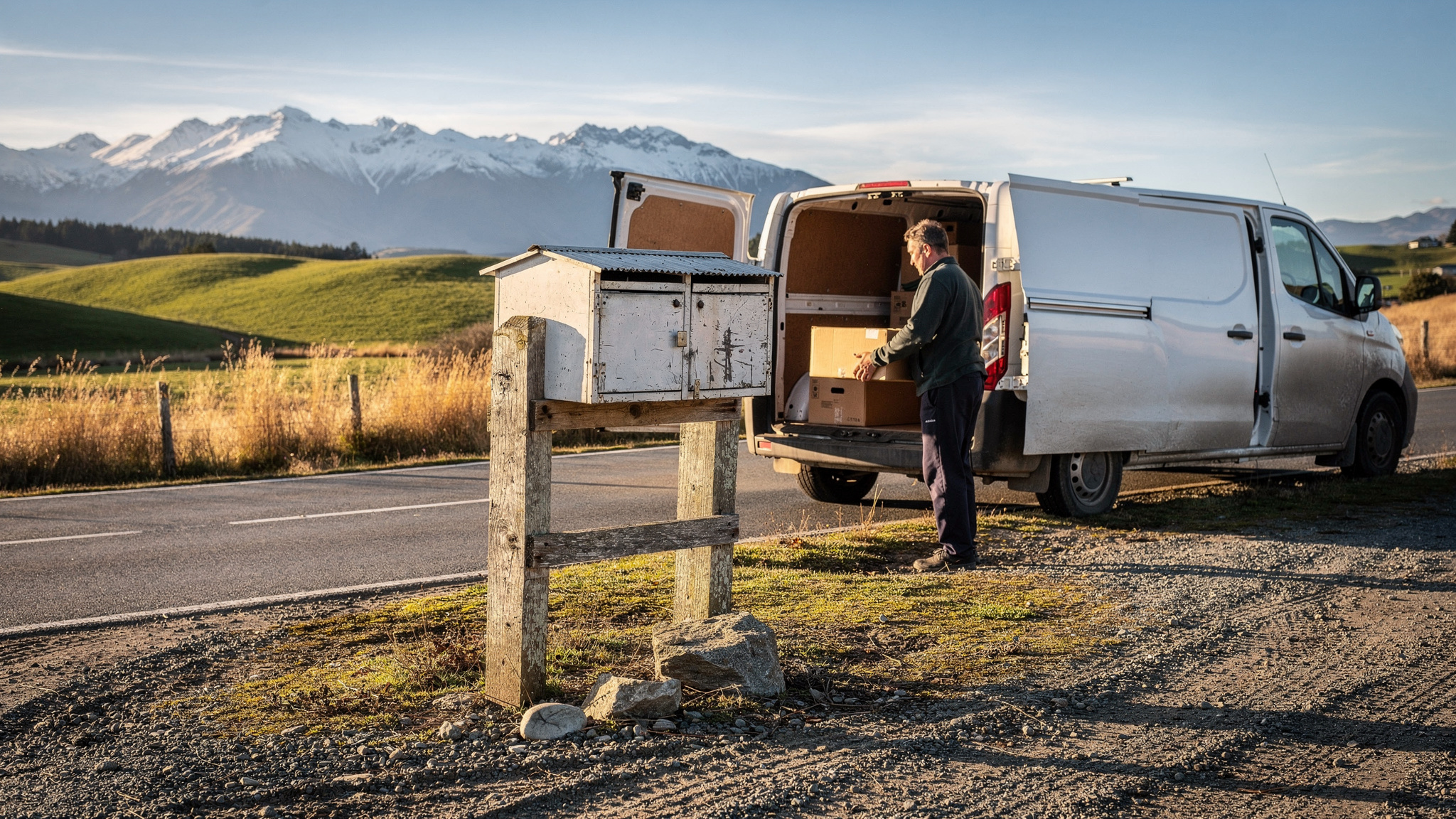
Automated route planning is software that takes a day's orders, addresses, delivery windows and vehicle capacity and builds the stop sequence for each driver in minutes. Dispatchers can then adjust the plan as the day changes. For New Zealand fleets, the payoff is predictable arrival windows, fewer wasted kilometres and quick replans when a highway closes.
Picture a Monday at a Christchurch depot. Orders for Rangiora, Ashburton and the Port Hills are waiting. One van needs to make an afternoon sailing out of Picton, and a snow warning is up for the high country.
Software can sequence all of that in minutes and update the plan when conditions change. For a small New Zealand fleet, that is where most of the value sits.
How automated route planning turns a day's orders into driver-ready runs
The workflow follows the same order every day. Each step replaces a job someone would otherwise do with a map and a spreadsheet.
Orders come in already complete. They arrive through integrations with online stores and order systems, or through an API. Each order lands with its address and the delivery window the customer chose.
Next, the planner reads the rules for the day: which drivers are working, what each vehicle can carry, and when each stop needs to be served.
The optimisation engine then works out a stop order for every vehicle. That order respects those windows and capacities while keeping driving distance down. A job that takes long concentration by hand comes back in minutes.
Each driver receives their run in the Locate2u driver app for smartphones. The app gives turn-by-turn navigation and captures a photo, signature and timestamp at every stop.
The plan stays live after that. Dispatchers watch progress on a map and slot in late orders. Every customer gets a tracking link showing when the vehicle will arrive.
That final step is what makes automated planning different from a printed run sheet. The plan keeps working after the first van leaves the yard.
The time saving shows up quickly. SuperPharmacy's case study reports that the Australian online pharmacy cut its daily route planning from up to an hour of manual work to 10 minutes after automating it with Locate2u. The full story is in the pharmacy section below.
Why predictable delivery windows are worth more to NZ shippers than speed
Ask a New Zealand shipper which matters more: a faster delivery, or one that arrives when promised. The research gives a clear answer.
Waka Kotahi NZ Transport Agency published a study as research report 665 in June 2020. It found that freight shippers would pay, on average, NZ$2.52 per tonne per hour for reliability improvements, against NZ$0.45 per tonne per hour for travel-time improvements.
The study measures reliability as a reduction in standard deviation. A smaller standard deviation means arrival times sit closer together, day after day.
That changes how a routing tool should be judged. Total kilometres saved is one measure. How consistently each stop lands inside its window is the one shippers put a higher price on.
Automated planning supports that directly. The window a customer chooses at checkout travels with the order, and the engine sequences stops to meet it. Customers see a live ETA instead of an all-day promise.
Operators also have a practical reason to track reliability themselves. The Ministry of Transport's October 2025 Transport Network Performance Report states: "We do not currently have any appropriate and frequent measures of road reliability."
That makes an operator's own records the most useful reliability data available. Every proof of delivery in Locate2u carries a timestamp, so each completed stop can be checked against the window that was promised.
Review that pattern by run and by area each week. It shows which routes would benefit from a wider window, an earlier start or a second vehicle.
How same-day rerouting keeps runs moving through South Island winter closures
A South Island winter can change a day's routes before lunch.
NZ Transport Agency Waka Kotahi issued a traffic bulletin on 6 July 2026. It reported that State Highway 8 between Fairlie and Lake Pukaki in the Mackenzie Basin had closed again with the arrival of more heavy snow. The agency urged road users to plan for closures or disruptions.
A route planned once in the morning has no way to absorb that. A plan that can change during the day can. This guide to static and dynamic route planning covers the difference in more depth.
Here is how a same-day replan works in Locate2u when a closure lands mid-run.
First, the dispatcher finds the affected vehicles on the real-time tracking map and sees which stops sit beyond the closure.
Next, the remaining stops are re-sequenced around the detour. Some can move to another vehicle that can reach them on open roads. New and changed stops slot into existing runs without rebuilding the whole day.
The updated run then goes straight to the driver's phone. Each customer's live tracking link shows the vehicle's progress, so people know where their delivery stands without phoning the depot.
Some stops are better moved to another day. Contacting those customers early with a new window keeps the relationship in good shape.
Some preparation before winter also helps. Keep a short list of the highways your regular runs depend on, and the detours that suit your vehicles. That way the replan takes minutes instead of a round of phone calls.
Planning rural runs and inter-island freight around fixed crossing times
New Zealand's freight routes follow its shape. The Ministry of Transport's 2022 Freight and Supply Chain Issues Paper notes that domestic freight routes are dictated by the country's geography, dispersed populations, regional production and manufacturing, and the location of ports.
For route planning, two of those show up every day: the Cook Strait crossing and long rural runs.
Treat the sailing as an appointment. A crossing leaves at a set time whatever the traffic, so plan the leg to the terminal backwards from check-in. Add the terminal as a stop with a delivery window that closes at check-in. The engine will then sequence the earlier drops so the van arrives in time.
On the far side, start a fresh run from the arrival terminal. Stops across the strait then get windows based on the actual arrival time, not an estimate made the day before.
Give rural customers a regular day. Grouping a district's stops onto a set delivery day keeps long runs dense. Customers can also plan around a known window.
A tracking link is especially useful on a farm road. A customer who can see the vehicle approaching can be at the gate or leave clear instructions.
Some deliveries are left at a rural gate or shed. For those, a photo and timestamp captured in the driver app give both sides a clear record of where the goods were placed.
Keeping kilometres tight while diesel prices move
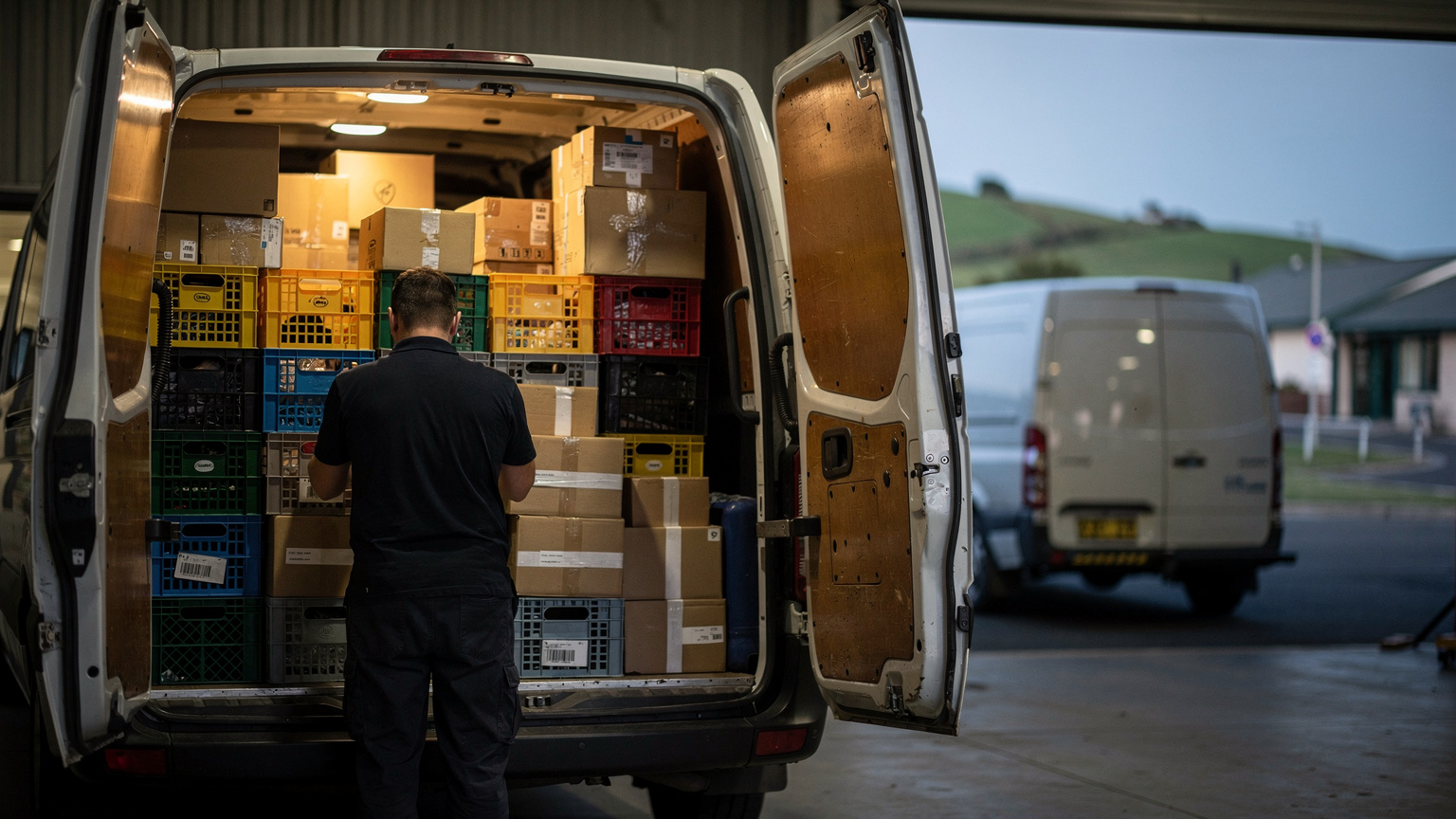
Every wasted kilometre burns fuel, and fuel prices have climbed sharply. Stats NZ reports that diesel prices in the year ended June 2026 were 71 percent higher than in the year ended June 2025.
When fuel moves like that, reusing last month's stop order costs more. The simplest response is to re-optimise each day's run against that day's actual orders.
Plan all vehicles together, so two vans aren't covering the same suburb from opposite ends.
Fold pickups into delivery runs where they sit on the way, instead of sending a separate trip.
Rebalance stops between drivers when one run is long and another finishes early.
Shorter is not always better, though. A route that pushes stops outside their windows works against the reliability shippers value. Locate2u's engine sequences stops against windows and capacity together, so distance and punctuality are weighed at the same time.
What one pharmacy delivery team gained by automating its daily plan
SuperPharmacy's case study reports that the business has operated as an online pharmacy in Australia since 2000. It delivers prescription medications, over-the-counter products and health essentials to customers nationwide.
Customers were increasingly expecting same-day delivery for their prescriptions. At the time, the delivery team was spending up to one hour every day planning routes by hand.
That process was also hard to change. When an urgent prescription came in during the day, or a delivery needed rescheduling, the route had to be generated again from scratch.
SuperPharmacy implemented Locate2u's route optimisation to automate the daily plan. Routes are now generated automatically from delivery locations, time windows and driver availability. The case study reports that what once took an hour now takes 10 minutes, cutting route planning time by 83%.
The bigger change was flexibility. New prescriptions can be slotted into existing routes on the fly without disrupting other deliveries. That flexibility is what allowed SuperPharmacy to offer same-day prescription delivery as a core service.
In the team's words: "Before Locate2u, we had to generate new routes if we wanted to change anything. Now we can adjust the day's deliveries on the fly."
That is one Australian business's result. The same workflow fits a New Zealand pharmacy or health-products team running same-day runs across Auckland or Wellington. In those runs, urgent orders arrive through the day and each one needs a place in a run that is already moving.
Signs a small fleet is ready to move beyond hand-planned routes
New Zealand's road freight sector is built from small businesses. The Ministry of Transport's 2022 Freight and Supply Chain Issues Paper reports that trucks carry 92.8% of freight volumes within New Zealand. It also reports that more than 60% of the about 4,700 road freight firms have fewer than two employees.
In a business that size, the planner and the driver can easily be the same person. So the right tool runs on a phone, needs no extra hardware and is priced per user rather than per fleet.
Hand planning works well for a handful of fixed runs. These signs suggest a business has outgrown it:
- Planning the next day's run eats into the evening or the start of the shift.
- Same-day orders mean redrawing the whole run, not just adding a stop.
- Customers ring to ask when their delivery will arrive.
- A second vehicle has joined, and splitting stops between drivers takes guesswork.
- Weather closures or detours regularly change the day after vehicles have left.
If two or more sound familiar, test a planner against a real week of your orders.
Growth links all of these signs. Each one shows a business taking on more work than a paper plan was designed to carry, which is a good problem to have.
What to check when choosing an automated route planner
The best test of any planner is a busy day of your own orders. Load real addresses, real windows and real vehicles. Then check whether the runs it builds are ones your drivers would happily follow.
Use this checklist alongside that test.
| What to check | Question to ask | Why it helps an NZ fleet |
|---|---|---|
| Order intake | Do orders arrive through an integration or API with the address and delivery window attached? | Removes retyping before each day's plan |
| Windows and capacity | Can every stop carry a delivery window and every vehicle a capacity? | Protects the reliable arrival times shippers value |
| Same-day changes | Can a stop be added mid-run or moved to another driver without rebuilding the day? | Handles urgent orders and winter highway closures |
| Driver app | Does each run reach a smartphone with navigation and photo, signature and timestamp capture? | No dedicated hardware, and a clear record at every stop |
| Customer updates | Does each customer receive a live tracking link? | Customers know when to expect the vehicle, including on rural roads |
| Vehicle suitability | Can each vehicle's dimensions and load limits be recorded and applied to its route? | Keeps each run practical for the vehicle assigned |
| Pricing model | Does the cost scale per user? | Suits one-person and two-person operations |
Locate2u covers most of that table in one platform: order integrations and API, delivery windows and vehicle capacity, same-day changes, the driver app, customer tracking links and per-user pricing.
For vehicle suitability, the concrete step is to list each vehicle's dimensions and load limits before testing. Then confirm the planner can apply them on your actual roads. If you run heavy or overdimension vehicles, check the current route requirements with NZ Transport Agency Waka Kotahi.
Finally, measure the test the way your customers will. Compare each stop's proof of delivery timestamp against the window promised, because consistent arrival is the measure customers notice.
Frequently asked questions
Is automated route planning the same as route optimisation?
Route optimisation is the engine that works out the best stop order. Automated route planning is the wider workflow around it, from importing orders and assigning drivers to sending each customer a tracking link. Locate2u covers both in one platform, so the optimised sequence goes straight to the driver without a manual handover.
Can orders flow into the route planner automatically instead of being typed in?
Yes. Locate2u connects to online stores and order systems through its integrations and API, so new orders arrive with their address and chosen delivery window already attached. That removes the copy-and-paste step that usually comes before planning.
Do drivers need special equipment to follow an automated route?
No dedicated hardware is needed. Drivers receive their sequenced run in the Locate2u driver app on a smartphone, follow turn-by-turn navigation, and capture photos, signatures and timestamps as proof of delivery at each stop.
Is automated route planning worth it for an owner-operator with one vehicle?
It can be, because a single driver who also plans and answers customer calls gets planning time back and can send live ETAs without phoning ahead. Locate2u is priced per user, so the cost grows with the team rather than starting at a fleet-sized minimum, and current NZ tiers are on the Locate2u pricing page.
Reliable windows, fewer wasted kilometres and a plan that can change when the weather does: that is what automated planning gives a New Zealand fleet. A good next step is to run a recent busy day through Locate2u's route optimisation with your own vehicles and windows. Then compare the runs it builds with the ones that went out.