Route Optimisation: How It Works and Why It's Essential
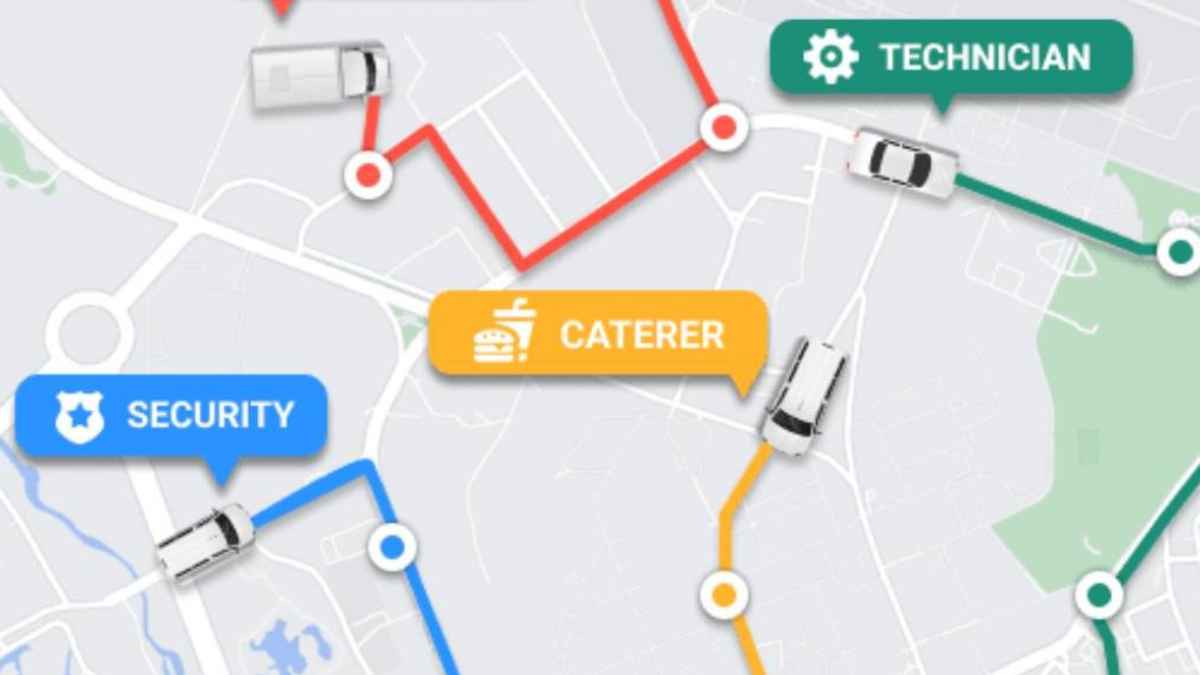
Route optimisation is more than just finding the shortest path to your delivery drop-off. It's about finding the most cost-effective route, considering the locations of the different stops scheduled and the preferred time windows customers wish to receive their orders.
It's a complex and fine balance to strike it right. Humans are prone to making mistakes, especially in unforeseen circumstances like traffic or weather.
Route planning is often confused with route optimisation. Route planning might calculate a path from point A to point B, but route optimisation also considers metrics like vehicle capacity and delivery urgency.
Industries like logistics, supply chain management, and last-mile delivery rely heavily on route optimisation to increase delivery speed and customer satisfaction and reduce costs.
Businesses that implement route optimisation software spend less on fuel and complete more deliveries per driver, and the algorithms keep improving.
What is route optimisation?
If you assign 50 or 100 bookings for delivery, using route optimisation software can make the process much faster, more efficient, and more accurate.
Route optimisation works out the most efficient route that the driver should follow. It also makes it easier for the driver to determine which parcel must be loaded into the vehicle first.
"The most important thing is, because you know the route the driver is taking, you can tell your customer we're going to deliver this parcel at approximately this time," says Steve Orenstein, CEO and founder of Locate2u.
This way, a driver can give customers an accurate time window, not your standard 2-3 hour time window, but up to the minute. It will be highly accurate every time.
How customers benefit from route optimisation
Faster deliveries, that's what all customers want. Speed is everything. Optimised routes ensure quicker delivery times. This is crucial in industries like e-commerce, where same-day or next-day deliveries are expected.
Improved delivery accuracy is when drivers follow the most efficient path, not the shortest one. Using the right software helps to reduce the likelihood of wrong addresses or missed delivery windows.
Route optimisation helps to improve the communication between driver and customer. With integrated real-time tracking features, customers can receive messages of accurate times when the driver will arrive.
With better communication and faster deliveries, customers feel the service is more reliable. When there is reliability, customers tend to be more loyal to a brand and return for more business.
How drivers benefit from route optimisation
When routes are optimised, drivers work in a less stressful environment. You can imagine navigating through traffic and poor road conditions guessing which road to take is not ideal.
When drivers complete their routes efficiently and on time, there is a sense of accomplishment and reduced frustration. This leads to increased job satisfaction.
Using this software enables drivers to complete more stops in a shorter period of time. With more deliveries in less time, drivers drastically improve their productivity.
How route optimisation works
Route optimisation relies on advanced algorithms and technologies. This is used to find the best possible routes and select the most efficient ones.
Route optimisation (RO) explained
It uses smart algorithms and real-time data. Think of it like GPS on steroids.
What algorithms are used for RO?
Algorithms, such as the Travelling Salesman Problem (TSP) solver or the Vehicle Routing Problem (VRP) solver, crunch through a ton of data to calculate the best path for multiple stops.
How does it know about the weather and traffic?
These tools integrate real-time information like GPS, traffic reports, and weather conditions. If there is a traffic jam, the software can instantly reroute your driver to avoid delays.
Can RO remember the most used routes?
Yes, historical data from past deliveries is used to predict future traffic patterns. Better yet, improve routes over time.
Is artificial intelligence (AI) used for RO?
AI is involved; it learns from each trip and adapts to make the system smarter and more accurate. For a deeper look at how AI is transforming the logistics space, see our article on AI logistics explained.
How route optimisation finds the perfect path
If you run a bakery offering same-day delivery to 50 customers across town, you'll find your job extremely painful without route planners. See how Husk Bakery increased deliveries by 30% with Locate2u. You'll follow the simple route that you know best to get from point A to point B.
However, with route optimisation tools, algorithms find the most efficient routes.
The software calculates the best sequence of multi stop routes to minimise total travel time, fuel consumption, and distance while still meeting each customer's delivery window.
Instead of zigzagging across town, your drivers follow a smooth and logical path with optimised routes.
Navigating traffic and weather with precision
Let's say one of your drivers is en route to deliver fresh pastries to customers on the other side of town. Suddenly, a traffic jam appears due to a major accident.
Normally, the driver would be stuck, potentially missing their delivery window. However, routing software immediately detects the issue and reroutes the driver around the traffic.
The software also takes into account real-time weather conditions, to avoid a storm, or drive around a flooded area.
How historical data shapes smarter routes
As your bakery continues to use route optimisation, the routing software starts to learn from previous deliveries.
Here's what it can remember from historical data to choose an optimal route next time:
- Rush hour trends
- Frequent congestion zones
- Customer's preferred delivery window
- Frequent stops and breaks
- Average delivery times
- Repeatedly used routes
- Road closures and construction
- Holiday traffic or other patterns
- Frequent delivery locations for regular customers
- No-delivery zones
By using historical data, your routes become even more efficient as the software refines its decision-making with each delivery.
The role of artificial intelligence
The more frequent deliveries your business starts making, the more the artificial intelligence (AI) kicks in. It collects traffic patterns, delivery times and makes smarter decisions.
It can even recognise when a specific driver constantly finishes their routes faster and starts assigning this driver more stops in the future.
In this bakery example, route optimisation ensures that deliveries are made on time, drivers spend less time on the road, and customers get their orders fresh, all while reducing costs.
Delivery without route optimisation
Now that you know how delivery can be fast-tracked and save you fuel costs, let's look at how route optimisation has changed the logistics industry over the years.
In the 1990s, before route optimisation software existed, the only technology used was printing customers' order slips to start planning the routes. The slips were printed in order and showed the customers' details.
A dispatcher had to assess each printed-out order slip, which included the delivery address, the number of items ordered, the type of package, and the weight of the goods.
The slips had to be sorted into piles, and the number of parcels that could fit into a van before the one route was maxed out had to be arranged.
Imagine being in charge of manually planning hundreds of deliveries in a busy city.
Routes were created using pen, paper, maps, whiteboards, and spreadsheets. Surprisingly, many companies still operate like this today.
Why do I need route optimisation?
Imagine your delivery drivers are stuck in traffic, wasting time and fuel, while your customers are anxiously waiting for their packages.
Your business is losing money, your drivers are frustrated, and your customers are starting to look elsewhere for a better experience.
This is exactly what route optimisation solves. Let's break down how you can benefit from route optimisation.
Route optimisation saves costs
Imagine if all your ten delivery drivers took the most fuel-efficient route every time; think of how much money you could save. You cut down on vehicle maintenance and overtime, too.
Increased productivity from drivers
It's easy to want to squeeze more deliveries in, but there's always that risk of stretching your delivery drivers too thin.
Route optimisation lets them complete the orders in a much shorter time, leaving space for more deliveries. It's like giving your team a turbo boost. More deliveries but the same amount of time.
Happy customers with better deliveries
In an age where customers expect packages to arrive within hours after placing an order, route optimisation helps to meet these high expectations. Whether you are delivering food, services or clothing, ETAs keep customers happy.
Real-time adaptability
When your driver is en route to a delivery but hits a massive traffic jam due to an accident, this could derail plans drastically. Without route optimisation, the driver hits straight into that hot zone and gets stuck.
However, with route optimisation, the driver easily dodges the traffic.
Better decisions with data
Route optimisation software gives you access to data to evaluate exactly where you are saving money on fuel or where it's still being wasted.
With a data report in your hand, better decisions can be made, like sending a driver for training to improve their driving skills.
How much do you save with route optimisation?
Your business could cut mileage and add capacity without increasing your fleet.
Driver wages and fuel make up a large share of the operating cost per mile. More can be saved through improved driver behaviour. With optimised routes, drivers complete more deliveries in less time.
Which industries can benefit from route optimisation
If you have your own business, you need route optimisation. However, each industry uses route optimisation for a different reason.
Here's a list of how some industries are using the software to improve their output:
- Logistics and supply chain management: Companies use route optimisation to minimise fuel costs, as well as cutting trips to stores, warehouses, or customers.
Example: Large retailers use route optimisation to streamline massive transportation networks, minimising fuel costs, reducing travel times, and ensuring shelves are stocked just in time for customer demand.
- Field service and maintenance: Service providers, such as electricians or plumbers, use optimised routes to visit multiple clients in a day.
Example: Imagine a plumbing company that needs to visit multiple homes across the city each day. Dispatchers need to know which driver or plumber is closest to the next address waiting for maintenance as soon as they finish one task.
With route optimisation, they can fit in more jobs per day and save fuel costs. For more on how this works in practice, read about how route optimisation helps plumbers.
- Public transportation systems: Efficiently routing buses or trains to reduce passenger wait times and travel duration.
Example: City bus networks use route optimisation to ensure buses run on time and take the most efficient paths. Route optimisation software analyses traffic patterns and rider demand and helps adjust bus routes dynamically.
- E-commerce and last-mile delivery: Businesses and delivery companies use route optimisation to meet growing consumer expectations for fast and accurate deliveries.
Example: Last-mile delivery is complex and expensive. That's why companies use route optimisation systems to plan the most efficient route to deliver in the shortest possible time.
2026 Outlook
As we move through 2026, route optimisation is no longer optional for businesses with delivery operations of any scale. Adoption of route optimisation software keeps growing, driven by e-commerce expansion, rising fuel costs, and increasing customer expectations for same-day delivery. Businesses that combine AI-powered route optimisation with delivery management software are seeing compounding efficiency gains that widen the gap between them and competitors still relying on manual planning. The key takeaway: every kilometre saved through smarter routing translates directly to lower costs, happier drivers, and more satisfied customers.
Related Articles
Logistics Partnerships for Last-Mile Success
Why last-mile success often depends on the right logistics partners, what reliable partnerships deliver, the trends shaping them and how to build them.
Training Logistics Teams for High-Speed Fulfillment
Where training speeds up logistics fulfillment: receiving, picking, shipping and systems, plus building a safety-first culture and hand-offs that really work.