How to Start a Medical Courier Business Built on Reliable Handoffs
Drafted with AI assistance, edited and fact-checked by Sean Flannery. See our editorial policy.
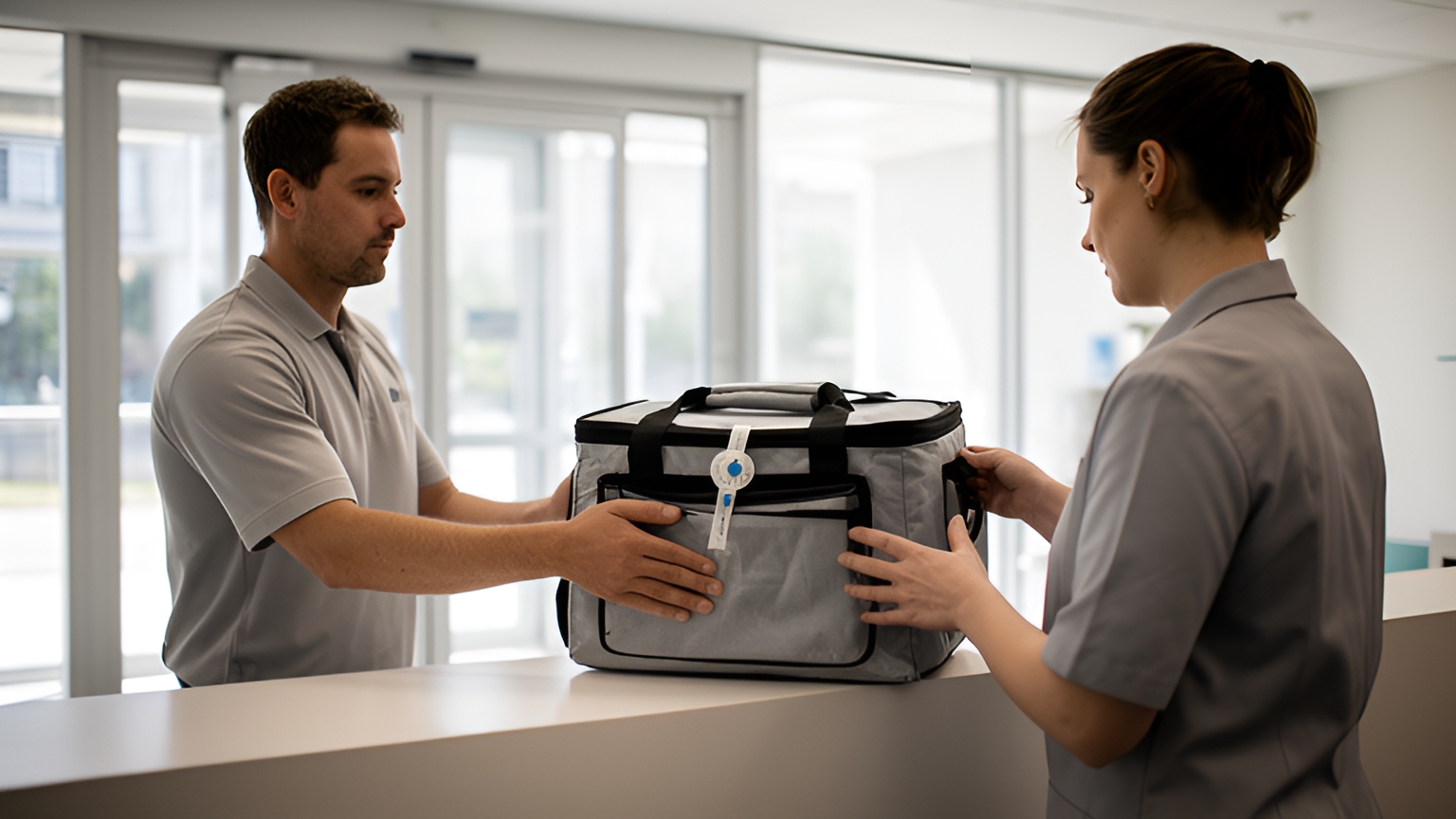
Clinics, labs and pharmacies want the item on time, in the right condition, with a record that shows it. That is why starting a medical courier business means selling reliable handling, not only transport. Before the first client, define your service tiers (STAT, same-day and scheduled loops), set up a handoff record covering pickup time, package condition, temperature band, recipient and delivery timestamp, and plan dense route loops that cover driver pay.
These are items that matter to someone's care. A specimen on its way to testing. A prescription a patient is waiting for at home.
Build the record and the routines around it first. Proof of delivery, live tracking and route optimisation software can then run that workflow every day, and the vehicles, loops and pay plan have something solid to fit around.
Why the shift to care at home is widening the market for a new medical courier
More care is happening in people's homes, and that changes what has to travel.
Across 23 OECD countries, the proportion of long-term care recipients who received care at home rose from 66% to 70% between 2013 and 2023, according to the OECD's Health at a Glance 2025.
For a new courier, that raises a practical question. Which links between homes, clinics, labs and pharmacies can your team serve on a steady schedule?
Repeat, scheduled work of that kind grows loop by loop, and these client types suit it:
- Clinics and collection centres that send specimens to a lab at set times each day
- Labs that move samples between their own sites
- Pharmacies that deliver prescriptions and health products to patients' homes
- Home care providers that move supplies or equipment between a base and clients' homes
Pharmacy home delivery shows this demand turning into everyday work. SuperPharmacy, an online pharmacy in Australia, made same-day prescription delivery a core service with Locate2u.
How to choose service tiers a small team can run well: STAT, same-day and scheduled loops
A service tier is a promise about time. Clients buy the promise, so each of the three tiers below needs a way of running that a small team can keep every single day.
| Tier | What the client needs | How a small team runs it well |
|---|---|---|
| STAT | One urgent item moved as soon as possible | A named on-call driver, a direct run and the recipient told before pickup |
| Same-day | Items booked during the day, delivered by an agreed time | A booking cut-off, with new jobs slotted into routes already running |
| Scheduled loop | The same pickups at the same times each weekday | A fixed stop order, fixed times and a standing handoff list |
The scheduled loop is the base to build on. Same pickups, same order, same times.
Drivers learn the route. Receiving staff learn when to expect the vehicle. Revenue arrives on a rhythm you can plan around.
Same-day work sits on top of the loops. Set a booking cut-off with each client so a new job can join a route that's already running instead of needing its own trip.
STAT is the tier to add with care. An urgent job pulls a driver off their plan, so offer it when a named on-call driver or a spare vehicle is ready for it.
Write each tier into a one-page service sheet per client: hours covered, booking cut-offs, STAT response time, after-hours and weekend cover, and who to call when a run is delayed. It becomes the reference everyone works from, new drivers included.
The general setup work, such as choosing vehicles and getting ready to trade, is covered in this guide to starting a delivery business.
How to build a handoff record that clinics and labs can rely on from the first pickup
The handoff record is what a clinic or lab is really buying. Every time an item changes hands, one line gets added.
Laboratory research shows why that record matters. Clinical chemistry studies place a large share of laboratory errors in the pre-analytical phase, the steps before testing, which cover collection, handling and transport.
One laboratory study found that samples which were never received formed the largest category of those pre-analytical errors. A handoff record answers the first question a lab asks in that moment: where is the sample now, and when did it last change hands?
A record that works from day one holds these details:
- Pickup time and the name of the person who handed the item over
- Item count and type, matched against the client's paperwork
- Package condition at pickup, with a photo
- Temperature band for the job
- Recipient name and signature
- Delivery timestamp and location
Paper can hold those fields, but it is slow to search when a lab rings to ask where a sample is. Locate2u's proof of delivery captures photos, signatures and timestamps at each delivery, so the record builds as the driver works and the office can open it straight away.
Receiving staff benefit too. With Locate2u's live tracking, you can share a tracking link so a lab or ward sees when the vehicle will arrive and has someone ready at the desk.
Agree one escalation step with each client before the first pickup. If packaging arrives damaged, a run is delayed or nobody is there to receive, the driver knows who to call and the record shows what happened and when.
Before the first pickup, check the handler training, specimen packaging categories and insurance cover that apply to each item type in your market. Then agree with each client who supplies the packaging, and write both on the service sheet.
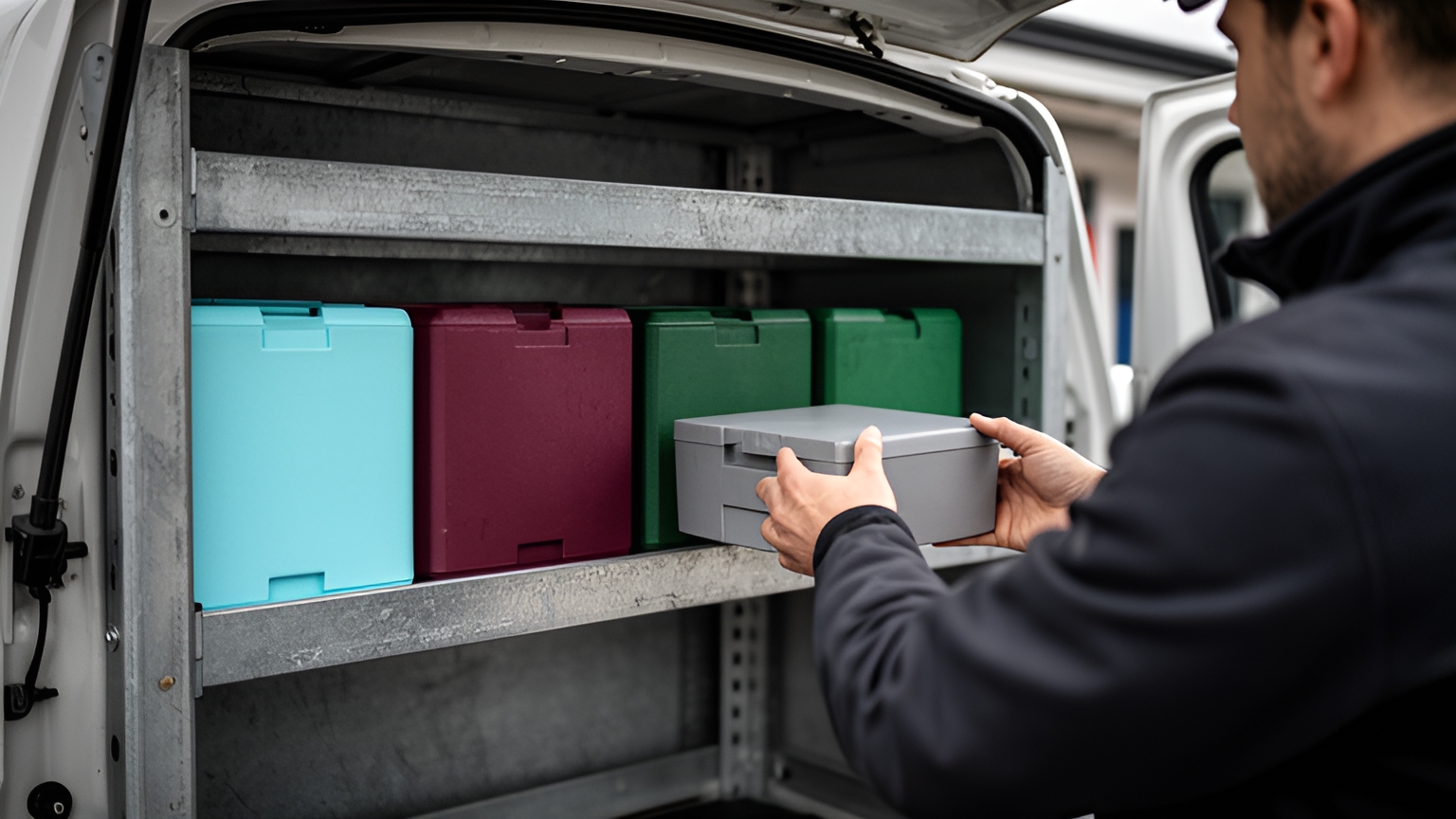
How to log ambient, refrigerated and frozen runs so every temperature band stays clear
Temperature is part of the job, so it belongs in the job record. Treat ambient, refrigerated and frozen as three separate bands, each with its own checks.
Cold-chain care matters well beyond any single run. A World Economic Forum article from 2018, passing on an older World Health Organisation estimate, reports that more than 50% of vaccines may be wasted globally every year because of temperature control, logistics and shipment-related issues.
That is a dated, global figure about vaccines, not specimen loops. Its lesson still fits a small courier: write the band on every job and check it at every handoff.
| Band | At pickup | During the run | At delivery |
|---|---|---|---|
| Ambient | Confirm the package is sealed and labelled for its band | Keep it out of direct sun and away from cabin heat | Package photo and recipient signature |
| Refrigerated | Confirm the client's cold packaging and note the band on the job | Keep it closed, in its packaging or a cooled compartment | Package and indicator photo, plus handover time |
| Frozen | Confirm the frozen packaging the client supplied and note the band | Keep frozen items together, early in the loop if the packaging has a hold time | Package and indicator photo, plus handover time |
Ask each client for the temperature range and packaging they specify for each band. The courier's role is to keep the item in that packaging, in the right part of the vehicle, and to record its condition at both ends.
If the packaging carries a temperature indicator, photograph it at pickup and again at delivery. Keep both photos with the job record so the condition at each handoff is clear to everyone.
Write the band into the job name or notes as well, so the driver sees it on every stop. Small habits like this keep three bands clear on a busy morning.
For a closer look at setting these runs up in Locate2u, see this guide to tracking medical and pharmacy delivery runs.
How clustering clinics into one daily loop makes revenue predictable, with a worked cost example
Route density decides whether a loop pays. A driver's day costs much the same whether it holds a handful of pickups or a full run, so the more paid stops a loop carries, the more comfortably it covers wages.
Clustering means grouping clinics that sit close together into one loop that runs at the same times each day, timed to reach the receiving lab before its cut-off.
Building the loop is a planning job that suits software. Locate2u's route optimisation generates routes from delivery locations, time windows and driver availability, and lets new jobs slot into routes that are already running.
The worked example below covers base driver wage only, on assumed inputs. It starts from the US Bureau of Labor Statistics figure: the median annual wage for light truck drivers was $44,860 in May 2025. The working days and loop sizes are assumptions for this worked example, so swap in your own roster and stop counts.
| Worked example line | Basis | Value |
|---|---|---|
| Annual median base wage | BLS median for light truck drivers, May 2025 | $44,860 |
| Working days a year | Assumed for this worked example | 250 |
| Base wage per day | Worked example: $44,860 ÷ 250 | $179.44 |
| Base wage per stop, assumed 8-stop loop | Worked example: $179.44 ÷ 8 | $22.43 |
| Base wage per stop, assumed 16-stop loop | Worked example: $179.44 ÷ 16, rounded | $11.22 |
The daily wage stays the same however many stops the loop holds. In this worked example, doubling the loop from 8 to 16 stops halves the base wage each stop carries, and that is the whole case for clustering.
For a full cost per loop per day, add vehicle running costs, insurance, packaging and on-costs from your own quotes and bills. Then price each loop to cover that total at the stop count you can reliably hold.
A thin loop can still grow. Look for neighbouring clinics to add, or move its pickup times so it shares a route with a denser loop.
How a pharmacy delivery team made same-day prescription runs part of its everyday service
SuperPharmacy has operated as an online pharmacy in Australia since 2000, delivering prescription medications, over-the-counter products and health essentials to customers nationwide.
As more customers came to expect same-day delivery for prescriptions, the delivery team needed planning that could keep pace.
Routes were planned by hand, which took up to one hour every day. When an urgent prescription arrived during the day, or a delivery needed rescheduling, the route had to be generated again from scratch.
The team moved its daily planning onto Locate2u route optimisation, with routes generated automatically from delivery locations, time windows and driver availability.
SuperPharmacy's case study reports that planning which took up to one hour of manual work now takes 10 minutes, a result from one pharmacy's operation in Australia.
The bigger change came during the day. New prescriptions can be slotted into existing routes on the fly without disrupting other deliveries, and that flexibility let SuperPharmacy offer same-day prescription delivery as a core service.
As SuperPharmacy puts it: "Before Locate2u, we had to generate new routes if we wanted to change anything. Now we can adjust the day's deliveries on the fly."
For a new medical courier, the useful pattern is a same-day tier sitting on top of planned routes. To test it on your own work, take one day's bookings, add an urgent job at mid-morning, and see whether the plan absorbs it without rebuilding the rest.
How to plan routes and loads that keep drivers safe, supported and fairly paid
Drivers are the people clinics and patients meet every day, and the whole service rests on them. Planning that looks after them is part of running a reliable medical courier.
The work is physical. The US Bureau of Labor Statistics notes that light truck drivers have one of the highest rates of injuries and illnesses of all occupations.
Its industry data for couriers and messengers records 8.0 total recordable injury and illness cases per 100 full-time workers in the US industry in 2024.
Those figures point to decisions made at the planning desk, long before a driver starts the engine.
Plan loads so heavier boxes sit low and near the door. Keep each pickup's items together, so the right package is always easy to reach.
Build routes that fit a normal shift with breaks included. Set delivery windows the plan can genuinely meet, so nobody has to hurry between stops.
Give after-hours and weekend runs extra support: a named on-call driver, a rest day after an on-call shift, and someone at base watching the run. Locate2u's real-time tracking gives dispatch a live view of every vehicle in the fleet, so someone always knows where the evening run is.
Set pay from your local official wage data (for example, the BLS median in the US), and review it when a loop grows or changes. Dense loops help here as well, because a day with more paid stops leaves more room to pay drivers well.
After each new loop's first week, ask the drivers how it ran. They see the parking, the receiving desks and the timing that work in practice, and their input shapes a better next version of the route.
Frequently asked questions
What should you ask a clinic or lab before quoting a scheduled run?
Ask for their pickup windows, the item types and temperature bands involved, who supplies the packaging, and the receiving lab's cut-off times. Also ask whether they need after-hours or weekend cover and who to call when a run is delayed, so the quote matches the work.
How can a small team cover after-hours and weekend medical runs?
Set the coverage hours in writing for each client and treat after-hours work as its own STAT tier with a named on-call driver. A short roster that everyone can see, plus an agreed escalation contact at the client, keeps urgent jobs moving without stretching the weekday team.
What should a driver do when the receiving department is closed on arrival?
Agree a named alternate recipient and an escalation contact with each client before the first run. If nobody can receive the item, the driver records the attempt with a photo and timestamp, keeps it in its temperature band and follows the client's agreed return or redelivery step.
Should a new medical courier start with pharmacy home deliveries or lab specimen loops?
Start with the work your current vehicles, packaging and team can handle consistently, then add the other line once the handoff record is routine. Pharmacy runs to homes and fixed specimen loops between clinics and labs use the same proof and tracking workflow but different schedules, so pilot one before adding the second.
A medical courier earns repeat work by making every handoff easy to trust. Write down your tiers, start the handoff record on the very first pickup, and grow dense loops that cover a good day's pay. To see how proof of delivery and handoff records would fit your own runs, book a call with the Locate2u team.