Garbage Route Planner: How to Build Balanced Waste Collection Routes
Drafted with AI assistance, edited and fact-checked by Sean Flannery. See our editorial policy.
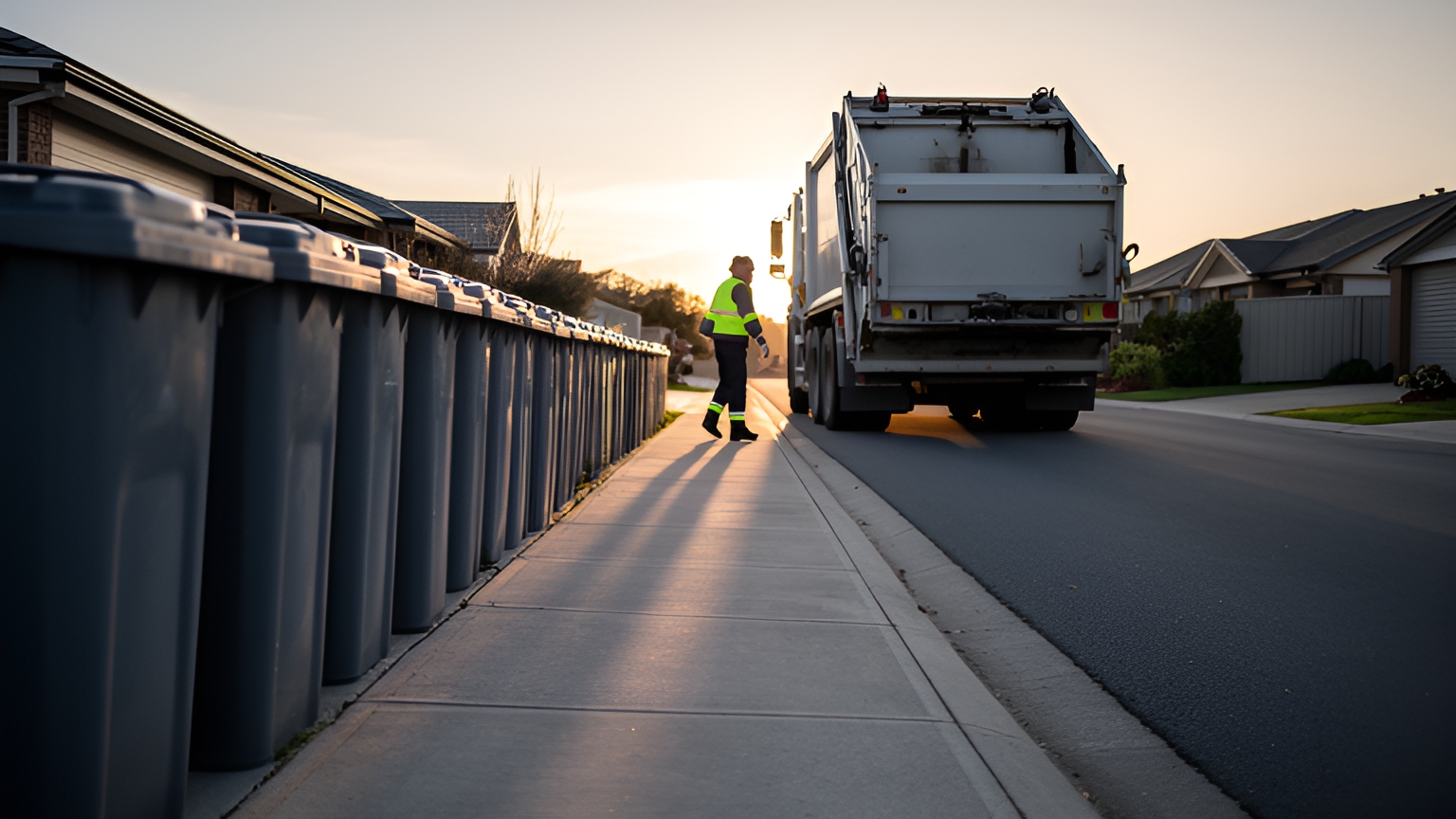
A garbage route planner sequences every bin, street and disposal trip into balanced daily collection routes, accounting for service time per stop, truck capacity, depot location and road conditions. Planning around the full workday, not just distance, gives crews fairer workloads, realistic finish times and more reliable collection for residents.
The shortest line on a map is only part of the answer. A collection day also has slow stops, a truck that fills up, a run to the tip and a drive home. A plan that leaves any of them out will finish later than it says.
What a garbage route planner does for a collection crew's working day
For the crew, a good plan answers a few simple questions before the truck leaves the depot. Which street comes first? When does the truck head to the tip? What time should everyone be back?
A garbage route planner turns the stop list into those answers. It splits streets into a route for each truck, puts the stops in a sensible order and fits disposal runs and breaks around the collection work.
The payoff shows up on the road. Finish times become predictable, the work is shared evenly across the fleet, and residents see their bins emptied on the expected day.
Planning speed matters as well, especially when requests arrive after the routes are set. In one business's result from prescription delivery in Australia, rather than waste collection, SuperPharmacy's case study reports that the online pharmacy cut route planning time by 83%.
Its delivery team had been spending up to one hour every day planning routes by hand. When an urgent prescription came in, or a delivery needed rescheduling, the whole route had to be regenerated from scratch.
With Locate2u's route optimisation, that hour of manual work became 10 minutes, with routes generated automatically from delivery locations, time windows and driver availability. New prescriptions slot into existing routes during the day without disrupting other deliveries, which let SuperPharmacy offer same-day prescription delivery as a core service.
As the team puts it: "Before Locate2u, we had to generate new routes if we wanted to change anything. Now we can adjust the day's deliveries on the fly."
A collection depot can run the same test on its own work. Time how long the office spends building tomorrow's runs by hand, then build the same stop list in a planner and compare the two.
How route hours connect to crew time and wage costs
Collection is people-powered work, and the route plan decides how those hours are spent.
In the US, the Bureau of Labor Statistics May 2023 wage estimates count 135,430 refuse and recyclable material collectors, with a mean hourly wage of $22.99 and a mean annual wage of $47,810.
Those are occupation-wide means, not the rate for any particular crew. Still, they show what a route hour represents: every hour a route runs is an hour of pay for each collector on the truck.
That makes route hours, rather than kilometres, the figure to plan around. A route that looks short on the map can still run long if it stacks slow stops together or reaches the tip at a busy time of day.
Balance matters as much as the total. When one truck is back well before another, the work isn't shared evenly, and the late finish tends to land on the same crew day after day.
Moving a street from one route to another changes two days at once, which is why balancing a whole fleet by hand gets slow. The maths behind multi-vehicle route planning shows how software weighs those trade-offs across every truck at once.
A simple starting check: compare planned and actual finish times for each route over a fortnight. A route that regularly finishes late is a sign the plan underestimates the work there, and the fix sits in the plan.
Planning around service time per stop instead of stop count
Two routes can carry the same number of stops and produce very different days.
Take a street of kerbside wheelie bins with short gaps between houses. Now take a row of apartment blocks, each with a shared bin room, several bins to wheel out and a tight entrance. On a stop list they look identical. At the kerb, they are not.
A planner balances routes properly only when each stop carries a realistic service time: how long the truck is stationary at that address. Add it to the driving time between stops and the route length starts to match the real day.
Group stops into a handful of types and give each its own service time:
- standard kerbside houses
- apartment blocks and shared bin rooms
- commercial premises with larger bins
- assisted collections, where bins are collected from the property
- rural properties with long driveways
Where do the service times come from? Timestamped stop records are the cleanest source, since each completed stop shows when the truck arrived and left. Start with a few weeks of recorded runs and refine as more data comes in.
Once service times are in place, the planner can balance routes on total working time. A route heavy with apartment blocks gets fewer stops. A route of quick kerbside stops gets more. Both finish at a similar time.
Fitting disposal trips, truck capacity and depot returns into a realistic schedule
A collection truck has a natural limit. Once it's full, collection pauses until it's been emptied.
So a realistic route includes the drive to the landfill, transfer station or recycling facility, the time on site and the drive back to the next street. Leave those legs out and the plan looks tidy on screen but finishes late on the road.
The planner needs a few inputs to model this well. Set the truck's capacity for each waste stream, the location and opening hours of each disposal site, an expected time on site, the depot's start and finish point, and the shift length with breaks.
Timing the tip run is where good sequencing pays off. Ideally the truck reaches capacity close to the disposal site, not on the far side of the service area, so the empty run back into the route stays short.
The end of the day deserves the same thought. Finishing the last collection leg near the tip lets the final disposal trip lead straight back to the depot, rather than sending a full truck across town.
Each waste stream has its own shape. General waste, recycling and green waste can go to different facilities, so the best street order for one stream may look quite different for another.
Locate2u's routing engine accounts for vehicle types, driver availability and geographic constraints, and dispatch planning in Locate2u is where the office assigns each balanced route to its truck and crew.
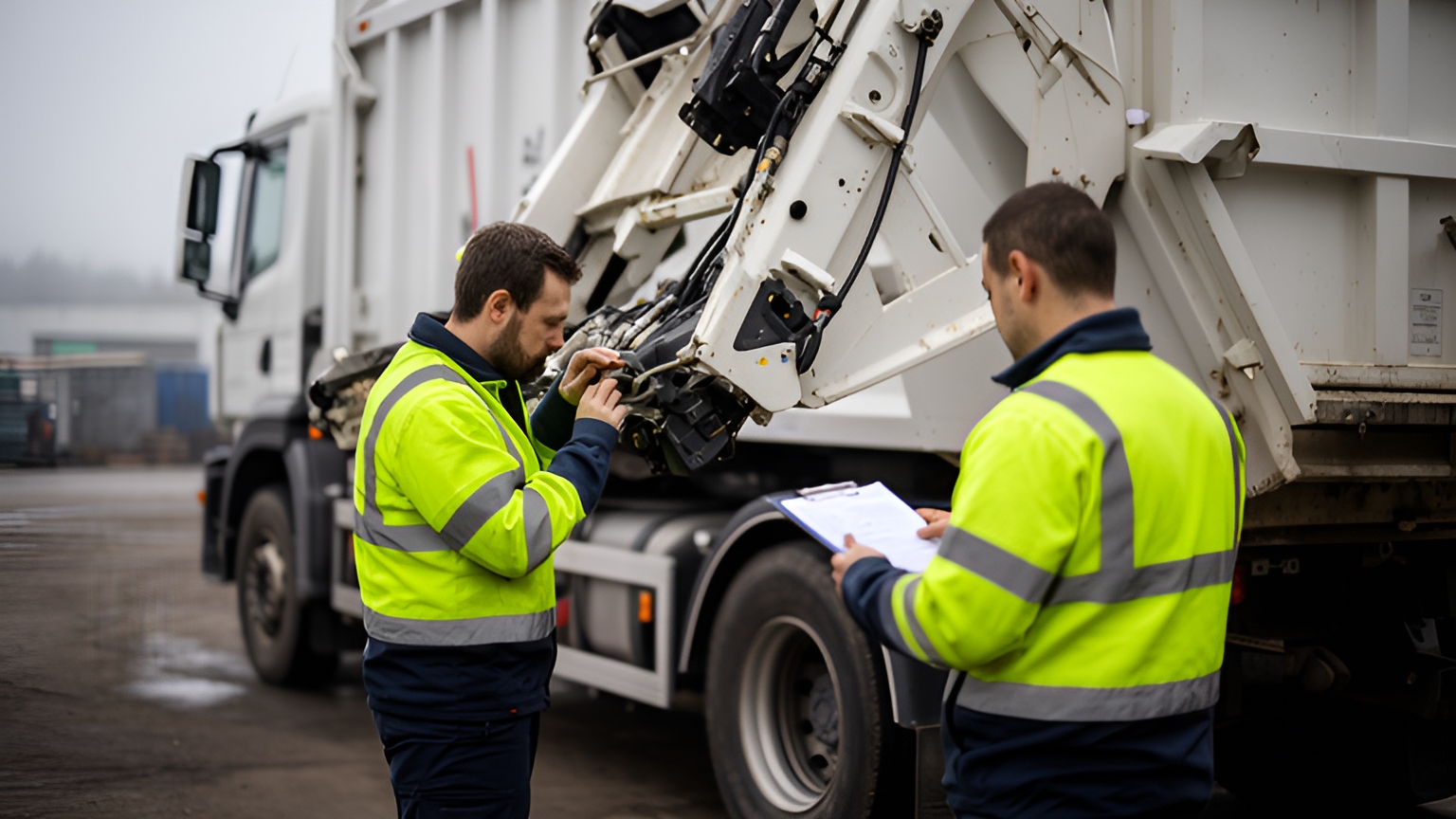
Sequencing streets for safer collection and loading
Route order shapes how crews move around the truck all day, so safety belongs in the plan from the start.
The US Bureau of Labor Statistics Census of Fatal Occupational Injuries recorded a fatal work injury rate of 37.4 per 100,000 workers for refuse and recyclable material collectors in 2024, with 36 deaths.
Stop sequence is one safety factor the office settles before the shift begins. That makes it worth the same care as distance and time.
Sequencing choices that make each stop simpler for the crew:
- Plan each street so the truck's loading side faces the kerb wherever the layout allows, which cuts down on crossing traffic.
- Approach dead ends and cul-de-sacs in a direction that lets the truck turn rather than reverse, if there's room.
- Collect busy main roads, and streets near schools, outside peak traffic and school drop-off and pick-up times.
- Record access notes such as narrow lanes, low branches or overhead wires on the stop itself, so every crew on that route sees them.
The Locate2u driver app keeps the planned stop sequence in the cab and updates it when dispatch adds or moves a job, so the crew always works from the current order.
Crews know their streets better than any map. Invite them to flag spots where the sequence feels awkward, then build those notes into the next version of the plan.
Adjusting routes as waste volumes and service areas change
A route plan rests on assumptions about how quickly trucks fill. Those assumptions should be local, because waste volumes differ widely from place to place.
Eurostat reports that 517 kg of municipal waste per capita was generated in the EU in 2024, ranging from 305 kg per capita in Romania to 782 kg per capita in Austria.
In England, Defra's local authority collected waste statistics put household waste at the equivalent of 376 kg per person in 2024, down 1 kg from 2023. That figure covers household waste only, so it isn't a like-for-like comparison with Eurostat's municipal waste measure.
The planning lesson is in the spread, not the comparison. The same number of households can fill a truck at very different rates in different places, so a capacity rule borrowed from another area may send trucks to the tip too early or too late.
Base fill assumptions on your own records instead, such as weighbridge tickets or the point in each route where the truck heads for disposal. Refresh them when volumes shift. If green waste climbs in the growing season where you operate, plan earlier tip runs for those weeks.
Service areas change too. The World Bank's 2018 What a Waste report puts collection rates at about 51 percent in lower-middle-income countries and about 39 percent in low-income countries. In those markets, extending coverage means adding new streets to the routes already running.
Whenever new streets, estates or services are added, re-optimise the whole route set rather than tacking stops onto the end of the nearest route. Appended stops quietly unbalance the fleet. A fresh plan shares the new work out evenly.
What fast same-day re-planning looks like in practice
Collection days change after the trucks leave. A bulky item pickup is booked mid-morning, a resident reports a missed bin, or a road closure blocks part of a route.
Fast re-planning handles each change without rebuilding the whole day. Real-time tracking gives dispatch a live dashboard showing every vehicle in the fleet, so the office can see which truck is closest and how far through its route it is.
From there the steps are short. Check the truck has room, since a bulky item can fill space faster than standard bins. Slot the job into the best-placed live route. Send the update to the cab, and have the crew record a photo and timestamp at the stop for a clear service record.
Agreeing a few rules in advance keeps these calls quick: which requests go same-day, which wait for the next scheduled run, and how much spare room each truck keeps for late additions.
This is the difference between a static plan fixed at the start of the day and a dynamic one that keeps adjusting. The guide to static and dynamic route planning explains when each approach fits.
A step-by-step checklist for rolling out a new collection route plan
A new route plan changes crews' working days and residents' collection days, so a steady rollout pays off. Work through these steps in order.
- Gather clean stop data: addresses, waste streams, collection days, bin counts and access notes for every service point.
- Set service times by stop type, using timestamped stop records where you have them.
- Enter the fixed inputs: truck capacity by stream, disposal sites and their opening hours, depot location, shift length and breaks.
- Build a separate route set for each waste stream and collection day, then balance each set on total working time.
- Review the draft routes with the crews who know the streets, and adjust for access and safety notes before anything goes live.
- Give residents clear notice of any change to their collection day.
- Start the new plan on a small group of routes, compare planned and actual finish times, and close any gaps before extending it to the whole fleet.
- Review finish times and exceptions each month, and re-optimise when streets, services or volumes change.
Exceptions make useful planning data. A run of late or missed stops at the tail of one route points to a route carrying more work than the plan allows, which a re-balance fixes.
For help mapping these steps onto your own collection area, book a call with the Locate2u team to talk through your routes, fleet and next steps.
Frequently asked questions
Can one route plan cover general waste, recycling and green waste on different days?
Yes. Treat each waste stream and collection day as its own route set, because bin counts, truck capacity and disposal sites differ by stream, and re-optimise each set separately so one stream's workload doesn't distort another's.
How often should waste collection routes be re-optimised?
Review them whenever new streets or services are added, when a crew's finish time keeps drifting later, or when volumes shift with the seasons. A quick monthly check of finish times and exceptions shows which routes need a fresh plan.
Do collection crews need a phone app to follow an optimised route?
An app keeps the stop sequence in the cab and updates it when dispatch adds or moves a job. The Locate2u driver app also lets crews record photos and timestamps at a stop, giving a clear service record.
Can on-demand or bulky item pickups be added to a route already on the road?
Yes, a dynamic planner can slot an extra pickup into the best-placed live route instead of rebuilding the whole day. Check capacity first, since bulky items can fill a truck faster than standard bins.
Balanced collection routes come from honest inputs: realistic service times, truck capacity, disposal trips and the crew's whole day, refreshed as streets and volumes change. Locate2u brings route optimisation, dispatch planning, real-time tracking and a driver app together for multi-stop operations, and Locate2u's route optimisation software is a good place to start when you want routes built on those inputs.