Routing Apps for Delivery Drivers: How to Choose a Multi-Stop Route Planner for Your Team
Drafted with AI assistance, edited and fact-checked by Sean Flannery. See our editorial policy.
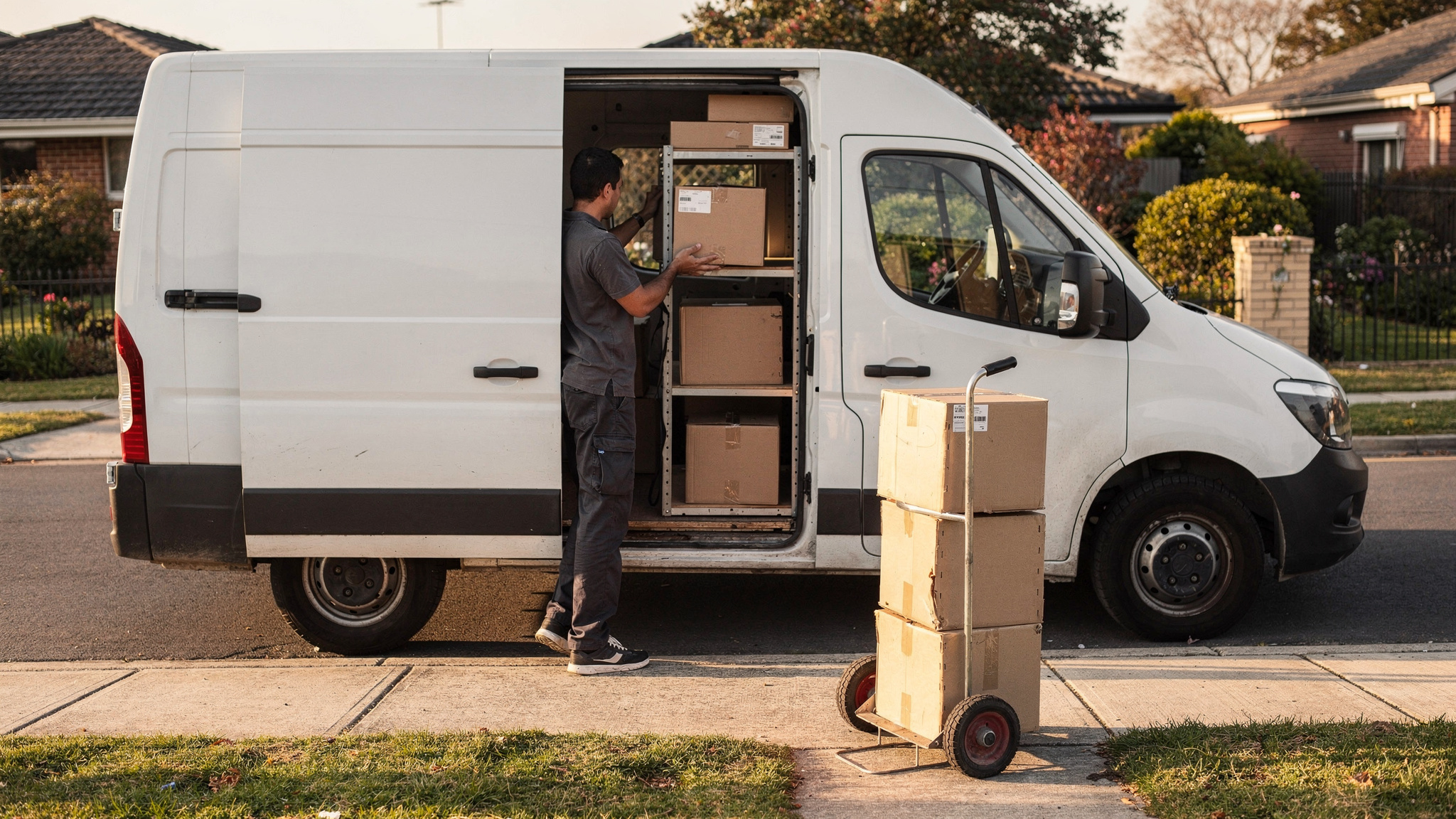
Routing apps for delivery drivers turn a list of addresses into an ordered multi-stop route, then guide each driver through it with navigation, live ETAs for customers and proof of delivery at each stop. The best fit plans for time at the door as well as time on the road, and lets dispatch adjust the day as orders change.
Getting a vehicle from one address to the next is the easy part to automate.
The harder jobs are planning a day that finishes when it says it will, keeping customers ready at the door and changing the plan mid-morning without starting again. Those jobs are what make a routing app useful to a delivery team.
What a routing app does for drivers on a multi-stop day
Start with how delivery work is usually handed out. The U.S. Bureau of Labor Statistics describes it plainly: "Most drivers generally receive instructions to go to a delivery location at a particular time, and it is up to them to determine the best route."
That works well for a handful of drops. On a day with dozens of stops, each with its own timing and access needs, the best order is a big puzzle to solve at the depot before the engine starts.
A routing app solves that puzzle first, then hands the driver a clear plan. On a multi-stop day it does four jobs:
- Sequencing: putting every stop in an order that respects delivery windows and the vehicle's load.
- Navigation: passing each leg to turn-by-turn directions so the driver can focus on the road.
- Customer updates: sending a tracking link and live ETA so the recipient knows when to expect the delivery.
- Proof of delivery: capturing a photo, signature or timestamp at the door, so the record is complete when the vehicle returns.
A navigation app on its own covers only the second job. That's worth remembering when you compare options, because two apps can show the same map and still plan very different days.
The time saved shows up in the office as well. SuperPharmacy's case study, told in full at the end of this guide, reports that daily route planning which once took up to one hour now takes 10 minutes.
Locate2u brings route optimisation, a driver app, live tracking and proof of delivery together in one platform, so each of those four jobs runs from the same plan.
Why good stop sequencing matters more as online shopping grows
Online orders make up a large share of retail sales, and that share differs by market. E-commerce accounted for 17.1 percent of total US retail sales in the second quarter of 2026, according to the U.S. Census Bureau.
In Great Britain the share is higher, and rising. The Office for National Statistics reports that the proportion of retail sales made online rose from 28.4% in July 2026 to 28.8% in August 2026.
For a delivery team, that means more residential stops and more customers expecting a clear arrival time. So when you trial an app, load it with a day that reflects where your work is heading, not only where it is today.
The final leg is also where a large part of the cost sits. The Capgemini Research Institute found that last-mile delivery accounts for 41% of total logistics supply chain costs, a figure from its 2019 report that Capgemini quoted again in October 2023.
With that much riding on the last mile, the stop order deserves a close look. Run the same day's orders through each app on your shortlist and compare the routes side by side.
The other early choice is between static and dynamic routing.
A static route is planned once before the vehicle leaves and stays fixed. It suits regular runs, such as scheduled wholesale drops, where the stop list barely changes.
A dynamic route can be re-sequenced during the shift as new orders, cancellations or delays arrive. Teams offering same-day delivery need this, because the morning plan is rarely the afternoon plan.
Locate2u's guide to delivery route optimisation covers the planning side in more depth.
How to plan for time at the door as well as time on the road
Road time is only part of a delivery driver's day. A large share happens outside the vehicle: finding a place to stop, walking to the entrance, waiting at reception, collecting a signature.
Many routing models plan only the driving. So a route can look tidy on screen and still finish later than planned, because the minutes at each door were never counted.
Multiply a short allowance at every stop by a full day of stops and the total grows fast. Planning it in is what makes a finish time believable, for the driver and for the customer waiting at home.
When you assess an app, look for these three things.
Service time per stop. A default allowance for a standard drop, plus longer times for stops that need them: a heavy item, an apartment block with a lift, an order that needs a signature.
Stop notes the driver sees on arrival. Gate codes, the best loading area, which entrance to use. This knowledge builds up over many runs, and a good app lets the team record it so every driver benefits.
Planned against actual. Arrival and departure times recorded at each stop show where door time runs long, so allowances can be tuned for next week.
Locate2u builds routes around delivery locations, time windows and driver availability. Whichever app you trial, ask how it handles service time, then check the result on a route your drivers already know well.
How live ETAs and tracking links keep customers ready to receive
A delivery goes best when someone is ready to receive it. Chilled food, prescriptions and bulky building materials all need a person in the right place at the right time.
Capgemini lists real-time ETA estimation alongside route optimisation and capacity planning among the technology areas that last-mile delivery requires.
The link between the two is simple. An accurate ETA depends on a realistic route, door time included, and a tracking link puts that ETA in the customer's hands.
Look for an app that sends the link automatically when the route starts, updates the ETA as the driver progresses and lets the customer know when the vehicle is close.
Locate2u's live tracking and customer notifications give each recipient a link to follow their delivery. Customers who can see their order coming have less reason to call, which leaves the office free to plan.
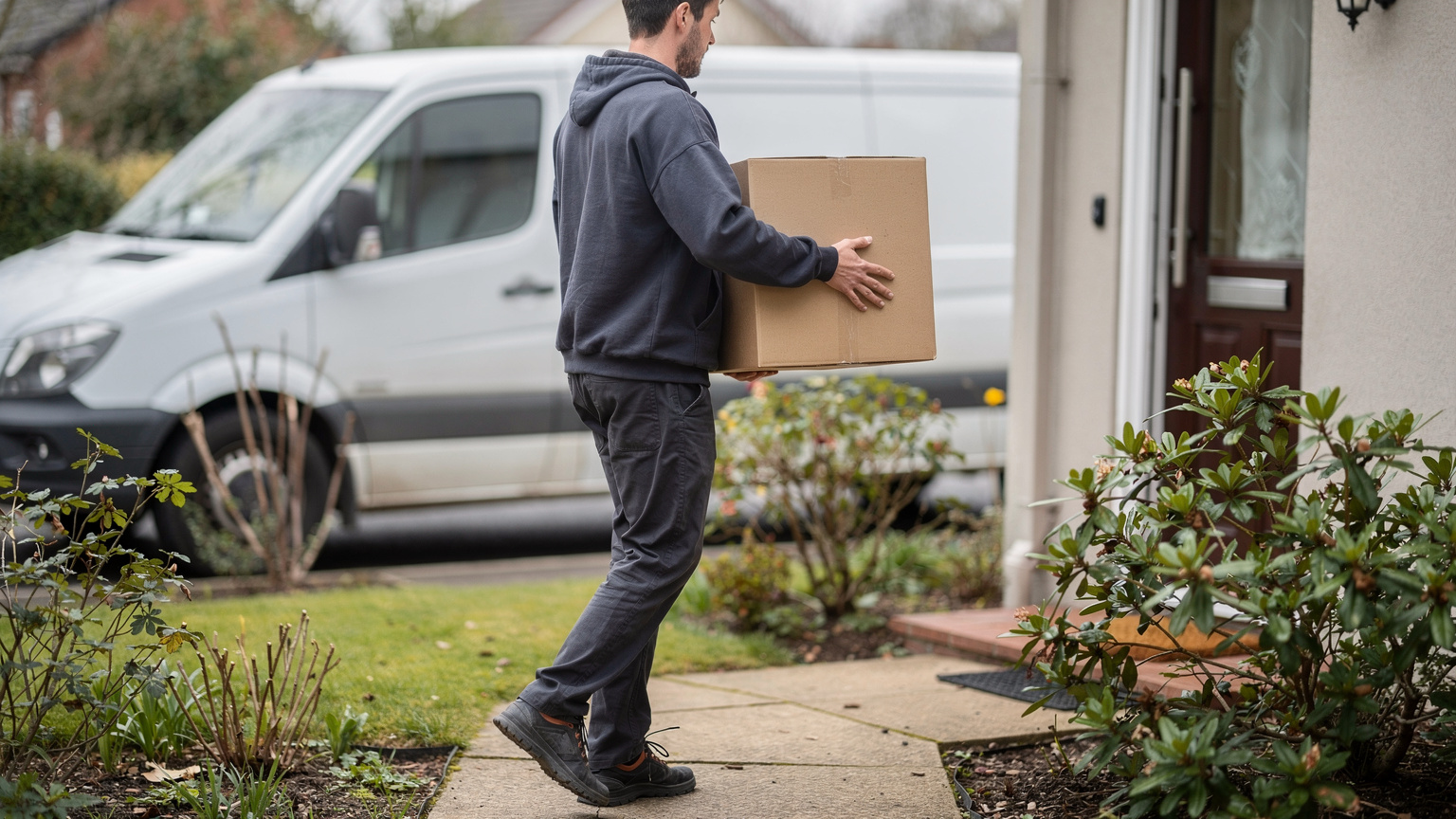
How smooth depot handovers help every route start on time
Every route starts with a handover: goods moving from the warehouse or depot into the right vehicle, with the right driver and the right paperwork.
That moment carries real weight. McKinsey analysis published in January 2024 finds that between 13 and 19 percent of logistics costs could stem from inefficient mid- and last-mile handover interactions, amounting to up to $95 billion a year in the United States economy alone.
That estimate covers handovers broadly, not routing alone. Even so, it points to a useful place to improve: the stretch between a finished route plan and the first stop.
A few habits help routes leave the bay on time.
Finalise routes before loading starts, so the warehouse team knows which vehicle each order belongs to.
Load in reverse stop order. The first delivery then sits nearest the door, and the driver isn't unpacking the vehicle at stop one.
Put each driver's stop list in the app before they leave, so checks happen once, at the bay, rather than at the kerb.
Feed late orders straight into the plan instead of onto a separate note. A dynamic routing app makes that straightforward.
Good dispatch planning keeps all of this in one view. With Locate2u, the dispatch team sees every vehicle on a live dashboard, so a route running behind is visible early and a later stop can be reassigned to another vehicle.
How a clear driver app helps new and experienced drivers alike
Delivery teams welcome new drivers regularly. The U.S. Bureau of Labor Statistics projects about 152,700 openings a year, on average, for delivery truck drivers and driver/sales workers over the decade.
A clear driver app helps a new team member run a confident first route. The stop order, the notes and the proof steps sit on one screen, so there is less to memorise on day one.
So test any app with your newest driver as well as your most experienced one. Ask both what slowed them down.
Experienced drivers bring something no algorithm starts with: local knowledge. The best routing apps for delivery drivers make that knowledge useful to everyone, through stop notes the next driver sees and a view of the whole route ahead, not just the next turn.
A few practical checks make a big difference on the road:
Does the app keep working when mobile coverage drops? Are the buttons large enough to use quickly at the door? How many taps does it take to complete a delivery?
Proof of delivery deserves its own test. Locate2u's driver app captures photo evidence, signatures and timestamps for every delivery, giving the driver, the office and the customer the same clear record.
A practical checklist for choosing a multi-stop route planner
Demo data always looks good. Your own orders, addresses and time windows tell you far more.
Use this table to structure a trial. Each row is a check you can run in an afternoon.
| What to check | Why it helps | How to test it |
|---|---|---|
| Delivery window per stop | Stops with narrow windows are reached in time | Set real windows and see whether the app shows when a route cannot meet one |
| Service time per stop | Finish times include time at the door | Give some stops longer allowances and check the ETAs move |
| Re-sequencing during the shift | Same-day orders fit without rebuilding the day | Add an order mid-route and watch how the plan updates |
| Driver app clarity | New and experienced drivers follow the plan easily | Have two drivers run the same route and note their questions |
| Customer tracking links | Recipients are ready when the driver arrives | Send yourself a link and follow a live route |
| Proof of delivery | Every drop has a clear record | Capture a photo and signature, then find the record from the office |
| Order import | Fewer manual steps between order and route | Import a real day's orders from your current system or online store |
| Billing model and terms | Costs stay predictable as the team grows | Compare per-user or per-vehicle billing, contract length and setup fees |
Then run the trial in this order:
- Pick a normal day and your busiest recent day.
- Run both through each shortlisted app with real addresses, windows and service times.
- Have drivers complete at least one live route, then compare the planned finish with the actual one.
- Ask the office how long planning took and how easily changes went in.
For the last row of the table, Locate2u's plans are set out on the pricing page, so you can compare like for like.
How an online pharmacy cut daily route planning to ten minutes
SuperPharmacy's case study reports that the business cut route planning time by 83% and unlocked same-day prescription delivery with Locate2u.
SuperPharmacy has operated as an online pharmacy in Australia since 2000. It serves customers nationwide, delivering prescription medications, over-the-counter products and health essentials to the door.
As demand for faster delivery grew, the delivery team was spending up to one hour every day planning prescription routes by hand. Changing anything meant regenerating the whole route from scratch.
With customers increasingly expecting same-day delivery for their prescriptions, the business moved to Locate2u's route optimisation to automate daily planning.
What once took an hour of manual work now takes just 10 minutes. Routes are generated automatically based on delivery locations, time windows and driver availability.
The bigger change came during the day. New prescriptions can be slotted into existing routes on the fly without disrupting other deliveries, and that flexibility enabled SuperPharmacy to offer same-day prescription delivery as a core service.
As the case study puts it: "Before Locate2u, we had to generate new routes if we wanted to change anything. Now we can adjust the day's deliveries on the fly."
This is one Australian business's result, told as its case study tells it. It shows dynamic routing and time-window planning at work in a team where every order matters to a patient.
Frequently asked questions
Is a routing app the same as a navigation app?
No. A navigation app gets one driver to one address, while a routing app decides the order of many stops across one or more vehicles first and then hands each leg to turn-by-turn directions.
What is the difference between static and dynamic routing?
A static route is planned once before the vehicle leaves and stays fixed for the day. A dynamic route can be re-sequenced during the shift as new orders, cancellations or delays come in, which suits teams that take same-day work.
Do delivery time windows change how a route is planned?
Yes. A stop with a narrow window can be placed ahead of a closer stop so it is reached in time, so check that any app you trial lets you set a window per stop and shows when a route cannot meet one.
What can a team do when one day's orders exceed its drivers?
Route the stops your own fleet can comfortably carry, then book on-demand courier capacity for the remainder. Zoom2u, Locate2u's sister brand, provides on-demand and same-day delivery capacity that can absorb overflow on busy days.
A routing app earns its place when the plan matches the real day: stops in a sensible order, door time counted, customers ready and dispatch free to adjust as orders change. Trial any option on your own orders with your own drivers before you decide. To see how Locate2u plans multi-stop days around time windows and live changes, explore Locate2u route optimisation.