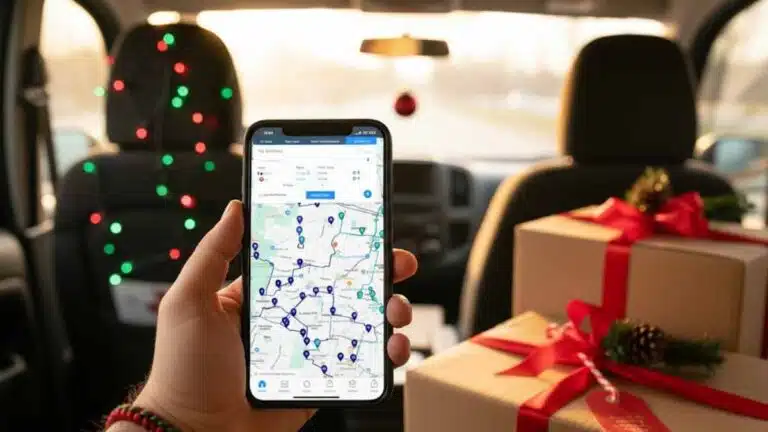

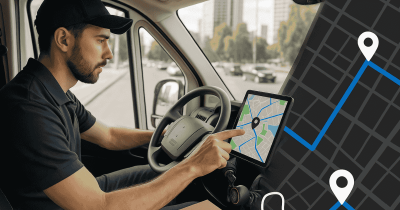
With delivery volumes climbing and budgets under pressure, static routes and manual planning just don’t cut it anymore. That’s where AI route optimization comes in.
AI route optimization uses real-time data and machine learning to plan and re-plan routes as the day unfolds. But is it worth the switch?
In this guide, we explain how AI routing differs from traditional methods, what benefits you can expect, the challenges to prepare for, and a practical path to implementation.
You’ll also learn which features matter most for last-mile success, from real-time tracking to proof of delivery and everything in between.
What is AI route optimization?
AI route optimization uses advanced algorithms, historical patterns, and live data (traffic, weather) to produce highly efficient routes and continuously adjust them as conditions change.
Unlike static approaches that set routes once per day, AI-driven systems re-optimize on the fly, helping teams maintain on-time performance while reducing distance, fuel, and idle time.
The key concept here is dynamic re-optimization.
As new orders arrive, a road closes, or a customer reschedules, the system updates plans automatically instead of relying on manual dispatcher intervention.
AI route optimization vs traditional methods
AI routing differs from traditional methods in several ways, from how it creates efficient routes to its learning process, personalization, and complexity handling.
1. Data inputs
The biggest difference comes down to brainpower. Or rather, data inputs.
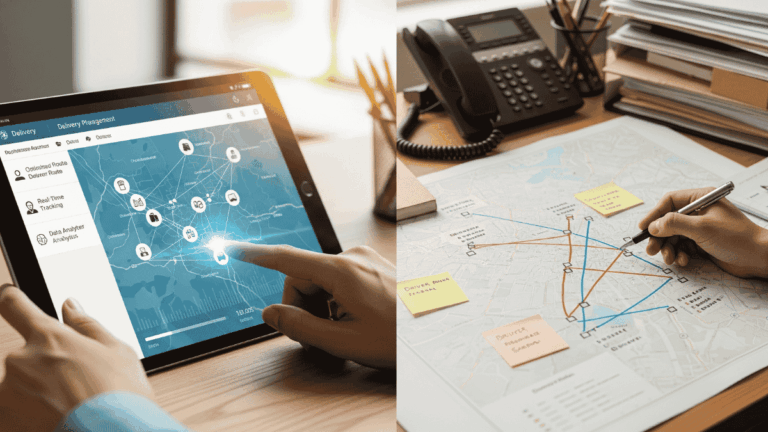
Traditional routing tools are basically “set it and forget it.” They take a static traffic map, perhaps add a few historical averages, and the software spits out a route for the day.
If traffic snarls, a storm rolls in, or a road suddenly closes? Too bad. Dispatchers are left scrambling.
2. Real-time rerouting
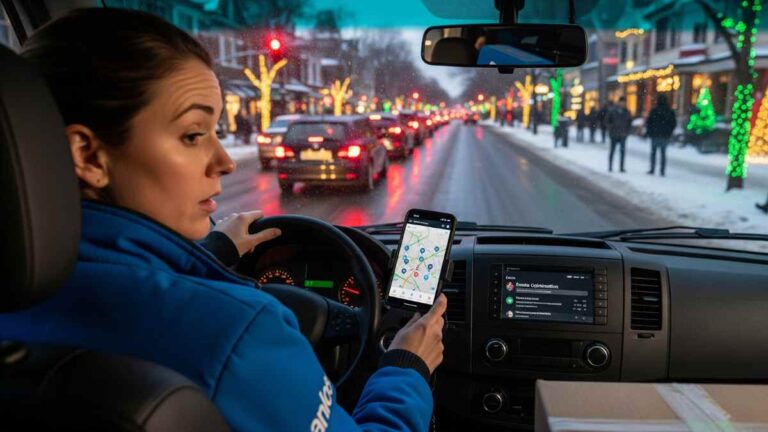
AI routing doesn’t work that way. It constantly pulls live traffic, weather, and historical data to re-optimize on the fly.
This makes it more adaptable than traditional tools.
3. Complexity handling
Since AI handles multiple constraints all at once, it makes it easier to deal with constant constraints popping up.
These constraints could include, for example, delivery windows, vehicle capacities, driver breaks, service times, staff rosters, working hours, etc.
4. Learning over time
Even better, AI learns continually. Every run makes the system a little smarter, because it tracks how long deliveries actually take, how drivers perform, and where bottlenecks really happen.
And in time, it starts to anticipate problems, instead of just reacting to existing problems.
5. Personalization
Perhaps the biggest advantage AI has over rigid old-school systems is that it can personalize routes based on driver skills, customer preferences, or even service levels.
Traditional methods are way less flexible when it comes to managing skill sets, a customer’s preferred delivery window, and so on.
What are the advantages of AI route optimization?
Let’s look at the advantages of AI route optimization. It shines where it matters the most: To keep things moving and deliveries on time.
1. Adaptability
This is called dynamic real-time adaptability. If there’s a crash on the freeway or a sudden downpour, the system reroutes automatically to protect delivery times without anyone needing to step in.
2. Higher efficiency and precision
Adaptability like this also makes your delivery processes much more efficient and precise. Especially since it saves fuel, cuts down on wasted kilometers, and helps drivers avoid sitting idle.
3. Scalability
It also scales like nothing else. With AI route optimization, you can confidently plan hundreds or thousands of stops with constraints like time windows, multi-depot operations, and vehicle capacities.
4. Resource optimization
On top of that, it uses historical patterns to predict busy periods and pre-position resources so you’re ready before demand spikes.
Jobs get matched to the right vehicle and driver, which means more first-time delivery success and fewer frustrated customers.
5. Better customer experience
Meanwhile, your customers get tighter delivery windows, real-time updates, and proof of delivery that actually holds up.
No more pesky “where’s my order?” noise. Your customers now trust in your delivery process and the service you provide.
ALSO READ: Delivery Fails: How to Turn Bad Reviews into Customer Loyalty
Where AI meets resistance and how to mitigate it
Unfortunately, not everyone jumps on board with AI routing from day one. So you might come up against resistance and limitations.
Let’s look at potential roadblocks and how to overcome them.
1. Implementation complexity
Integrating GPS, telematics, and order data can feel overwhelming, especially if the data is being pulled in from different systems.
The smart play is to start small. Pick just one region or fleet segment, and run a pilot on that segment so you can measure the value before scaling.
2. Data quality dependency
Data quality is another hurdle. Messy addresses or missing GPS signals will sabotage even the smartest algorithm.
The solution here is to invest in clean data, geocoding checks, and consistent driver app use. It will pay off, trust us.
3. Computational requirements
While these AI routing systems are powerful, they might also be heavy on processing.
The key to this potential stumbling block is cloud-based solutions. It will easily handle the big calculations while adjusting in real-time throughout the day.
4. No guaranteed ‘perfect’ optimal route
It’s also worth resetting expectations.
AI won’t always deliver the “perfect” route. Instead, it will aim for the best possible route fast, which in practice often beats waiting for a flawless plan that comes too late.
5. Change management
Finally, there’s the human factor. Drivers and dispatchers may resist change because they’re used to their way of doing things.
The fix here is to show them how it makes their lives easier. This could include fewer backtracks, clearer instructions, less firefighting, happier customers, and better driver performance.
Training, transparency, and feedback go a long way toward smoothing adoption.
What does ‘good’ look like? A relatable before-and-after
Before: A national home-delivery team starts each day with static routes built around zip codes.
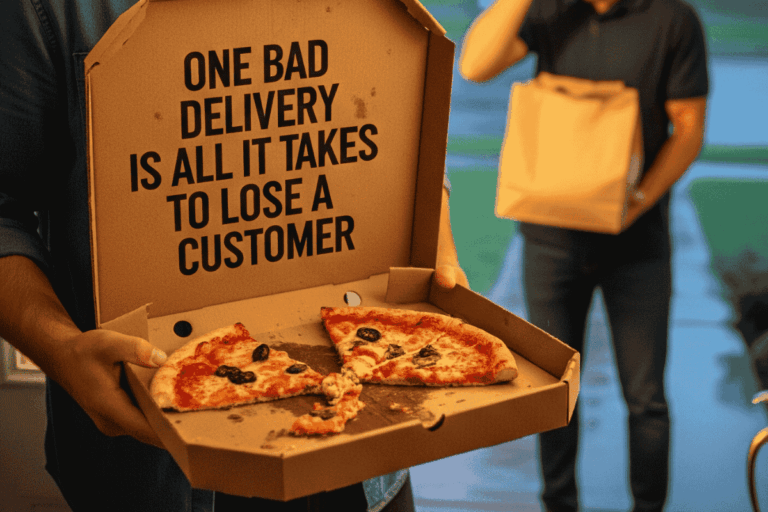
Traffic surprises lead to late arrivals, dispatchers manually reshuffle jobs, and drivers work overtime. Customers receive broad delivery windows and frequently call for updates.
After: The team adopts AI route optimization with real-time tracking and a driver app.
Routes auto-adjust when a road closes, customers receive accurate ETA updates, and proof of delivery reduces disputes.
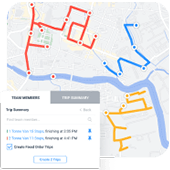
Dispatch sees the whole fleet’s progress on one map, focusing on exceptions instead of firefighting every change.
The outcome is:
- fewer failed deliveries,
- tighter windows,
- more stops per vehicle,
- without burning out the team.
What problems does AI route optimization solve day-to-day?
1. Late deliveries
Delays happen. Traffic jams, accidents, or just a bad day on the road. The benefit is that AI reacts fast to reroute drivers while while keeping customers happy.
READ: Last-Mile Delivery: The 3 Things Customers Care About Most
2. High cost-per-drop
If your drivers are spending less time stuck in traffic or just randomly idling, you will be saving money.
AI helps by trimming down on wasted distances and fuel burn. So that means that when your delivery volume starts climbing, you’ll have better margins to show for it.
3. Manual replanning
No more dispatchers playing Tetris every time something changes! AI automatically handles mid-day adjustments, leaving humans free to focus on the real exceptions.
4. Inaccurate ETAs
AI learns how your drivers actually move: how fast they drive, how long a stop really takes, etc. It then uses that to deliver ETAs you can actually trust.
5. Failed first attempts
Missed deliveries are expensive, ask any logistic manager or delivery business owner…
But AI will match jobs to customer preferences and send pre-arrival notifications, so you’re more likely to get it right the first time.
How do you implement AI route optimization without disruption?
Step 1: Baseline your KPIs
Before you change anything, measure where you’re at. These are the basics, like:
on-time delivery rate,
cost-per-drop,
failed delivery rate,
distance per stop, and
average service time.
Step 2: Clean your data
We all know the saying: Garbage in, garbage out. Bad data will kill optimization (and your efforts to analyse it) every single time.
You can keep your data clean by standardizing addresses, verifying geocodes, and making sure of the accuracy of depot, vehicle, and driver records.
Step 3: Pilot with a representative slice
Don’t try to boil the ocean!
Just start with one region or product line that represents your typical challenges and prove the value quickly.
Step 4: Configure constraints
Tell the system what reality looks like, so the plans it generates for you won’t look like fantasy.
Be very specific about:
- capacities,
- time windows,
- driver skills,
- breaks,
- and service times.
Step 5: Equip drivers
Roll out a driver app that gives them turn-by-turn navigation, barcode scanning, and proof of delivery tools.
You might have to provide some training and explain to them with real proof how this will make their job easier, not harder.
Step 6: Monitor and iterate
Compare what was planned with what actually happened.
Once all the comparative data is in, you can now tweak buffer times, load assumptions, and service durations.
Remember: small adjustments will make big gains!
Step 7: Scale gradually
Once the pilot proves itself, roll it out wider. This is where you include more regions, more scenarios, more complexity.
Grow with confidence instead of all at once.
ALSO READ: Why Every CEO Should Care About the Last-Mile Delivery Experience
Which features matter most in a modern routing solution?
There are a few features you’ll soon find you simply can’t go without. Together, they form a very powerful modern routing solution.
1. Route optimization
Route optimization is the core engine you will need.
It handles capacities, time windows, priorities, skills, driver hours, and multi-depot flows—without choking under pressure.
2. Real-time tracking
One of the nicest features of real-time tracking software is that you can see your whole fleet on the map!
That kind of live GPS visibility means you can catch problems early on, and then also send alerts before delays become disasters.
3. Driver app
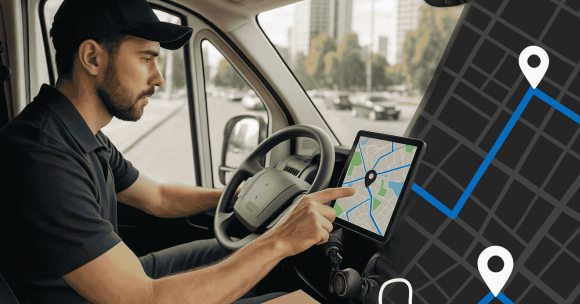
The driver app is your on-the-ground toolkit. It has turn-by-turn navigation and can also include job notes, barcode scanning, and guided workflows.
4. Proof of delivery
Photos, signatures, and time-stamped notes make disputes vanish. With proof of delivery (POD) software, you can prove every delivery actually happened. With proof!
5. Customer notifications
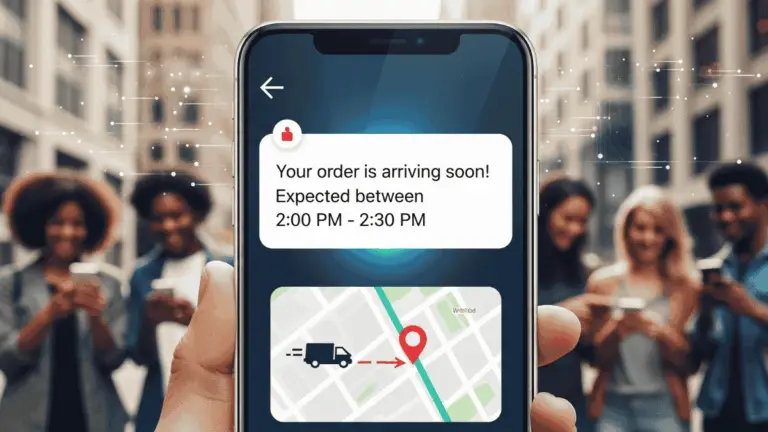
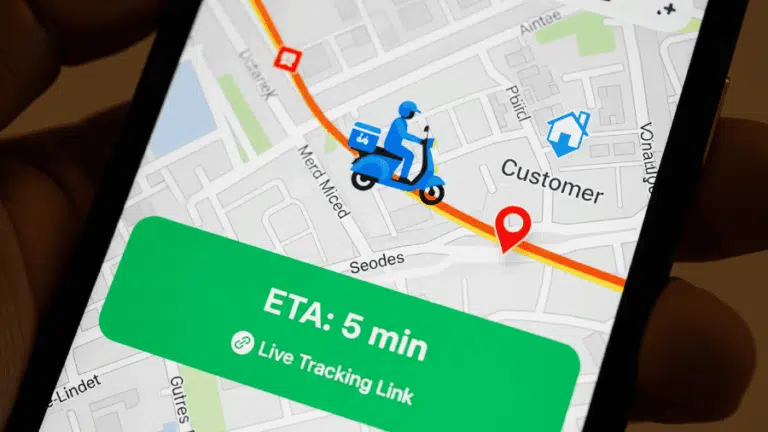
Customers really just want to be kept in the loop. Give them automatic SMS or email updates, and include a live tracking link that shows an accurate ETA.
That’s really it. And it will get you fewer “where is my order?” calls and happier support teams!
6. Dispatch tools
Think of this as your control room view. Drag-and-drop adjustments, what-if scenarios, and auto-reassignment let dispatchers steer the fleet in real time.
7. Analytics & KPIs
Dashboards that show what’s working (and what isn’t): on-time performance, cost-per-drop, distance per stop, first-attempt success, driver utilization.
8. Open integrations
Because no system works in isolation, APIs and connectors tie your routing into your order management, WMS, TMS, or e-commerce platform seamlessly.
How does AI route optimization improve customer experience?
For one, you’d be able to provide customers with accurate delivery windows through proactive communication. It makes it easier for them because they have lives and schedules to manage while waiting for the delivery.
1. Smaller, accurate delivery windows
A decent AI routing tool with study stop durations and driver patterns so it can tighten ETAs. Customers no longer need to waste an entire day waiting around.
2. Proactive communication
All those messages you automated will now keep your customers informed and in the loop.
They will know when the driver’s on the way, which means fewer inbound calls and clearer expectations.
3. Transparent tracking
Customers can literally watch their delivery move across the map. That transparency builds trust and reduces anxiety for critical shipments.
4. Reliable proof of delivery
Photos and signatures give customers confidence and give you evidence when someone says, “I never got it.” Disputes get resolved quickly without drama.
What KPIs should you track to prove ROI?
We suggest you track these KPIs:
On-time delivery rate (OTD): Percentage of orders delivered within the promised window.
Cost-per-drop: Total delivery cost divided by completed stops.
Failed delivery rate: Percentage of unsuccessful first attempts.
Distance per stop: Kilometers or miles per completed stop.
Driver and vehicle utilization: Time on-task vs. waiting or idle.
Customer satisfaction (CSAT/NPS): Post-delivery ratings and feedback trends.
CO2 per delivery (optional): Emissions proxy based on distance and fuel type to support sustainability goals.
How do you balance human expertise with AI?
It’s important to understand where AI excels and where a human would excel.
AI thrives on pattern recognition and rapid recalculation; humans are better at context, empathy, and exception handling.
The ideal solution for your business would be to combine the best of both worlds.
Use AI to plan and re-plan quickly, to analyze data and find patterns, to learn and improve. Then use those outcomes to empower your human dispatchers to focus on high-impact exceptions and customer service.
For drivers, guided workflows reduce guesswork while preserving autonomy for real-world decisions on the road.
Common pitfalls to avoid
Avoid these pitfalls at all costs!
- Overfitting to “perfect” data: Build buffers for loading times, building access, and elevator delays.
- Ignoring driver feedback: Drivers surface on-the-ground realities; feeding this back improves model accuracy.
- One-time setup mindset: Routing is a living system. Review KPIs weekly, tune monthly, and re-baseline quarterly.
- Under-communicating change: Share the “why” with teams and customers. Clear education drives adoption.
Where does Locate2u fit in?
Locate2u brings route optimization, real-time tracking, a powerful Driver App, and proof of delivery into one platform designed for last-mile speed and reliability.
Whether you run scheduled, same-day, or on-demand deliveries, you can optimize routes, keep customers in the loop with accurate ETAs, and prove every delivery with photos and signatures.
And it can all be done within a single system.
FAQ: Quick answers to common questions
What is proof of delivery?
Proof of delivery (POD) is a verifiable record of a completed delivery: often a photo, signature, barcode scan, timestamp, and GPS location.
It reduces disputes and speeds up issue resolution.
How does AI actually choose routes?
AI evaluates millions of possible sequences using constraints (time windows, capacities, skills) and live data (traffic, weather), selecting the best-performing routes in near-real time and re-optimizing as conditions change.
Do I need telematics or special hardware?
Not necessarily. A driver app with GPS on smartphones is enough for many fleets. You can add telematics later for deeper vehicle data.
Is AI routing only for large fleets?
No. Smaller fleets benefit from reduced route planning time, tighter ETAs, and better utilization. Leaner teams will often see (and experience) the value the fastest.
Can AI handle strict delivery windows and capacities?
Yes. Modern optimizers respect constraints like delivery windows, vehicle weight/volume limits, driver breaks, and service times.
What happens if my data isn’t great?
Start anyway with a pilot while improving address quality, service time estimates, and driver app adoption. The system’s learning loop will help you refine over time.
A practical next step: run a low-risk pilot
If you’re still not sure, start here.
Select one depot or region with typical demand.
Baseline KPIs and define your target improvements (e.g., on-time rate, cost-per-drop).
Configure constraints, roll out the driver app, and monitor planned vs. actual.
Iterate for two to four weeks, then decide on broader rollout.
Final thoughts on AI route optimization
It may seem like just another shiny new tech, but AI route optimization is a practical way to get more done with less stress.
Who wouldn’t want smarter planning, faster reactions, and fewer headaches? For both your team and your customers!
Sure, it requires some discipline. Clean data, solid processes, and a bit of change management when humans are involved. But isn’t that the cost of playing at a higher level?
Start small, run a pilot, and bring the right tools into the mix: real-time tracking, a driver app that actually works, and proof of delivery you can trust.
You see from this test run that the payoff is tighter routes, happier customers, and a bottom line that finally breathes easier.
About the author

Cheryl has contributed to various international publications, with a fervor for data and technology. She explores the intersection of emerging tech trends with logistics, focusing on how digital innovations are reshaping industries on a global scale. When she's not dissecting the latest developments in AI-driven innovation and digital solutions, Cheryl can be found gaming, kickboxing, or navigating the novel niches of consumer gadgetry.