Delivery Management Software vs a Delivery Marketplace

When it comes to getting products from your warehouse to your customer's door, two distinct models dominate the landscape: delivery management software (DMS) and delivery marketplaces. Both solve the same fundamental problem, but they take very different approaches to doing so. Choosing the right one can shape your cost structure, customer experience, and long-term growth trajectory.
This guide breaks down both options in plain terms so you can make an informed decision based on your business model, delivery volume, and strategic goals.
What Is Delivery Management Software (DMS)?
Delivery management software is a platform that helps businesses plan, execute, and monitor deliveries using their own fleet of drivers. A DMS typically includes features such as route optimization, real-time GPS tracking, automated customer notifications, proof of delivery capture, driver management, and analytics dashboards.
Think of a DMS as the operating system for your delivery operations. You supply the drivers and vehicles. The software handles the logistics intelligence, helping you assign stops efficiently, keep customers informed, and capture delivery data at every touchpoint.
Businesses that use a DMS range from local bakeries running a handful of daily deliveries to large distribution companies managing hundreds of drivers across multiple regions.
What Is a Delivery Marketplace?
A delivery marketplace is an online platform that connects businesses (or individual senders) with independent couriers and delivery drivers. Rather than managing your own fleet, you post a delivery job and an available driver in your area picks it up and completes it.
Marketplace platforms handle driver recruitment, payment processing, and basic tracking. The model works similarly to ride-sharing apps: you request a service, a nearby provider fulfills it, and the platform takes a commission or service fee on each transaction.
This approach is popular among e-commerce sellers, small retailers, and businesses that need ad hoc or on-demand delivery without the overhead of maintaining a driver workforce.
Key Differences Between a DMS and a Delivery Marketplace
While both solutions get packages delivered, the differences in how they operate have significant implications for your business. Here are the areas where they diverge most.
Cost Structure
A DMS typically charges a fixed monthly subscription fee, sometimes with per-driver or per-delivery pricing tiers. Your primary variable cost is what you pay your own drivers. As your delivery volume increases, the per-delivery cost generally decreases because the software cost stays relatively flat.
Delivery marketplaces charge per delivery, often with a commission or service fee built into each transaction. This means costs scale linearly with volume. For low volumes, this pay-as-you-go model can be cheaper. At higher volumes, marketplace fees can become a significant expense that erodes margins.
Control Over Operations
With a DMS, you have full control over every aspect of the delivery experience. You decide which driver handles which route, set delivery windows, define service standards, and manage performance directly. If something goes wrong, you can intervene immediately.
With a marketplace, you hand over much of that control to the platform and its independent drivers. You can set basic parameters, but the driver selection, routing decisions, and on-the-ground execution are largely out of your hands.
Branding and Customer Experience
A DMS allows you to deliver a fully branded experience. Your drivers wear your uniform, drive your branded vehicles, and represent your company at the customer's door. Tracking notifications can carry your logo and messaging. This consistency builds trust and reinforces your brand with every delivery.
Marketplace deliveries are typically completed under the marketplace's brand or with no branding at all. Your customer may not even realize who handled the delivery, which means you miss an opportunity to build brand loyalty during one of the most tangible moments of the buying journey.
Data Ownership
When you use a DMS, all delivery data belongs to you. Route performance, driver efficiency, customer feedback, delivery times, and geographic trends are yours to analyze and act on. This data becomes a strategic asset that helps you optimize operations over time.
Marketplace platforms often retain much of the delivery data, sharing only limited reporting with you. The platform uses aggregated data across all its clients to improve its own algorithms and business, not necessarily yours.
Scalability
Scaling with a DMS means hiring more drivers and adding more vehicles, which requires capital investment and management effort. However, the software itself scales easily, and you maintain operational consistency as you grow.
Scaling with a marketplace is simpler in the short term. You just post more delivery jobs. But you become dependent on driver availability in your area, and during peak periods or in underserved regions, you may face driver shortages or inflated pricing.
Pros and Cons at a Glance
Delivery Management Software
- Pros: Full operational control, branded customer experience, data ownership, lower per-delivery cost at scale, consistent service quality, deep integration with your existing systems
- Cons: Requires your own driver fleet, upfront investment in vehicles and hiring, ongoing fleet management responsibilities
Delivery Marketplace
- Pros: No fleet required, fast to get started, flexible for ad hoc or seasonal demand, minimal upfront investment, geographic reach without physical presence
- Cons: Higher per-delivery cost at volume, limited control over driver quality, minimal branding opportunity, restricted data access, dependency on platform availability and pricing
When to Use Each Approach
A DMS Is the Better Fit When:
- You already have your own drivers or plan to build a fleet
- Delivery is a core part of your value proposition, not just an afterthought
- You need consistent, branded service quality at the customer's door
- Your delivery volumes are high enough that per-delivery marketplace fees become expensive
- You want to own your delivery data and use it to improve operations
- You operate in industries like field services, food delivery, pharmacy, or furniture where the delivery experience directly affects customer satisfaction
A Marketplace Is the Better Fit When:
- You do not have drivers and do not want to hire them
- Your delivery volumes are low or unpredictable
- You need coverage in areas where you have no physical presence
- Speed to market matters more than long-term cost optimization
- Deliveries are occasional or seasonal rather than a daily operation
The Hybrid Approach
Many growing businesses find that a combination of both models works best. You might use delivery management software like Locate2u to manage your core delivery operations with your own fleet while using a marketplace to handle overflow during peak periods or to cover regions where you do not yet have drivers. See how SuperPharmacy cut route planning time by 83% with Locate2u.
This hybrid model gives you the cost efficiency and control of your own fleet where it matters most, with the flexibility of marketplace capacity when you need it. As your business grows, you can gradually bring more routes in-house and reduce marketplace dependency.
A Decision Framework for Your Business
To determine the right path, ask yourself these questions:
- Do you have drivers or plan to hire them? If yes, a DMS is the clear starting point. If no, a marketplace gets you delivering immediately.
- How many deliveries do you make per week? Below 50, a marketplace may be more cost-effective. Above 50, the economics of a DMS start to become compelling. Above 200, a DMS almost always wins on cost.
- How important is the delivery experience to your brand? If your customers associate delivery quality with your company, you need the control a DMS provides.
- What are your growth plans? If you expect delivery volumes to grow significantly, investing in a DMS now positions you for lower marginal costs in the future.
- Do you need delivery data for operational decisions? If analytics, route performance, and driver metrics matter to your business, a DMS gives you ownership of that information.
Why Owning Your Delivery Operations Pays Off
For businesses where delivery is more than a checkbox, owning your operations through a DMS creates compounding advantages over time. Every delivery generates data you can use to optimize routes, improve driver performance, and reduce costs. Every customer interaction reinforces your brand. Every efficiency gain drops straight to your bottom line.
A platform like Locate2u is designed to make this ownership accessible to businesses of all sizes. With intelligent route optimization, real-time tracking, automated notifications, and proof of delivery, you get enterprise-grade delivery management without the complexity. You can start with a small fleet and scale as your business grows, knowing the software will keep pace.
The choice between a DMS and a marketplace is not about which is objectively better. It is about which aligns with where your business is today and where you want it to be tomorrow. For businesses ready to take control of their delivery operations, a DMS is the foundation that makes sustainable growth possible.
Explore how delivery management can transform your operations, or see how Locate2u's delivery management platform gives you the tools to deliver with confidence.
Related Articles
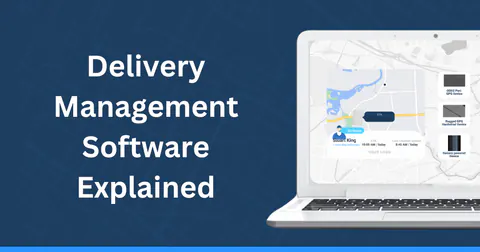
What Is Delivery Management Software?
What delivery management software is, the core features to expect, the benefits for delivery businesses, how to choose a platform and where the market is going.
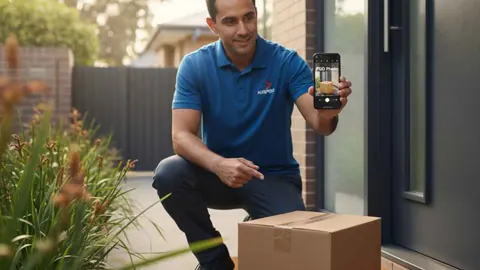
The Future of Proof of Delivery: Photos and Beyond
How proof of delivery is moving beyond paper signatures to photos, GPS timestamps and AI checks, and how to choose the right POD setup for each risk level.

How Proof of Delivery Beats Porch Pirates
Package theft hits delivery businesses as hard as customers. How proof of delivery, live tracking, safer drop-offs and driver training cut porch piracy losses.